Stories and simple recipes from a region where food still remembers the land
I grew up in Silchar, in the Barak Valley of Assam, where food has always seemed to me like a language spoken quietly.
We did not have to explain what we were eating. A plate of hot rice, a little mashed potato with mustard oil, some greens, a piece of fish, perhaps a sour curry at the end — these things spoke for themselves.
When I was a child, I thought every home in India ate like we did.
I thought everyone knew the smell of mustard oil heating in an iron kadai. I thought everyone understood why a particular sourness in a fish curry could make an old person smile. I thought everyone knew that the best part of a rainy afternoon was not always tea and biscuits. Sometimes it was simply hot rice, something mashed with a little salt and green chilli, and a curry that had been simmering quietly in the kitchen.
It was only when I began travelling and eating more seriously that I realised how little many people outside the Northeast knew about our food.
They knew momos. They knew perhaps Assamese tea. Some knew pork with bamboo shoot. A few knew smoked meat, fermented soybean, or the famous bhut jolokia. But the Northeast is not one cuisine, and certainly not one flavour.
It is a collection of many kitchens.
Assam, Manipur, Meghalaya, Mizoram, Nagaland, Tripura, Arunachal Pradesh and Sikkim each have their own food traditions, shaped by different communities, landscapes and histories. Even within one state, the food can change from one valley to another, from one community to another, from one family to the next. Rice is an important staple across much of the region, while boiling, steaming, smoking, drying and fermentation have long played important roles in everyday cooking. (Condé Nast Traveller India)
And somewhere inside all this variety are dishes that are slowly becoming quieter.
They are not necessarily extinct. Someone’s grandmother is still making them. A family in a village still knows the right amount of salt. Someone still remembers which leaf to pick after the first rain. But these foods are no longer appearing as often on modern dining tables.
That is what I mean by forgotten flavours.
They are the foods that live between memory and habit.
As someone who loves food — perhaps a little more than is practical — I have always been drawn to such dishes.
I want to know what people ate before restaurants began deciding what regional food should look like.
I want to know what a mother cooked when there was no special occasion.
I want to know what farmers carried to the fields, what grandmothers made from leftover rice, what a family cooked when the market was poor but the garden was generous.
And whenever I find one of these foods, I feel that I have found a small piece of Northeast India that deserves to be remembered.
The Northeast begins with the kitchen
There is a mistake we often make when we talk about Indian food.
We divide it into broad categories — North Indian, South Indian, Bengali, Punjabi, Gujarati — and then we place Northeast India somewhere at the edge of the conversation.
But the Northeast has always had its own culinary universe.
Its mountains, forests, rivers and heavy monsoon rains have shaped the way people eat. There is an abundance of greens, herbs, bamboo shoots, roots, tubers and wild vegetables. Rivers provide fish. Communities that eat meat have developed remarkable ways of smoking, drying and preserving it. Fermentation is not some modern food trend here; it is an old way of preserving food and creating flavour. (NNWA Nutrition & Wellness Academy)
The cooking is often surprisingly simple.
That simplicity can confuse people.
If there is no thick gravy, no dozen spices, no cream and no elaborate garnish, some people assume that the food is somehow less sophisticated.
I think the opposite is true.
When you have only five ingredients, you have nowhere to hide.
The vegetable must taste like the vegetable.
The fish must taste like fish.
The bamboo shoot must retain its character.
The smoked meat must carry the memory of the fire.
The chilli must be allowed to be a chilli.
This is why so many old Northeast recipes feel honest.
They do not try too hard.
They are foods that came from what was available.
And perhaps that is exactly why they are worth saving.
1. Poita Bhaat — The rice that was never wasted
There are few things more humble than leftover rice.
But in Assam, leftover rice can become something beautiful.
When I was growing up, poita bhaat was not introduced to me as some grand traditional dish. Nobody stood beside me and said, “Today I will teach you an important part of Assamese culinary heritage.”
No.
It was simply there.
Rice left from dinner was soaked in water overnight. By morning, it had become soft, cool and slightly fermented. It was eaten with salt, green chilli, onion, mustard oil, perhaps aloo pitika or whatever else was available.
That was breakfast.
Simple.
Cold.
Comforting.
And on a hot Assamese morning, it made perfect sense.
Poita bhaat, also called fermented or soaked rice, has long been part of Assamese summer food. The overnight soaking gives the rice a mild sourness, and it is traditionally eaten with simple accompaniments such as onion, green chilli and mashed potato.
Today, we talk about fermentation with great excitement.
We buy expensive jars of fermented vegetables.
We read about probiotics.
We call foods “gut-friendly”.
Our grandmothers simply soaked yesterday’s rice.
That is the funny thing about old food. What once looked ordinary can suddenly become fashionable again.
Simple Poita Bhaat
You need:
- 2 cups cooked rice
- Enough water to cover the rice
- 1 small onion, sliced
- 1–2 green chillies
- Salt
- A little mustard oil
- A boiled potato, optional
How I make it:
Place the cooked rice in a clean bowl or earthen pot. Cover it with water and leave it overnight.
The next morning, drain some of the water if you prefer a thicker texture.
Add salt, sliced onion, green chilli and a few drops of mustard oil.
If you have a boiled potato, mash it roughly with salt, green chilli and mustard oil and eat it alongside.
That is all.
No complicated technique.
No special presentation.
Just rice remembering that it has another life after dinner.
2. Alu Pitika — The dish that taught me what “home” tastes like
If you ask me what food represents home, I may not say fish.
I may not say tea.
I may not even say rice.
I may say alu pitika.
It is only mashed potato.
At least that is what someone unfamiliar with Assamese food might say.
But if you have grown up eating it, you know that it is never “only” mashed potato.
It is potato mixed with mustard oil, onion, green chilli and salt. Sometimes roasted chilli. Sometimes coriander. Sometimes a little boiled egg. Every household has its own way.
I have eaten alu pitika beside elaborate dishes, and somehow the pitika still disappears first.
There is something about mashed food.
It asks you to eat slowly.
It mixes with rice beautifully.
It carries the taste of mustard oil.
And it reminds us that good cooking does not always begin with expensive ingredients.
A simple Assamese recipe collection describes alu pitika in almost exactly these terms — boiled potatoes mashed with mustard oil, chilli and onion. (ramkicooks.blogspot.com)
For me, it belongs in the category of forgotten flavours because dishes like this rarely receive the attention they deserve. They are too ordinary to become restaurant stars.
But ask anyone from an Assamese home what they would happily eat on a tired day, and you may hear a very different answer.
My Silchar-style Alu Pitika
You need:
- 3 medium potatoes
- 1 small onion, finely chopped
- 2 green chillies, chopped
- Salt
- 1–2 teaspoons mustard oil
- A little coriander, optional
How I make it:
Boil the potatoes until soft.
Peel them while still warm and mash them by hand. Do not make the mixture completely smooth. A few little lumps make it better.
Add onion, green chilli and salt.
Pour over the mustard oil.
Now use your fingers or a spoon and mix everything together.
Taste.
Add more chilli if you like.
That moment when the mustard oil rises through the warm potato — ah, that is when the kitchen begins to smell like Assam.
Serve with hot rice.
The forgotten kitchen is often a poor kitchen
This is something I have thought about many times.
Why do some dishes disappear?
Sometimes it is because the ingredients become difficult to find.
Sometimes younger people move to cities.
Sometimes cooking becomes faster.
Sometimes a dish becomes associated with poverty, village life or hardship, and families stop making it when they become more prosperous.
Poita bhaat, for example, could be seen as food made from leftovers. A vegetable stew could be dismissed as “too simple”. A boiled preparation might seem boring when everyone wants something fried.
But food has never been only about taste.
It also carries ideas about status.
That is dangerous for old recipes.
Because once people become embarrassed by what their grandparents cooked, the recipe can disappear in one generation.
I have always believed that there is dignity in humble food.
Perhaps especially in humble food.
3. Chamthong or Kangsoi — Manipur in a quiet bowl
The first time I ate chamthong, I remember being surprised by how gentle it was.
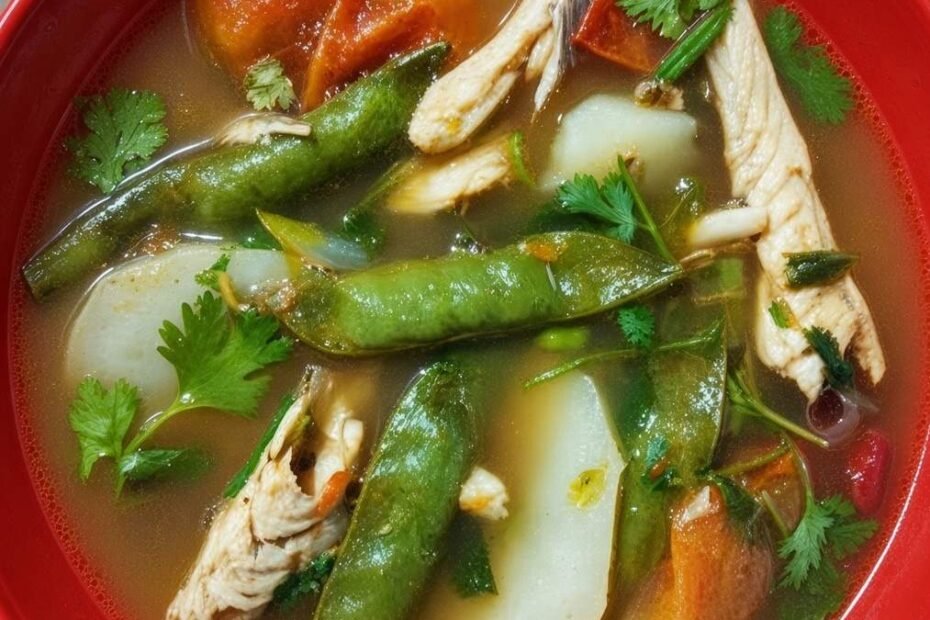
Manipuri cuisine has many flavours that can be strong and distinctive, especially through ingredients such as fermented fish. But chamthong, also known as kangsoi, can be a simple vegetable stew — the kind of food that seems almost too modest until you sit down with rice and eat it slowly.
The Northeast has many such dishes.
Food that does not shout.
Food that waits.
A pot of vegetables, a little salt, chillies, herbs and perhaps fermented fish can become a complete meal.
Older recipe collections describe Manipur’s kangsoi/chamthong as a simple vegetable stew, while traditional accounts of Northeast cooking repeatedly point to boiling and simmering as important techniques.
I like this kind of cooking because it makes sense in a home kitchen.
You do not need to be a chef.
You need fresh vegetables and patience.
Simple Chamthong
You need:
- 1 potato
- 1 small pumpkin
- A handful of beans
- A handful of leafy greens
- 1 tomato
- 2 green chillies
- A small piece of ginger
- Salt
- Water
- A little fermented fish, optional
How I make it:
Cut the vegetables into rough pieces.
Put them into a pot with water, ginger, chillies and salt.
Let everything simmer until tender.
If you use fermented fish, add a small amount according to taste.
The broth should remain light.
Do not turn it into a thick curry.
That is the beauty of it.
Serve it hot with rice.
Some versions and households use different vegetables or additional ingredients, so this is best understood as a simple home-style interpretation rather than one fixed recipe.
And perhaps that is the point.
Traditional food is not always a formula.
Sometimes it is a method passed from one pair of hands to another.
4. Bai — Mizoram’s bowl of boiled vegetables
There is something almost comforting about a dish that does not try to impress you.
That is how I feel about bai from Mizoram.
Bai is a vegetable-based preparation that can include ingredients such as cabbage, beans, pumpkin, potato and leafy vegetables. Some versions use fermented soybean or other local ingredients to give it more depth. A traditional recipe from the Northeast includes vegetables, potato, green chilli, rice and fermented soybean paste. (eShe)
When I read recipes like this, I always think about the old Northeast kitchen.
A pot sits on the fire.
Vegetables are cut.
Rice is cooking somewhere nearby.
There is no need to make everything spicy.
The food is allowed to taste of itself.
That is a lesson modern cooking sometimes forgets.
Simple Bai
You need:
- 1 cup chopped cabbage
- 1 potato
- A handful of beans
- A few pieces of pumpkin or other seasonal vegetables
- 1 green chilli
- A small handful of rice
- Salt
- A little fermented soybean paste, if available
- Water
How I make it:
Wash the vegetables and cut them into medium pieces.
Put the vegetables, potato, rice, chilli and salt into a pot.
Add enough water and cook gently until everything becomes soft.
If you are using fermented soybean paste, add a small amount towards the end.
The finished dish should be soft and comforting, somewhere between a vegetable stew and a thick soup.
Eat it hot.
Eat it with rice.
And eat it without trying to make it taste like something else.
That last part is important.
5. Godok — Tripura’s simple comfort food
Tripura has always fascinated me because its food tells another story of the Northeast.
There are rice dishes, vegetables, bamboo shoots, fish and fermented ingredients, but one dish that I think deserves more attention is godok.
It is a simple preparation built around vegetables and fermented fish, and it belongs to that wonderful category of foods where a small amount of a strongly flavoured ingredient gives character to an otherwise humble pot.
The name itself may not mean much to someone outside Tripura.
But names are how food travels.
Someone cooks it in a village.
A daughter learns from her mother.
A son leaves for another city.
Someone asks, “What did your grandmother make?”
And suddenly the old dish is spoken aloud again.
Tripura’s traditional food includes godok among its lesser-known rice-and-vegetable preparations, alongside dishes using bamboo shoot and fermented fish.
Simple Godok
You need:
- 1 small potato
- 1 small pumpkin
- A handful of green beans
- 1 small tomato
- 1–2 green chillies
- A little fermented fish, according to taste
- Salt
- Water
How I make it:
Cut all the vegetables into small pieces.
Place them in a pot with water, chilli and salt.
Add the fermented fish.
Cook slowly until the vegetables are very soft.
Some cooks mash part of the vegetables into the broth, giving it a thicker texture.
Serve with hot rice.
It is earthy, salty and deeply comforting.
And if you are new to fermented fish, start with a very small quantity.
These are flavours that take time to understand.
The smell of smoke, bamboo and rain
There is another reason I think the Northeast has so many forgotten foods.
Preservation was not just a technique.
It was survival.
In a land of heavy rain, difficult terrain and seasonal abundance, people needed ways to keep food for later.
Meat could be smoked.
Fish could be dried.
Bamboo shoots could be fermented.
Vegetables could be preserved.
Fermentation became part of the everyday kitchen rather than something unusual. Across the Northeast, smoking, drying and fermentation remain important parts of culinary traditions.
Even today, the smell of smoke can take me somewhere else.
Sometimes I smell it in a market in Silchar and immediately think of a village kitchen.
I see the blackened walls.
The old cooking vessels.
The bamboo racks.
The firewood.
The women talking while they work.
The children waiting for food.
That is what recipes cannot completely explain.
A recipe tells you what to put into the pot.
It cannot tell you who was sitting beside the fire.
It cannot tell you whether it was raining.
It cannot tell you what someone was worrying about while stirring the curry.
It cannot tell you that a grandmother always tasted the food twice.
It cannot tell you that the youngest child was allowed the crispiest piece.
Food history is made from these small things.
Why I call them forgotten
I do not want to romanticise the past.
Not everything old was wonderful.
Traditional kitchens could be hard work. Cooking over wood fires took time. Grinding, pounding, washing and chopping were physical labour. Many old dishes were created because people had very little and had to make the most of whatever was available.
But there is a difference between poverty and ingenuity.
Our ancestors knew how to make food from things we might ignore today.
Banana peels became part of the preparation of khar in Assam. Wild greens became important vegetables. Fermentation preserved food. Rice was never casually wasted. Seasonal produce was celebrated because there was no expectation that every ingredient should be available throughout the year. (NNWA Nutrition & Wellness Academy)
This was not “farm-to-table”.
Nobody needed the phrase.
It was simply life.
In Assam, for example, khar has traditionally been prepared using alkaline water made by filtering water through ash from sun-dried banana peel or related plant material. Khar is traditionally associated with the beginning of an Assamese meal. (NNWA Nutrition & Wellness Academy)
That kind of knowledge is precious.
But it is also fragile.
Because it depends on someone knowing.
Silchar taught me that food does not respect borders
Living in Silchar has given me a particular way of looking at food.
The Barak Valley sits in southern Assam, and its food culture carries many layers.
People have moved through this region for generations.
Languages overlap.
Food habits overlap.
Markets bring together ingredients and memories from different communities.
When you live in a place like this, it becomes difficult to say, “This food belongs only to this place.”
Food travels.
It crosses rivers.
It crosses hills.
It crosses borders.
It moves with workers, traders, migrants, brides, students and families.
A recipe can leave one village and become another family’s treasured dish somewhere else.
That is why I am careful with the word “authentic”.
If my grandmother cooked something one way and your grandmother cooked it another way, neither of us necessarily cooked it incorrectly.
Perhaps both recipes are true.
Perhaps food is not a museum object.
Perhaps it is alive.
The taste of the Northeast is not one taste
If you have never explored Northeast Indian food, do not begin by asking what “Northeast food” tastes like.
That question is too large.
Ask instead:
What does Assam taste like?
What does Manipur taste like?
What does Mizoram taste like?
What does Tripura taste like?
What does Meghalaya taste like?
And then ask about the communities within those places.
You will keep discovering something new.
One kitchen may love fermented fish.
Another may prefer smoked meat.
Another may depend on greens.
Another may use bamboo shoot.
Another may cook with very little oil.
Another may make a powerful chilli chutney.
There are countless food traditions across the region, and many are still primarily carried through homes rather than restaurant menus. (NNWA Nutrition & Wellness Academy)
That is perhaps why I find the forgotten dishes so interesting.
The famous dishes are already being remembered.
The quiet ones need someone to speak for them.
Five recipes, five memories
When I look back at the five recipes in this story, what strikes me is how little they have in common on the surface.
Poita bhaat is leftover rice.
Alu pitika is mashed potato.
Chamthong is a vegetable stew.
Bai is another simple vegetable preparation.
Godok brings vegetables together with fermented fish.
Yet all five tell a similar story.
They use what is available.
They waste very little.
They rely on simple cooking.
They are designed to be eaten with rice or as part of a simple meal.
And most importantly, they belong to homes.
That is why I worry about losing them.
Not because every old dish must be preserved exactly as it was.
Food must change.
It always has.
But when a recipe disappears completely, we lose more than taste.
We lose a way of thinking.
We lose knowledge about seasons.
We lose knowledge about preservation.
We lose the memory of ingredients that once grew everywhere.
We lose the small solutions people developed for everyday life.
And we lose stories.
One day, someone will ask
Sometimes I imagine my own kitchen years from now.
Perhaps I will be old.
Perhaps someone younger will be standing beside me, impatiently asking how much salt to put in something.
And I will probably say the same thing older people have always said:
“Ektu andaj kore dao.”
Put it according to your sense.
That is how many recipes survive.
Not through measurements.
Through observation.
Through smell.
Through memory.
Through the sound of oil heating.
Through the colour of a vegetable changing in the pan.
Through knowing when a dish is ready without looking at the clock.
Maybe that is why writing recipes is both useful and slightly sad.
You can write down the ingredients.
You can write down the method.
But you cannot completely write down memory.
For that, you need a person.
Someone who remembers.
Someone who tasted it before.
Someone who can say, “No, no, not like that. Wait. Let it cook a little longer.”
Bhalo kore ranna kor. Cook it properly.
That sentence contains more history than we realise.
Bringing the forgotten flavours back
I do not think the answer is to turn every old Northeast dish into a restaurant speciality.
Some foods are happiest at home.
A bowl of poita bhaat does not need a fancy plate.
Alu pitika does not need microgreens.
Chamthong does not need a tasting menu.
Bai does not need a chef’s reinterpretation.
Godok does not need a dramatic description.
These foods need something much simpler.
They need to be cooked.
They need to be eaten.
They need to be taught.
If you have a grandmother who knows an old recipe, ask her to make it.
If your mother cooks something that nobody has written down, write it down.
If your village has a dish that younger people no longer make, ask someone to teach you.
Do not wait until the person who knows the recipe is gone.
That is how food disappears.
Not suddenly.
Quietly.
One kitchen at a time.
A final plate from Silchar
If you came to my house in Silchar on a rainy afternoon and asked me what I wanted to eat, I would probably not make you anything fashionable.
I would make rice.
I would put some alu pitika on the table.
Perhaps there would be greens.
Perhaps a simple fish curry.
If the weather was very hot, I might bring out poita bhaat.
If I had vegetables from the market, I might make something like a simple stew.
And if you asked me where these recipes came from, I might struggle to give you a single answer.
That is because food rarely has only one birthplace.
It travels through people.
It changes in their hands.
It gathers memories.
It becomes ours.
That is what I love about Northeast Indian food.
It does not always ask to be admired.
It asks to be eaten.
And perhaps that is enough.
From the rice fields of Assam to the hills of Mizoram, from Manipuri kitchens to Tripura’s home fires, from bamboo shoots and fermented fish to simple greens and mashed potatoes, the forgotten foods of the Northeast are still waiting.
Some are sitting in old notebooks.
Some are remembered by grandmothers.
Some are being cooked quietly in villages.
Some survive only as a taste in someone’s memory.
And some may be waiting for the next curious foodie to ask:
“What is this?”
I hope we keep asking.
Because every time we do, another forgotten flavour gets a chance to come home.
And in my part of Assam, we know something very simple about food.
You can travel very far.
You can live in another city.
You can change your kitchen, your plates, your cooking vessels and even your habits.
But give someone a familiar taste from home, and for a moment, they are back where they began.
That is the real power of food.
It does not just feed us.
It remembers us.