An old Kashmiri historian remembers the food of his childhood — the village fires, winter stores, river fish, green haak, dried vegetables, noon chai, and the quiet wisdom hidden in an ordinary meal.
I am an old man now.
When I walk through the villages of Kashmir, I no longer walk as quickly as I did when I was young. My knees complain when the road goes uphill, and my eyes need more light to read an old manuscript. But there is one thing I can still recognise from a great distance.
The smell of a Kashmiri kitchen.
Give me a little smoke from a wood fire, the smell of mustard oil, a handful of dried red chillies, and perhaps the faint sweetness of rice cooking in a copper pot, and I can tell you where I am.
I am home.
People who visit Kashmir often ask me, “What is Kashmiri food?”
They expect me to say rogan josh, gushtaba, rista or wazwan. These are certainly important. Wazwan, especially, is at the heart of many great Kashmiri celebrations. But if you want to understand Kashmir, I would ask you to forget the wedding feast for a moment.
Come with me to a village.
Sit beside an old woman cleaning haak. Watch a farmer bring home turnips from the field. See a family hanging vegetables in the sun before winter arrives. Drink a small cup of noon chai beside a warm kangri. Eat rice with a simple vegetable dish.
Then you will begin to understand.
Because Kashmiri food was not created in palace kitchens alone.
It was created by mountains.
It was created by snow.
It was created by rivers and lakes, short summers and long winters, fertile fields and careful women who knew that nothing should be wasted.
And, above all, it was created by memory.
A Valley That Teaches You How to Eat
Kashmir is a beautiful place, but beauty can sometimes make people forget how difficult life here has been.
The mountains that surround the Valley are magnificent. In spring, the orchards bloom. In summer, the fields become green. Autumn brings apples, walnuts and golden leaves. But winter can be severe.
For the people living in the villages, food could never depend only on what was growing outside the door that day.
We had to think ahead.
My grandmother used to say, “Yi chhu winteras taiyar karun” — roughly, “This is something you must prepare for winter.”
She was speaking about food, but she was also speaking about life.
During the warmer months, vegetables were washed, cut and placed in the sun. They became hokh syun — dried vegetables kept for the cold months. Turnip, bottle gourd, lotus stem, leafy vegetables and other produce could be dried and stored. When fresh vegetables became difficult to find, these dried foods returned to the kitchen.
Modern people might look at dried vegetables and think of them as poor food.
My grandmother would have laughed.
“Poor?” she would have said. “Poor is throwing away what the earth has given you.”
She understood something that we sometimes forget today: preservation is not only about survival. It is also about taste.
The sun changes a vegetable.
The cold changes a vegetable.
Time changes a vegetable.
A fresh turnip and a dried turnip are not the same thing. Each has its own story.
This tradition of hokh syun is one of the clearest examples of how Kashmir’s climate shaped its cuisine.
The First Dish I Remember
If you ask me about my first food memory, I will not say wazwan.
I will say haak.
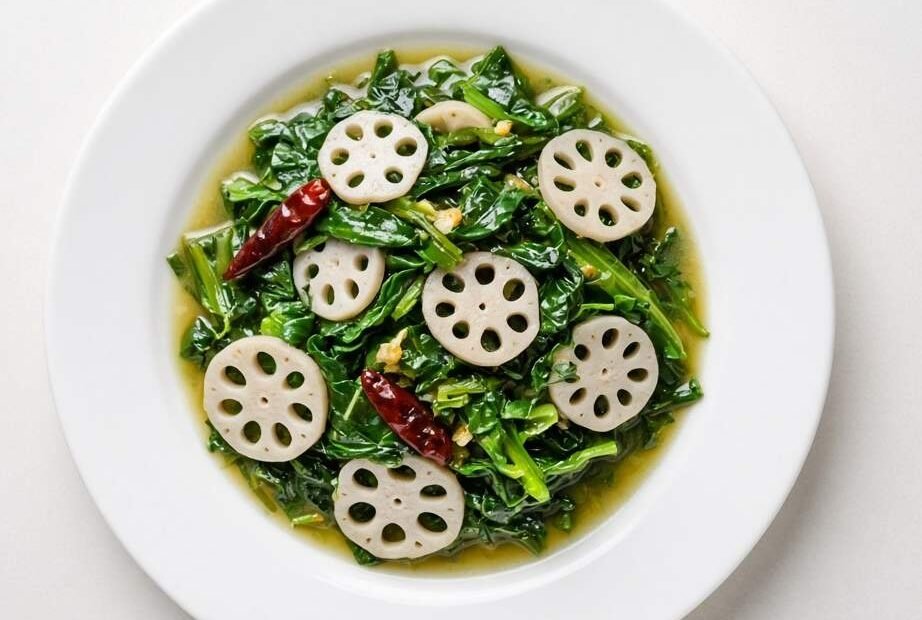
Haak is a leafy green, and there are different kinds and preparations across Kashmiri kitchens. It is one of the simplest foods in the Valley. It is usually cooked with very few ingredients, often with mustard oil, salt and chilli.
Yet I have eaten expensive meals in my life, and I still return to haak in my memory.
Why?
Because food is never only about ingredients.
When I was a boy, my mother would sit near the kitchen fire with a large pile of greens. She would remove the rough stems, wash the leaves and place them into a pot.
There was no great ceremony.
No silver plate.
No chef.
Just a woman cooking for her family.
The greens would slowly soften. The mustard oil would give off its sharp smell. A dried chilli would darken in the hot oil.
Then came the rice.
In Kashmiri we call rice batta. For most families, it has always been the centre of the meal.
The haak was placed beside it, and sometimes we would make a small well in the rice and put the greens there.
That was lunch.
That was enough.
And it was wonderful.
Haak remains one of the defining foods of Kashmiri home cooking, particularly because it shows the Valley’s preference for allowing an ingredient to speak for itself rather than covering it with many spices.
Village Recipe No. 1: Simple Haak
What you need
- 2 large bunches of fresh haak or similar Kashmiri greens
- 1–2 tablespoons mustard oil
- 1 dried red chilli
- Salt
- A little water
How my mother made it
Wash the greens carefully. Heat mustard oil in a heavy pot and add the dried chilli. When the oil becomes hot and fragrant, add the greens and salt.
Add a little water, cover the pot and cook until the leaves become tender.
That is all.
Do not add ten spices.
Do not turn it into another kind of curry.
Eat it hot with plain rice.
The secret is not the recipe.
The secret is the green.
The Village Garden Was Our Market
Today, people go to supermarkets.
In my childhood, the garden was the supermarket.
A village family knew which vegetable was ready in which month.
We knew when the gogji — turnip — was good.
We knew when monj — kohlrabi — was tender.
We knew where the lotus stem, nadru, could be found.
We knew which greens were best after rain.
And we knew that the same vegetable could taste different depending on where it was grown.
The Valley’s lakes and wetlands also played an important role. Lotus stems became part of everyday cooking, while fish from the waters became another part of the Kashmiri table.
Nadru is especially important.
If you pull a lotus stem from the water and cut it open, you see its beautiful little holes. As a child, I thought they looked like tiny windows.
Perhaps that is why I remember them so well.
My father used to tell me, “The lotus teaches us something. It grows from mud, but gives us something beautiful.”
He was not a philosopher.
He was simply a hungry man eating lunch.
But Kashmiri people have always had a way of turning food into philosophy.
Nadru appears in many preparations, including nadru yakhni and fried nadru munji. It is deeply connected with the waters and food culture of the Valley.
A Pot of Monj Haak
There is another dish I associate strongly with village kitchens: monj haak.
Monj is kohlrabi. When the vegetable is young, its leaves are also used. Nothing is wasted.
The bulb is cut into pieces and cooked together with the leaves.
This is the kind of dish that tells you something about Kashmir.
It does not try to impress you.
It does not need a beautiful name.
It simply feeds you.
And in the villages, that was the purpose of food.
Not Instagram.
Not presentation.
Not fashion.
Food had to give strength to the farmer who went into the field, warmth to the family sitting beside the fire, and comfort to the old person who had spent the day indoors.
Village Recipe No. 2: Monj Haak
What you need
- 2 kohlrabi, or monj, with their tender leaves
- 1 tablespoon mustard oil
- 1 dried red chilli
- A pinch of asafoetida, if desired
- Salt
- Water
Method
Peel the kohlrabi and cut it into thick pieces. Wash the leaves and chop them roughly.
Heat mustard oil in a pot. Add the dried chilli and, if using, a small pinch of asafoetida.
Add the kohlrabi pieces first and cook for a few minutes.
Then add the leaves, salt and enough water to make a light broth.
Cover and simmer until the vegetable is tender.
Serve with rice.
Some versions are made very simply, while others use slightly different seasonings. That is normal in Kashmir. A recipe is often a family memory rather than a fixed rule.
When Winter Came, the Sun Came Into the Kitchen
The best thing about Kashmiri winter food is that you can taste summer inside it.
Look at a string of dried vegetables hanging in an old village house.
Those vegetables were once green.
They were growing in sunlight.
Then someone cut them, prepared them and dried them carefully.
Months later, when snow covered the fields, they returned to the cooking pot.
That is why I sometimes say that hokh syun is “summer stored for winter.”
My grandmother was particularly proud of her dried turnips.
She would slice them carefully and leave them in the sun. The pieces would become smaller and darker.
When winter arrived, she would wash them and cook them slowly.
The kitchen would smell earthy and deep.
Today, you can buy almost anything at any time of the year. This has changed the way we think about food.
But in the old days, seasons were written into the meal.
Summer tasted different from winter.
Autumn had its own smell.
Spring brought fresh greens.
Winter brought dried vegetables, beans and slow cooking.
Food was a calendar.
You could tell the month from the kitchen.
Village Recipe No. 3: Dried Turnip with Chillies
This is a simple village-style preparation inspired by the old tradition of cooking hokh syun.
What you need
- 1 cup dried turnip pieces, gogji haech
- 1 tablespoon mustard oil
- 1 dried red chilli
- A small pinch of fennel powder
- A little dry ginger powder
- Salt
- Water
Method
Wash the dried turnip well and soak it in warm water for about 20–30 minutes.
Heat mustard oil in a pot. Add the dried chilli.
Add the drained turnip, salt, fennel and a small amount of dry ginger powder.
Pour in enough water to cover the pieces.
Cover and simmer slowly until the turnip becomes soft and the cooking liquid reduces.
Eat it with plain rice.
The dish is humble, but its flavour is strong and earthy.
When I eat it, I remember winter afternoons when the sun was weak and everyone wanted to sit close to the kangri.
The Smell of Bread in the Morning
Before I talk about meat, I must talk about bread.
Because if you wake up in a Kashmiri town or village early enough, you will hear the kandur.
The traditional baker is called a kandur, and his bakery is more than a place to buy bread.
It is a meeting point.
People come early.
They exchange news.
They buy girda, lavasa, tschot and other breads.
The bread is hot, smoky and slightly crisp.
Then comes noon chai.
Some visitors are surprised by pink salted tea.
We are surprised that they are surprised.
Noon chai is part of our daily rhythm. The name itself comes from noon, meaning salt, and chai, tea.
I remember old men sitting together in the morning with bread and tea. They discussed politics, harvests, weddings, prices and sometimes absolutely nothing.
That is also part of food culture.
A meal does not have to be grand to be important.
Sometimes a cup of tea creates more history than a royal banquet.
Traditional Kashmiri breads such as girda, tchot and lawasa, along with noon chai, remain closely associated with the everyday food culture of the Valley.
Fish, Rivers and the Taste of Water
I have always loved fish.
Perhaps this is because I grew up near water.
Kashmir has rivers, streams and lakes, and fish has long had a place in the Valley’s food traditions.
But village fish cooking is different from the grand dishes people sometimes imagine when they hear “Kashmiri cuisine.”
It can be simple.
A fish may be cleaned, salted, lightly fried and cooked with a few vegetables.
Sometimes fish is paired with turnip.
Sometimes with greens.
Sometimes with apple or other local produce.
This is another lesson Kashmir teaches us: the landscape comes onto the plate.
The river gives the fish.
The field gives the turnip.
The orchard gives the fruit.
The kitchen brings them together.
There are traditional Kashmiri preparations combining fish with turnip, knol-khol, apples and greens, showing how closely the cuisine connects water, field and orchard.
Village Recipe No. 4: Fish with Turnip
What you need
- 500 g firm river fish or another local fish
- 2 medium turnips
- 1–2 tablespoons mustard oil
- 1 dried red chilli
- ½ teaspoon fennel powder
- A small pinch of dry ginger powder
- Salt
- Water
Method
Clean and salt the fish.
Heat mustard oil and lightly fry the fish until it takes a little colour. Remove it.
In the same pot, add the turnip pieces and dried chilli. Cook for several minutes.
Add fennel, dry ginger and salt.
Pour in enough water to make a light gravy.
Return the fish to the pot.
Cover and simmer gently until the turnips are tender and the flavours come together.
Serve with rice.
This is not a restaurant dish.
It is the kind of food I would rather eat sitting beside a village window.
The Two Great Tables of Kashmir
When people speak about Kashmiri cuisine, they often speak about two traditions without fully understanding how closely they live beside one another.
There is the elaborate ceremonial world of Wazwan, particularly associated with Kashmiri Muslim celebrations.
Then there is the everyday home table.
The two should not be confused.
Wazwan is a feast.
The home meal is life.
At a wedding, a waza may prepare dish after dish. Meatballs, kebabs, rogan josh and other preparations appear as part of a great culinary ceremony.
But the ordinary Kashmiri family may eat rice, haak, turnip, beans, vegetables, fish or a simple meat dish.
The difference is important.
If you only eat Wazwan, you will know the celebration of Kashmir.
If you eat haak with a family in a village kitchen, you may begin to know the people.
Kashmiri food also carries traditions from different communities of the Valley. Kashmiri Muslim and Kashmiri Pandit food traditions have their own identities, while also sharing ingredients and dishes such as haak and preparations based on lotus stem.
This shared culinary language matters.
Food remembers what history sometimes tries to separate.
The Spice Cabinet of a Kashmiri Grandmother
People sometimes tell me Kashmiri food is “very spicy.”
I disagree.
Kashmiri food can be bold, but boldness is not the same as heat.
Our traditional kitchen has its own language of flavour.
Fennel gives sweetness.
Dry ginger gives warmth.
Cardamom gives fragrance.
Mustard oil gives strength.
Dried chilli gives colour and heat.
Yoghurt gives softness and sourness.
And then there are ingredients such as mawal, used in some traditional preparations, and saffron from the Pampore region.
We do not always need a large number of spices.
We need the right ones.
A good Kashmiri cook knows when to stop.
That is a difficult lesson.
Anyone can add another spice.
A good cook knows when not to.
Qahwah and the Art of Sitting
There is another food memory that I cannot leave out.
Qahwah.
Green tea, saffron, cardamom and nuts may come together in this fragrant drink, depending on the household and occasion.
But the important part is not the cup.
It is the sitting.
Someone visits your house.
You offer qahwah.
They sit.
You talk.
The tea is finished.
Another cup comes.
More conversation.
In Kashmir, hospitality has always been tied to food.
If a guest arrives unexpectedly, the first question is not, “Why did you come?”
It is, “Will you have tea?”
And if the guest says no, we ask again.
Perhaps twice.
Sometimes three times.
This is not pressure.
It is affection.
Food is one of the ways we say:
You are welcome here.
What the Mountains Taught Us
After all these years of studying history, I have come to believe that food tells the truth more quietly than books do.
A history book can tell you that Kashmir experienced different rulers.
Food tells you that ingredients travelled.
A history book can tell you about trade.
Food tells you that spices, dried fruits and cooking techniques crossed mountains and borders.
A history book can tell you about a harsh winter.
Food tells you about strings of dried vegetables hanging from a wooden roof.
A history book can tell you about agriculture.
Food puts a turnip on your plate.
A history book can tell you about community.
Food shows you who sits together.
This is why I became a historian and a foodie.
The two subjects are not separate.
They are the same river seen from two banks.
Memory Is the Final Ingredient
My hands shake a little now when I hold a cup of tea.
My grandchildren cook differently from my mother.
They use refrigerators.
They use pressure cookers.
They order food on their phones.
They travel.
Their Kashmir is not exactly my Kashmir.
And I do not want to stop them.
Food must change.
Every generation changes the kitchen.
But I hope they do not forget the old flavours.
I hope someone still knows how to cook haak without covering it in unnecessary spices.
I hope someone remembers how to dry turnips in the sun.
I hope the word hokh syun remains alive.
I hope a child still waits outside the kandur for hot bread.
I hope someone still sits beside an old man with a cup of noon chai and listens to a story.
Because when a recipe disappears, something more than food disappears.
A small piece of memory disappears.
A way of understanding the land disappears.
A grandmother’s hands disappear.
A village afternoon disappears.
And perhaps one day, someone will ask:
“What did Kashmir taste like?”
I would like the answer to be more than a list of dishes.
I would like them to say:
It tasted of mustard oil heating in an old kitchen.
It tasted of green haak and plain rice.
It tasted of turnips pulled from cold earth.
It tasted of lotus stems lifted from quiet water.
It tasted of bread bought before sunrise.
It tasted of dried vegetables saved for snow.
It tasted of tea shared between friends.
It tasted of wood smoke, rain, walnut trees and apple orchards.
It tasted of a mother’s kitchen.
It tasted of a grandmother’s memory.
And, above all, it tasted of a people who learned to take what the mountains, rivers, fields and seasons gave them — and turn it into something they could call home.
That, to me, is the real flavour of Kashmir.
Not the grand feast.
Not the expensive restaurant.
Not the photograph of a beautiful plate.
It is the simple meal eaten when nobody is watching.
That is where Kashmir lives.
And that is where, even after all these years, I still find myself.