I live in Kolkata with my two daughters. My kitchen is small, my fish basket is never small, and some of my most treasured recipes came to Bengal from a place that is now across a border. These are the foods I cook, remember, and sometimes write about.
There are mornings when my kitchen smells like my grandmother’s kitchen.
It happens without warning.
I may be standing at the sink in my Kolkata flat, trying to get my younger daughter out of bed for school, while the pressure cooker is making its impatient little sounds. Outside, a bus is honking. Somewhere downstairs, a milkman is arguing with a customer. My phone is ringing because someone wants to know if I can send an article by evening.
And then I heat mustard oil.
That smell rises sharply from the pan.
For a moment, Kolkata disappears.
I am a little girl again, standing barefoot on the cool floor of my grandmother’s kitchen. I can hear women talking in the next room. Someone is washing rice. Someone is cleaning fish. A shil-nora is making that slow, heavy sound as mustard seeds are ground into paste.
Thakuma, my grandmother, is telling me not to come too close to the stove.
“Don’t touch that. Gorom!”
Hot.
I am sure every Bengali child has heard that word more times than they can count.
I smile whenever I remember it.
I was born and brought up in Kolkata, but my family roots are from what is now Bangladesh. My grandparents came from East Bengal, and although I grew up on this side of the border, our kitchen never quite accepted that the border existed.
We had ilish. We had mustard. We had rice. We had green chillies. We had dried fish. We had stories.
And we had arguments.
Which fish is better?
Ilish or rui?
Is shorshe better with a little chilli or a lot?
Should the panch phoron have mustard seeds?
In our family, these were serious questions.
As a mother of two daughters, I now understand that these arguments were never really about food.
They were about belonging.
Bengali cuisine itself stretches across today’s West Bengal and Bangladesh, shaped by the rivers, fertile delta, rice cultivation and extraordinary abundance of freshwater fish. Rice and fish became so closely associated with Bengali identity that the familiar expression machhe bhate Bangali — “fish and rice make a Bengali” — still says something important about the culture. (National Geographic)
But when I cook for my daughters, I don’t think about culinary history.
I think about feeding them.
And somehow, that is where history begins.
My Daughters Know Fish Before They Know History
My elder daughter is seventeen.
She can tell the difference between ilish and rui by looking at the fish.
My younger one is twelve and still needs help with the bones.
Every Bengali mother knows this particular form of anxiety.
“Slowly!”
“Don’t talk while you’re eating.”
“Look at the bones.”
“Not like that. Take the soft piece first.”
The meal becomes a lesson in survival.
When my daughters were little, they did not like fish very much. They liked the gravy. They liked rice. They liked potatoes.
Fish was suspicious.
Then one Sunday, I cooked macher jhol with potatoes.
Nothing fancy.
Just fish, potatoes, turmeric, salt, green chilli and a little mustard oil.
My elder daughter ate everything.
Then she asked, “Ma, can I have more?”
I nearly cried.
Not because the food was particularly special.
But because I knew something had happened.
She had found her way into our family through food.
That is how traditions survive.
Not through lectures.
Not through history books.
Through one more spoonful of gravy.
The River Is Always Somewhere in the Kitchen
If you look at a map of Bengal, you understand the food a little better.
There are rivers everywhere.
Water moves through the land, dividing it, joining it, feeding it. The Ganges, Brahmaputra and their many tributaries have shaped the land and the lives of the people who live there.
Fish was never an exotic ingredient in our homes.
It was simply there.
Fish sellers were part of everyday life. Markets were noisy places where women examined fish carefully, asked questions about freshness, bargained, complained about prices and then bought exactly what they wanted.
My mother could identify a good fish from several feet away.
“Look at the eyes,” she would say.
I would look.
I saw eyes.
She saw freshness.
That is the difference between a child and a Bengali mother.
Fish has also never meant only one dish in Bengal. The same fish can become a light jhol, a mustard preparation, a steamed dish, a vegetable-and-fish ghonto, a fried piece beside dal, or something entirely different.
And the fish changes with the season.
That is another thing I learned from my grandmother.
You don’t cook only according to what you like.
You cook according to what the season gives you.
Mustard Is Not Just an Ingredient
When people ask me what makes Bengali food Bengali, I usually say three things:
Rice.
Fish.
Mustard oil.
But mustard is more complicated than that.
We use mustard seeds.
We grind them.
We make mustard paste.
We use mustard oil.
We use kasundi.
We temper with mustard seeds.
And yet the mustard should not always dominate.
That is the trick.
Bengali cooking, at its best, is not about throwing everything into one pot and making it powerful. It is about understanding what each ingredient needs.
A delicate fish needs a delicate gravy.
A fatty ilish can take mustard.
A bitter vegetable needs sweetness somewhere nearby.
A leafy green may need only garlic and mustard oil.
The traditional Bengali kitchen also has its own spice language. Panch phoron, for example, combines five seeds — commonly fenugreek, nigella, cumin, fennel and mustard or radhuni, with regional variations.
But when I am cooking for my family, I don’t measure it like a scientist.
I take a pinch.
I listen to the oil.
I smell it.
Then I know.
The First Taste: Bitter Before Everything Else
One of the things I find most beautiful about Bengali meals is that we don’t always begin with something delicious in the obvious sense.
Sometimes we begin with bitter.
Teto.
My daughters hate this part.
I tell them, “You will understand when you are older.”
My grandmother used to say that the bitter beginning prepares the stomach and the palate for the meal to come. Traditional Bengali meals may begin with bitter preparations such as shukto or neem begun, followed by greens, dal, vegetables and then fish or other main dishes. (tadkatable.com)
Perhaps this is why Bengali food feels like a conversation.
One flavour speaks.
Another answers.
Something bitter.
Something salty.
Something warm.
Something sharp.
Then fish.
Then perhaps something sour.
Finally, something sweet.
It is almost like telling a story.
And every Bengali mother knows: you cannot begin a story with the ending.
Recipe 1: Neem Begun — A Bitter Little Beginning
This is one of those old dishes that has become less common in many modern kitchens.
I learned it from my mother, who learned it from hers.
It is extremely simple.
You need young neem leaves and small pieces of eggplant.
That’s it.
Ingredients
- A small handful of tender neem leaves
- 1 small eggplant
- 1–2 tablespoons mustard oil
- Salt
- A pinch of turmeric
Method
Wash the neem leaves very well.
Cut the eggplant into small pieces.
Heat mustard oil in a pan until it is properly hot. Add the neem leaves and fry them gently until crisp.
Take them out.
In the same oil, add the eggplant with a little turmeric and salt.
Cook until soft and lightly browned.
At the end, mix the fried neem leaves through the eggplant.
Serve with the first portion of hot rice.
That first bite will be bitter.
Don’t be frightened.
That is the point.
My grandmother would always watch my face when I ate it.
“Ki holo?” she would ask.
“What happened?”
I would make a terrible face.
She would laugh.
“Bitter is also a taste.”
I think that was one of the first food lessons I ever learned.
The Food of a Border That Was Once No Border
My family stories begin in East Bengal.
There are names of villages, ponds, markets and houses that I know only through stories.
I have never seen some of those places.
Yet I have eaten them.
That may sound strange.
But food can carry geography.
My grandmother spoke about fish that tasted different there.
She talked about vegetables that grew in abundance.
She remembered the way mustard was ground.
She remembered rice being cooked in large quantities.
And she remembered the taste of shutki — dried fish.
I did not understand when I was young why she sometimes became quiet when she spoke about food from her childhood.
Now I do.
Migration changes everything.
You leave behind your house.
You leave behind your pond.
You leave behind your kitchen.
But if you can recreate the taste, you have carried one small piece of home with you.
The culinary differences between western and eastern parts of Bengal are real, though there is plenty of overlap. East Bengali cooking is often associated with stronger chilli, mustard, dried fish and rustic preparations, while West Bengali cooking developed its own rich traditions around vegetables, sweets and more elaborate urban cuisine.
In my house, the two traditions meet.
That is perhaps the most Bengali thing about us.
Recipe 2: Lau Pata Bhorta — The Recipe Nobody Wanted to Throw Away
This is one of my favourite old recipes.
It is also a lesson in not wasting food.
Lau is bottle gourd.
Most people use the gourd and throw away the leaves.
Our grandmothers looked at the leaves and said:
“Why?”
So they cooked them.
The leaves were boiled, mashed and mixed with mustard oil, green chilli and sometimes garlic.
There are many versions of bhorta across Bengal and Bangladesh — mashed preparations that can be made from fish, vegetables, greens or dried ingredients. Rustic preparations such as lau pata bhorta are now being rediscovered as part of Bengal’s older food traditions. (The Times of India)
Ingredients
- A handful of tender bottle-gourd leaves
- 1 green chilli
- 1 small garlic clove
- 1 teaspoon raw mustard oil
- Salt
Method
Wash the leaves carefully.
Boil them until tender.
Drain very well.
Traditionally, you would use a shil-nora to pound them. If you don’t have one, use a mortar and pestle or simply mash them very thoroughly.
Add chopped green chilli, garlic and salt.
Now comes the important part.
Add raw mustard oil.
Not too much.
Just enough.
Mix everything together.
Eat with hot rice.
I sometimes make this when I have had a difficult day.
There is something about the sharpness of raw mustard oil and green chilli that wakes you up.
My daughters wrinkle their noses.
I tell them, “One day, you will miss this.”
They laugh.
Maybe they will.
The Chorchori of a Bengali Kitchen
One of my favourite words in Bengali cooking is chorchori.
It sounds like what it is.
A little of this.
A little of that.
Vegetables from the basket.
Something almost finished.
A piece of pumpkin.
A few beans.
An eggplant.
A potato.
Some greens.
Nothing wasted.
Everything together.
Chorchori is often described as a humble mixed-vegetable preparation, but its apparent simplicity hides a lot of work: the vegetables have to be cut carefully and cooked in the right order.
My mother could make a beautiful chorchori out of what looked like an empty vegetable basket.
That was one of her talents.
When I became a mother, I realised it was also a form of household magic.
A mother looks at leftovers differently.
A restaurant chef sees ingredients.
A mother sees dinner.
Recipe 3: Kumro Chorchori — The Taste of an Ordinary Afternoon
This is not a grand dish.
That is precisely why I love it.
Ingredients
- 1 cup pumpkin, cut into small pieces
- 1 small potato
- 1 small eggplant
- A handful of green beans
- A little spinach or other seasonal greens
- 1 teaspoon panch phoron
- 1–2 green chillies
- 1–2 tablespoons mustard oil
- Salt
- Turmeric
- A little water
Method
Heat mustard oil in a heavy pan.
Add panch phoron.
When the seeds begin to crackle, add the potato.
Let it cook for a few minutes.
Then add the eggplant, pumpkin and beans.
Add turmeric, salt and green chilli.
Cover and cook gently.
Don’t add too much water.
Chorchori should not become a soup.
When the vegetables are nearly done, add the greens and cook until everything becomes soft but still has some character.
That’s it.
Serve with rice.
If you make it properly, some pieces will be soft, some will hold their shape, and the mustard oil and panch phoron will tie everything together.
My mother used to say, “Chorchori has no fixed recipe.”
I now understand.
It has a memory, not a formula.
The Fish Seller Knows More Than the Cookbook
I write occasionally for a food blog, and sometimes people ask me where I find my recipes.
They imagine I search through old cookbooks.
Sometimes I do.
But many of my best recipes come from people.
The woman selling greens at the market.
The fish seller.
My neighbour.
My mother.
An aunt.
A friend who says, “You have never cooked it like this?”
There are recipes that exist only in someone’s memory.
That worries me.
Because memories disappear.
People die.
Hands become too weak to cook.
Children move away.
And suddenly a dish that was cooked every week for fifty years is gone.
That is why I write.
Not because I think I am an expert.
I am not.
I write because I am afraid of forgetting.
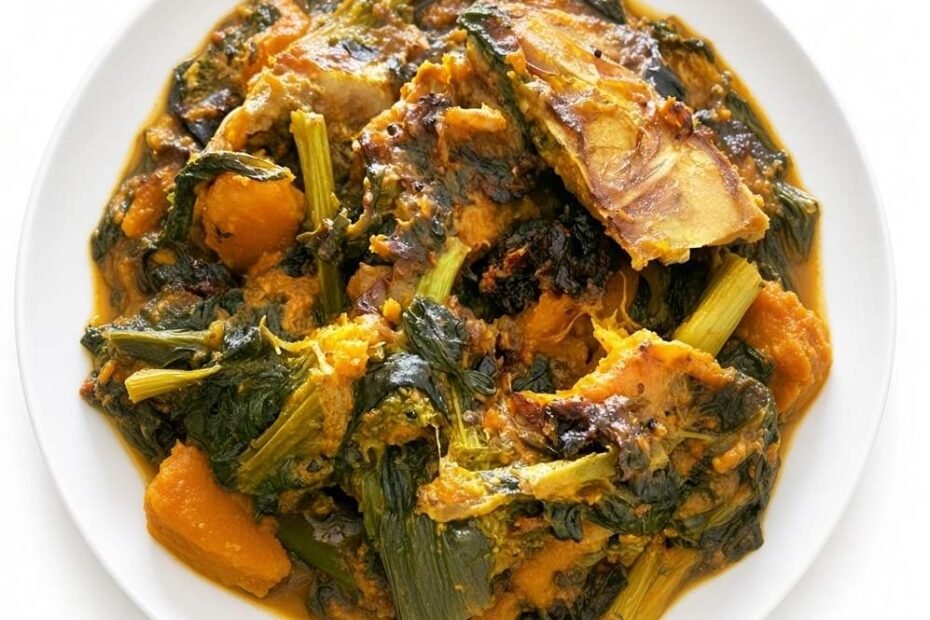
Recipe 4: Pui Shaak Chorchori with Fish Head
This is one of those dishes that reminds me of the older East Bengali style of cooking, where vegetables and fish could happily share the same pot.
Pui shaak — Malabar spinach — has a slippery, rich texture when cooked.
The fish head gives the dish depth.
It is a very Bengali idea:
Nothing should go to waste.
Ingredients
- 2 bunches pui shaak
- 1 small fish head, preferably from rohu or another firm freshwater fish
- 1 small potato
- A handful of pumpkin pieces
- 1 small eggplant
- 1–2 green chillies
- 1 teaspoon panch phoron
- 1–2 tablespoons mustard oil
- Turmeric
- Salt
Method
Wash and chop the pui shaak, keeping the tender stems.
Rub the fish head with salt and turmeric.
Heat mustard oil and fry the fish head until browned. Remove it.
In the same pan, add panch phoron.
Add potato, pumpkin and eggplant.
Cook for a few minutes.
Add the chopped pui shaak, salt, turmeric and green chilli.
Cover and let the vegetables cook in their own moisture.
When they begin to soften, return the fish head.
Break it gently into the vegetables, but do not completely mash it.
Cook until everything comes together.
Eat with plain rice.
My daughters prefer the potato.
I prefer the fish head.
My mother would have preferred that we ate both.
Ilish Is a Season, Not Just a Fish
There are some foods that are ingredients.
And then there are foods that become events.
Ilish belongs to the second category.
When hilsa arrives in the market, Bengali families start discussing it.
Is it from the Padma?
Is it good this year?
Is it too expensive?
How big is it?
How oily is it?
My husband once came home carrying a hilsa that was so large he looked proud enough to have personally caught it.
He had not.
He had bought it.
But in a Bengali home, buying a good hilsa is a form of achievement.
We cooked it with mustard.
Of course.
Shorshe ilish needs no introduction.
But my grandmother had another lesson.
“Don’t put too much mustard,” she would say.
That surprised me.
Surely more mustard meant more flavour?
“No,” she said. “Then you taste mustard. You don’t taste the fish.”
That sentence stayed with me.
Good Bengali cooking is often about restraint.
Mustard should lift the fish.
It should not bury it.
The Meal Is a Story Told in Courses
When my daughters eat lunch on a Sunday, I sometimes watch the plate before I watch them.
First comes rice.
Then something bitter.
Then vegetables.
Then dal.
Then fish.
Maybe chutney.
Then something sweet.
This order is not universal and Bengali households have their own variations, but the idea of moving through flavours is an important part of traditional Bengali meals.
When I was young, I thought this was simply how everyone ate.
Now I realise how unusual it is.
We don’t simply eat until we are full.
We move through the meal.
The bitter dish wakes us.
The greens settle us.
The dal comforts us.
The fish satisfies us.
The sour chutney refreshes us.
The sweet tells us that lunch is finished.
And then someone says:
“Cha khabe?”
Will you have tea?
Of course we will.
We are Bengali.
What My Grandmother Carried Across the Border
Sometimes I wonder what my grandmother would think of my kitchen today.
There is a refrigerator.
A mixer-grinder.
A microwave.
A gas stove.
A phone lying beside the cutting board.
I write recipes on a laptop.
My daughters sometimes help me take photographs for my blog.
She would probably laugh at all of it.
But I think she would understand.
Because the heart of the kitchen is still the same.
Rice is still washing in a bowl.
Mustard oil is still heating.
Fish is still waiting to be cooked.
Someone is still shouting from the other room:
“Ma, when is lunch ready?”
And I am still saying:
“Five minutes!”
It is never five minutes.
It is twenty.
But that is also tradition.
The Forgotten Recipes Are Usually the Humblest Ones
There is a strange thing happening now.
We are becoming interested in “heritage food.”
Restaurants are bringing back old recipes.
Food writers are searching for lost dishes.
Chefs are talking about forgotten ingredients.
That is wonderful.
But I sometimes think we are looking in the wrong place.
The forgotten recipe may not be something royal.
It may be a handful of leaves.
A mashed vegetable.
A leftover fish head.
A bitter eggplant dish.
A chorchori made from the last vegetables in the kitchen.
Old Bengali food was often clever because it had to be.
Nothing was thrown away easily.
The river gave fish.
The field gave vegetables.
The kitchen had rice.
The cook had imagination.
That was enough.
My Daughters Are My Real Food Blog
Sometimes I worry that my daughters will not cook Bengali food when they grow up.
They are busy.
They have school and friends and phones and their own dreams.
They don’t want to spend an hour cleaning fish.
They don’t want to grind mustard on a stone.
They don’t want to learn which vegetable goes first into a chorchori.
And that’s okay.
I don’t want to force them.
But every once in a while, I call them into the kitchen.
“Come.”
“What?”
“Come here.”
I give one of them a green chilli.
The other gets a handful of coriander.
I tell them to smell the mustard oil.
They complain.
Then they smile.
And I tell them about my grandmother.
I tell them where our family came from.
I tell them that some of the places in those stories are now in another country.
I tell them that once, people travelled with very little.
But somehow recipes survived.
Then my younger daughter asks:
“Ma, can we make that fish again?”
And I know the story is safe for another generation.
Bengal Is More Than Fish and Rice
It is easy to reduce Bengali food to a few famous dishes.
Ilish.
Roshogolla.
Shorshe.
Mishti doi.
Biryani.
Kosha mangsho.
But Bengali food is much bigger than its famous dishes.
It is pui shaak.
It is lau pata.
It is neem begun.
It is chorchori.
It is rice eaten with mashed vegetables.
It is the smell of fried fish in a narrow Kolkata lane.
It is the sound of mustard seeds crackling in hot oil.
It is a fish seller calling out prices.
It is a grandmother saying, “আর একটু নাও” — ar ektu nao, take a little more.
It is the Bengali mother’s eternal question:
“Have you eaten?”
Bhat kheyechis?
Have you had rice?
That question contains more love than many grand declarations.
What I Want My Daughters to Remember
One day my daughters will leave home.
Perhaps one will live in Bengaluru.
Perhaps the other will live in London.
Perhaps both will stay in Kolkata.
Who knows?
They may cook pasta more often than rice.
They may order dinner.
They may become vegetarian.
They may learn foods from ten other countries.
I will be happy for them.
But I hope that somewhere in their memory, there remains the smell of mustard oil.
I hope they remember how hot rice feels when it first comes out of the pot.
I hope they remember their grandmother’s stories, even if they were not old enough to understand them.
I hope they remember the difference between rui and ilish.
I hope they remember that fish has bones and that you must eat carefully.
I hope they remember panch phoron popping in hot oil.
I hope they remember the little bitter beginning of a Bengali meal.
And perhaps, one day, when they have children of their own, one of them will stand in a kitchen somewhere far away from Kolkata.
She will heat mustard oil.
She will hear that first sharp crackle.
And suddenly she will remember me.
That is how food travels.
Not by airplane.
Not by train.
Not across borders.
It travels from one pair of hands to another.
The Last Bowl of Rice
Last Sunday, I cooked lunch for the four of us.
There was rice.
Dal.
A little neem begun.
Pui chorchori.
Fish with a light mustard gravy.
And a small bowl of chutney.
My elder daughter was sitting at the table, scrolling through her phone.
My younger daughter was telling me a long story about something that happened at school.
My husband was asking whether there was more fish.
I shouted from the kitchen:
“Yes, there is. Wait!”
Then I stopped.
For a second, I listened.
Four people talking.
Rice being served.
A spoon hitting a steel bowl.
The ceiling fan turning slowly.
Mustard oil still lingering in the air.
Nothing extraordinary.
Just lunch.
But perhaps that is the extraordinary thing.
A family sitting together around food.
A recipe that travelled across a border.
A grandmother who taught a mother.
A mother teaching her daughters.
A river that continues to flow.
Rice growing in fields.
Mustard flowering somewhere in winter.
Fish moving through dark water.
And a kitchen in Kolkata keeping all these things alive.
People often say Bengal is the land of fish, rice and sweets.
I think they are right.
But for me, Bengal tastes of something more.
It tastes of memory.
It tastes of ma.
It tastes of thakuma.
It tastes of mustard oil on a hot pan.
It tastes of a daughter’s first bite of fish.
It tastes of bhat kheyechis?
Have you eaten?
And when I hear that question, I know exactly what it means.
It means:
Are you well?
Are you home?
Are you being looked after?
Are you loved?
In my family, that is what food has always meant.
And perhaps that is why, after all these years, I still believe that the best Bengali recipe is not written in any cookbook.
It is simply this:
Cook what you have.
Remember where it came from.
Feed the people you love.
And when they ask for a little more, always give it to them.
Bhalo kore kheyo.
Eat well.
That is enough.