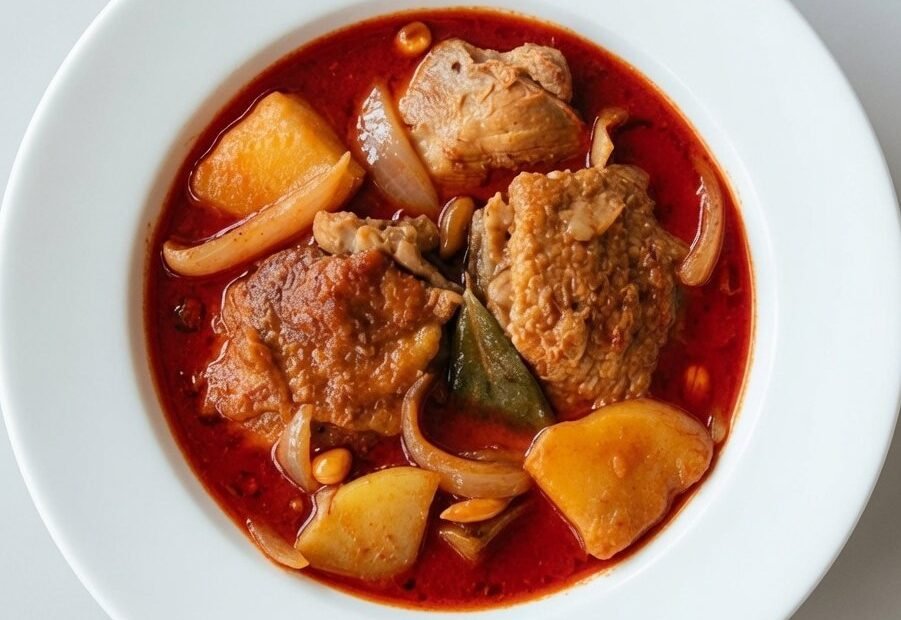
Among the many famous curries of Thailand, Massaman Curry holds a unique place. While Green Curry is known for its vibrant herbal flavors and Red Curry for its rich warmth, Massaman Curry offers something entirely different. It is gentle rather than fiery, rich rather than sharp, and deeply comforting in a way that feels almost universal.
A steaming bowl of Massaman Curry tells a story of cultures meeting through food. Tender beef slowly cooked until it practically melts, creamy coconut milk, soft potatoes, roasted peanuts, and fragrant spices such as cardamom, cinnamon, cloves, and cumin come together to create one of the most beloved dishes in Thai cuisine.
The first spoonful often surprises people. Many expect intense heat because it is a Thai curry. Instead, they discover layers of sweetness, nuttiness, gentle spice, and savory richness. It is a curry that invites you to slow down and enjoy every bite.
Served over fragrant jasmine rice, Massaman Curry is more than a meal. It is a reflection of Thailand’s long history as a crossroads of trade, culture, and culinary traditions.
What Is Massaman Curry?
Massaman Curry is a Thai curry traditionally made with beef, coconut milk, potatoes, onions, peanuts, and a spice-rich curry paste. Unlike many Thai curries that rely heavily on fresh herbs and chilies, Massaman Curry incorporates dried spices that are more commonly associated with South Asian and Middle Eastern cuisines.
The result is a dish that feels both distinctly Thai and surprisingly familiar to people from many parts of the world.
The curry is known for its rich, thick sauce and mild heat level. Instead of focusing on spiciness, it emphasizes depth, sweetness, warmth, and complexity.
The tender meat, creamy potatoes, and crunchy peanuts create a satisfying combination of textures that make every spoonful enjoyable.
The Fascinating History of Massaman Curry
To truly appreciate Massaman Curry, it helps to understand its remarkable history.
Unlike some traditional Thai dishes that developed entirely within the country, Massaman Curry reflects centuries of cultural exchange.
Historians generally believe the dish was influenced by Muslim traders and merchants who traveled through Southeast Asia. These traders brought spices such as cardamom, cinnamon, cloves, nutmeg, and cumin, ingredients that were not traditionally central to Thai cooking.
Thailand was an important trading center, connecting merchants from India, Persia, the Middle East, and beyond. As cultures interacted, culinary traditions blended.
The word “Massaman” is widely believed to have connections to the word “Muslim.” While the exact origins remain debated, most food historians agree that the curry reflects strong influences from Muslim cooking traditions.
Over time, Thai cooks adapted these imported spices to local ingredients and tastes. Coconut milk, peanuts, fish sauce, and Thai curry techniques were incorporated into the dish.
The result was something entirely new.
Massaman Curry became particularly popular in central Thailand and eventually found its way into royal kitchens. Historical records and traditional Thai literature mention versions of the dish, highlighting its importance within Thai culinary culture.
What makes Massaman Curry special is that it demonstrates how food evolves. Rather than belonging to a single culture, it represents the exchange of ideas, ingredients, and traditions across regions and generations.
Today, it remains one of Thailand’s most celebrated dishes and is enjoyed by people around the world.
Why People Love Massaman Curry
Massaman Curry appeals to a wide audience because it offers a different experience from many other Thai dishes.
Its flavor is rich without being overwhelming.
The coconut milk provides creaminess.
The spices create warmth.
The peanuts add nuttiness.
The potatoes contribute comfort and substance.
The beef becomes incredibly tender during slow cooking.
For people new to Thai cuisine, Massaman Curry often serves as an excellent introduction because it is generally milder than Green Curry or Red Curry.
For experienced food lovers, it offers complexity and depth that reward careful attention.
The Ingredients That Make It Unique
Several ingredients define the character of Massaman Curry.
Beef is the traditional choice because it becomes wonderfully tender during the long cooking process.
Potatoes absorb the curry sauce and become soft and flavorful.
Peanuts provide texture and a rich nutty taste.
Coconut milk creates the luxurious body of the sauce.
Cardamom, cinnamon, cloves, cumin, and coriander contribute warm spice notes that distinguish Massaman Curry from other Thai curries.
Together, these ingredients create a curry unlike any other.
Ingredients
For the curry:
- 800 grams beef chuck or stewing beef, cut into cubes
- 2 tablespoons Massaman curry paste
- 2 cups coconut milk
- 2 cups beef stock
- 3 medium potatoes, peeled and cut into chunks
- 1 large onion, cut into wedges
- ½ cup roasted peanuts
- 2 tablespoons fish sauce
- 2 tablespoons palm sugar or brown sugar
- 1 tablespoon tamarind paste
Whole spices:
- 4 cardamom pods
- 1 small cinnamon stick
- 3 cloves
- 1 star anise (optional)
For serving:
- Steamed jasmine rice
Preparation Time and Cooking Time
Preparation Time: 25 minutes
Cooking Time: 2 hours 15 minutes
Total Time: 2 hours 40 minutes
Servings: 6
Step-by-Step Massaman Curry Recipe
Prepare the Ingredients
Cut the beef into large bite-sized cubes.
Peel and chop the potatoes.
Cut the onion into wedges.
Measure all ingredients before cooking begins.
Massaman Curry cooks slowly, but proper preparation makes the process easier.
Cook the Curry Paste
Place a large pot over medium heat.
Add about half a cup of coconut milk.
When it begins to warm, stir in the Massaman curry paste.
Cook gently for several minutes.
The aroma will become richer as the paste releases its oils and spices.
Brown the Beef
Add the beef cubes.
Stir until the pieces become coated in the curry mixture.
Cook for several minutes until the surface of the beef develops some color.
This step adds depth to the finished curry.
Build the Curry Base
Pour in the remaining coconut milk and beef stock.
Add the cardamom pods, cinnamon stick, cloves, and star anise if using.
Stir gently.
Bring the mixture to a gentle simmer.
Slow Cook the Beef
Reduce the heat to low.
Cover partially and allow the curry to simmer slowly for about ninety minutes.
During this time, the beef becomes increasingly tender.
The sauce also develops greater depth and complexity.
Add Potatoes and Onion
Add the potatoes and onion wedges.
Continue simmering for another thirty to forty minutes.
The potatoes should become tender but not fall apart completely.
Add the Final Seasonings
Stir in the fish sauce, sugar, tamarind paste, and roasted peanuts.
Allow everything to cook together for another ten minutes.
Taste carefully.
The curry should have a balance of sweet, savory, nutty, and mildly spicy flavors.
Serve
Remove the whole spices if desired.
Spoon the curry into serving bowls.
Serve hot with jasmine rice.
The rice absorbs the rich sauce beautifully and completes the meal.
Understanding the Flavor Profile
Massaman Curry is often described as sweet, savory, and nutty, but those words only tell part of the story.
The cardamom contributes floral warmth.
The cinnamon adds sweetness.
The cloves bring depth.
The coconut milk creates richness.
The tamarind provides gentle acidity.
The peanuts add roasted complexity.
As these flavors combine, the curry develops a remarkable balance that feels comforting and sophisticated at the same time.
This complexity is one reason why Massaman Curry continues to be admired by chefs and home cooks alike.
Why Slow Cooking Matters
One of the secrets to great Massaman Curry is patience.
Unlike quick stir-fries, this dish improves with time.
Slow cooking allows the beef to become tender and juicy.
It gives the spices an opportunity to infuse the sauce fully.
The potatoes absorb the flavors of the curry while maintaining their texture.
The result is a dish where every ingredient tastes connected to the others.
Many cooks even believe Massaman Curry tastes better the next day because the flavors continue developing as the curry rests.
The Role of Coconut Milk
Coconut milk is the foundation of the curry’s luxurious texture.
Without it, the spices would feel much sharper.
The coconut milk softens and balances the stronger flavors while adding natural sweetness.
As it simmers, it becomes infused with the spices, creating a smooth and velvety sauce.
The richness of coconut milk is one reason Massaman Curry feels so comforting.
Why Peanuts Are Essential
Peanuts are more than a garnish in Massaman Curry.
They contribute an important layer of flavor and texture.
Their roasted nuttiness complements the warm spices beautifully.
As they simmer in the sauce, some remain slightly crunchy while others soften and blend into the curry.
This creates additional complexity in every bite.
Nutrition Information
Approximate values per serving:
| Nutrient | Amount |
|---|---|
| Calories | 650-750 |
| Protein | 35g |
| Carbohydrates | 30g |
| Fat | 42g |
| Fiber | 5g |
| Sodium | 900mg |
Values may vary depending on ingredients and serving size.
The beef provides protein, iron, and essential nutrients.
Potatoes contribute carbohydrates and fiber.
Peanuts offer healthy fats and additional protein.
Coconut milk adds richness while supplying beneficial plant-based fats.
Tips for Home Cooks
Choose a beef cut suitable for slow cooking. Tougher cuts become incredibly tender during the long simmer.
Do not rush the cooking process. Time is one of the most important ingredients in Massaman Curry.
Use full-fat coconut milk for the richest flavor and texture.
Taste throughout the cooking process and adjust seasoning gradually.
Allow the curry to simmer gently rather than boiling aggressively.
Freshly roasted peanuts provide better flavor than stale or heavily salted varieties.
If the curry becomes too thick, add a small amount of stock.
If it seems too thin, continue simmering uncovered until the desired consistency develops.
Many home cooks find that the curry tastes even better after resting overnight in the refrigerator.
Serving Suggestions
Massaman Curry is traditionally served with steamed jasmine rice.
The rice helps balance the richness of the sauce and absorbs its flavors beautifully.
Fresh cucumber slices can provide a refreshing contrast.
A simple Thai salad also pairs well with the curry.
Because Massaman Curry is rich and filling, lighter side dishes often work best.
For family meals, it frequently serves as the centerpiece of the table.
Final Thoughts
Massaman Curry is one of the most fascinating dishes in Thai cuisine. Its combination of tender beef, creamy coconut milk, roasted peanuts, soft potatoes, and aromatic spices creates a meal that feels both exotic and familiar.
Its history tells a story of cultural exchange and culinary creativity. Influences from distant regions blended with Thai ingredients and techniques to create something unique and enduring.
Every bowl offers warmth, comfort, and complexity. The sweetness of coconut milk, the richness of beef, the nuttiness of peanuts, and the fragrance of cardamom work together in perfect harmony.
Whether you are exploring Thai food for the first time or have enjoyed it for years, Massaman Curry deserves a place on your table. It is a dish that rewards patience, celebrates tradition, and reminds us that some of the world’s greatest foods are born when cultures meet and share their flavors.
A well-made Massaman Curry is more than just dinner. It is history, comfort, and craftsmanship served in a single bowl.