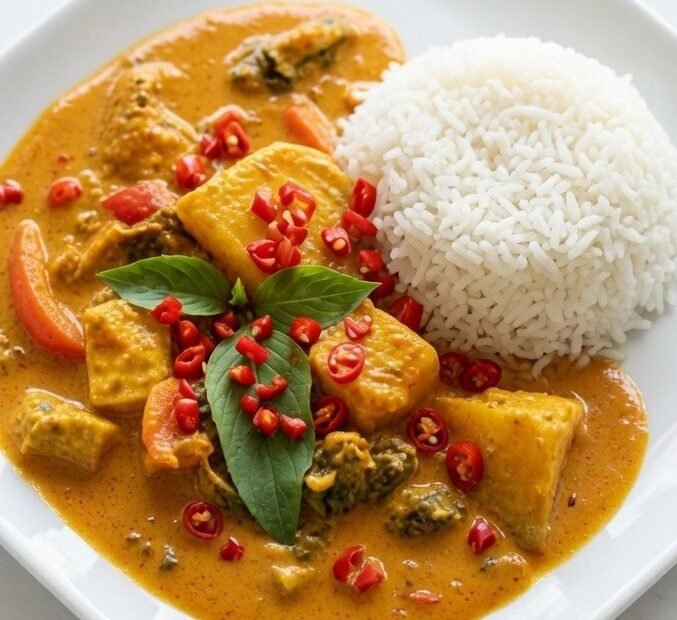
Few Thai dishes are as rich, comforting, and satisfying as Panang Curry. While many people are familiar with Thai Green Curry or Red Curry, Panang Curry offers a completely different experience. It is thicker, creamier, slightly sweeter, and wonderfully fragrant. The curry wraps itself around every piece of chicken like a silky sauce, creating a dish that feels both luxurious and comforting.
The first time many people taste Panang Curry, they notice its unique texture. Unlike some Thai curries that have a broth-like consistency, Panang Curry is rich and concentrated. Coconut milk creates a velvety base, while peanuts add a gentle nuttiness that makes the curry incredibly satisfying. Fresh kaffir lime leaves bring a bright citrus aroma that cuts through the richness and gives the dish its distinctive personality.
Served over steaming jasmine rice, Panang Curry is the kind of meal that encourages people to slow down and enjoy every bite. It is warm, flavorful, and deeply comforting without being overwhelmingly spicy. For many Thai food lovers, it is one of the most approachable and enjoyable curries in the entire cuisine.
Whether enjoyed at a street-side restaurant in Thailand or prepared in a home kitchen thousands of miles away, Panang Curry remains one of the most beloved dishes in Thai cooking.
What Is Panang Curry?
Panang Curry is a Thai curry made with Panang curry paste, coconut milk, chicken, peanuts, and kaffir lime leaves. It belongs to the family of red curries but has several characteristics that make it unique.
The curry is generally thicker than traditional Red Curry because it uses less liquid and more coconut milk. This creates a rich sauce that clings beautifully to the chicken.
Panang Curry is also known for its subtle peanut flavor. Ground peanuts or peanut-rich curry paste contribute a gentle nuttiness that complements the creamy coconut milk.
The addition of kaffir lime leaves provides a refreshing citrus aroma that balances the richness of the sauce.
The result is a curry that feels elegant, comforting, and full of character.
The Origins of Panang Curry
Like many traditional dishes, the exact origins of Panang Curry are debated among food historians. Some believe the dish may have connections to cultural exchanges between Thailand and neighboring regions through trade and migration.
Over time, Thai cooks adapted ingredients and techniques to create a curry that reflected local tastes and traditions.
Today, Panang Curry is considered one of Thailand’s classic curry dishes. It appears on restaurant menus throughout the country and is enjoyed by people from all walks of life.
Although recipes vary slightly between regions and families, the essential combination of coconut milk, curry paste, peanuts, and kaffir lime remains at the heart of the dish.
What makes Panang Curry particularly special is its ability to showcase the balance that defines Thai cuisine. Richness, sweetness, spice, and fragrance come together in harmony without any single element dominating the others.
Why Panang Curry Is So Popular
Many people who are new to Thai food find Panang Curry especially appealing.
Unlike some curries that deliver intense heat, Panang Curry focuses more on richness and complexity. It still contains chili, but the spice is often gentler and more approachable.
The creamy coconut milk softens the heat and creates a smooth texture that many people love.
The peanuts contribute a subtle roasted flavor.
The kaffir lime leaves add freshness.
The chicken provides tenderness and substance.
Together, these ingredients create a dish that feels comforting yet exciting.
It is the kind of meal that satisfies both adventurous eaters and those seeking familiar comfort food.
The Ingredients That Define Panang Curry
Every ingredient in Panang Curry plays an important role.
Coconut milk forms the foundation of the sauce. It provides richness and natural sweetness.
Panang curry paste contributes spice, depth, and color.
Chicken absorbs the flavors of the curry while remaining tender.
Peanuts add nuttiness and texture.
Fish sauce contributes savory depth.
Palm sugar balances the spice with gentle sweetness.
Kaffir lime leaves provide the signature citrus fragrance that distinguishes Panang Curry from many other curries.
These ingredients work together to create a dish that is both simple and remarkably complex.
Ingredients
For the curry:
- 500 grams boneless chicken thighs, sliced
- 3 tablespoons Panang curry paste
- 2 cups coconut milk
- 2 tablespoons finely ground roasted peanuts
- 1 tablespoon fish sauce
- 1 tablespoon palm sugar or brown sugar
- 4 kaffir lime leaves, thinly sliced
- 1 red chili, thinly sliced for garnish
For serving:
- Steamed jasmine rice
Optional vegetables:
- Sliced bell peppers
- Green beans
- Baby corn
Preparation Time and Cooking Time
Preparation Time: 15 minutes
Cooking Time: 30 minutes
Total Time: 45 minutes
Servings: 4
Step-by-Step Panang Curry Recipe
Prepare the Ingredients
Slice the chicken into bite-sized pieces.
Finely slice the kaffir lime leaves.
Measure the coconut milk, peanuts, fish sauce, and sugar.
Having all ingredients ready before cooking makes the process smooth and enjoyable.
Cook the Curry Paste
Place a wok or large pan over medium heat.
Add about half a cup of coconut milk.
Allow it to warm gently.
Add the Panang curry paste and stir continuously.
Cook for several minutes until the mixture becomes fragrant.
This step develops the flavor foundation of the curry.
As the paste cooks, the aromas become richer and more complex.
Add the Chicken
Add the sliced chicken.
Stir well so every piece becomes coated in the curry mixture.
Cook for several minutes until the chicken begins to lose its raw appearance.
The chicken will continue cooking in the sauce later.
Build the Curry Sauce
Pour in the remaining coconut milk.
Stir gently until everything combines into a smooth sauce.
Reduce the heat slightly and allow the curry to simmer.
The sauce should become creamy and luxurious.
Add the Peanuts
Stir in the ground roasted peanuts.
This is one of the defining moments of the recipe.
The peanuts add body, texture, and the signature nutty flavor that makes Panang Curry unique.
Allow the curry to simmer gently so the flavors can blend.
Season the Curry
Add the fish sauce and palm sugar.
Taste carefully.
The curry should be creamy, mildly spicy, slightly sweet, and deeply savory.
Adjust seasoning if necessary.
Add the Kaffir Lime Leaves
Stir in most of the sliced kaffir lime leaves.
Reserve a small amount for garnish.
Allow them to cook for a minute or two.
Their fragrance will immediately brighten the entire dish.
Serve
Spoon the curry into serving bowls.
Garnish with the remaining kaffir lime leaves and sliced red chili.
Serve hot alongside jasmine rice.
The rice absorbs the rich sauce and completes the meal perfectly.
Understanding the Flavor Profile
One reason Panang Curry is so memorable is its extraordinary balance.
The coconut milk creates richness.
The curry paste provides warmth and spice.
The peanuts contribute nuttiness.
The fish sauce adds savory depth.
The sugar introduces gentle sweetness.
The kaffir lime leaves provide freshness and fragrance.
No single ingredient dominates the others.
Instead, they blend together into a harmonious flavor experience.
This balance is one of the defining characteristics of Thai cuisine.
Why Kaffir Lime Leaves Matter
Many home cooks wonder whether kaffir lime leaves are truly necessary.
The answer is yes.
Their aroma is difficult to replace with any other ingredient.
When sliced thinly and added to the curry, they release citrus oils that brighten the rich coconut sauce.
Without them, the curry may still taste good, but it loses part of its authentic character.
The contrast between rich coconut milk and fresh citrus fragrance is one of the secrets behind Panang Curry’s popularity.
The Role of Peanuts
Peanuts are often overlooked, yet they play a crucial role in Panang Curry.
They contribute more than flavor.
They also influence texture.
The ground peanuts help thicken the sauce and create the rich consistency associated with the dish.
Their roasted flavor complements both the coconut milk and the spices.
Together, they create a curry that feels more substantial and satisfying than many thinner curries.
Why Coconut Milk Is Essential
Coconut milk is the heart of Panang Curry.
Its natural sweetness balances the spices.
Its richness creates the creamy texture that defines the dish.
As the curry simmers, the coconut milk absorbs flavors from every ingredient and transforms into a luxurious sauce.
Using high-quality coconut milk often makes a noticeable difference in the final result.
The richer the coconut milk, the smoother and more flavorful the curry becomes.
Nutrition Information
Approximate values per serving:
| Nutrient | Amount |
|---|---|
| Calories | 500-600 |
| Protein | 28g |
| Carbohydrates | 12g |
| Fat | 38g |
| Fiber | 3g |
| Sodium | 850mg |
Values may vary depending on ingredients and serving size.
Chicken provides high-quality protein.
Peanuts contribute healthy fats and additional protein.
Coconut milk supplies beneficial plant-based fats while creating satiety.
When served with rice, Panang Curry becomes a complete and satisfying meal.
Tips for Home Cooks
Use full-fat coconut milk whenever possible. It produces a richer and more authentic sauce.
Cook the curry paste thoroughly before adding the chicken. This develops deeper flavor.
Avoid boiling the curry aggressively. Gentle simmering helps maintain a smooth texture.
Chicken thighs generally remain juicier than chicken breast.
Fresh kaffir lime leaves provide significantly better flavor than dried alternatives.
Taste as you cook. Small adjustments to fish sauce or sugar can dramatically improve balance.
Do not skip the peanuts. They are essential to the character of Panang Curry.
Allow the curry to rest for a few minutes before serving. The flavors continue to develop as it sits.
If you enjoy vegetables, bell peppers and green beans work particularly well in this curry.
Serving Suggestions
Panang Curry is traditionally served with jasmine rice.
The rice absorbs the rich sauce and balances the intensity of the flavors.
Fresh cucumber slices can provide a refreshing contrast.
Light vegetable dishes also pair well with the curry.
For family dinners, Panang Curry often serves as the centerpiece of the meal.
Its rich flavor and comforting texture make it a crowd-pleaser that appeals to many different tastes.
Panang Curry Compared to Other Thai Curries
People often ask how Panang Curry differs from Green Curry or Red Curry.
Green Curry tends to be more herbal and often spicier.
Red Curry is usually lighter and more broth-like.
Massaman Curry includes warm spices such as cardamom and cinnamon.
Panang Curry stands apart because of its thick texture, peanut flavor, and strong kaffir lime aroma.
It occupies a unique place within Thai cuisine and offers an experience unlike any other curry.
Final Thoughts
Panang Curry is one of Thailand’s most comforting and satisfying dishes. Its combination of creamy coconut milk, tender chicken, roasted peanuts, fragrant kaffir lime leaves, and flavorful curry paste creates a meal that feels both luxurious and approachable.
Every spoonful delivers a balance of richness, sweetness, spice, and citrus freshness. The thick sauce coats the chicken beautifully, while the peanuts and coconut milk provide depth and warmth.
For home cooks, Panang Curry is an excellent introduction to Thai curries because it is relatively simple to prepare while delivering restaurant-quality flavor.
Whether enjoyed on a quiet evening at home or served as part of a larger Thai-inspired feast, Panang Curry remains a dish that captures the essence of Thai cooking: balance, harmony, and incredible flavor.
Once you experience its creamy texture, nutty richness, and fragrant aroma, it becomes easy to understand why Panang Curry continues to be one of Thailand’s most treasured culinary creations.