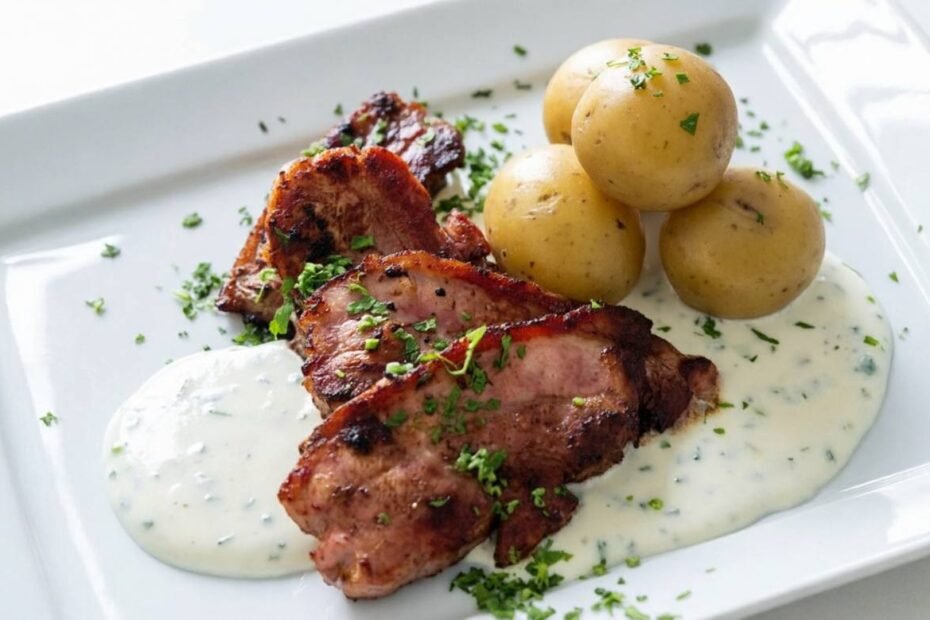
I arrived in Denmark with a backpack, a chef’s knife wrapped carefully in my luggage, and a long list of foods I wanted to taste. As a young American chef traveling through Europe, I had heard plenty about Danish pastries, open-faced sandwiches, and modern Nordic restaurants. What I did not expect was to fall in love with a simple plate of crispy pork belly, boiled potatoes, and parsley sauce.
The dish was called Stegt Flæsk med Persillesovs.
Locals spoke about it with pride. Some called it comfort food. Others described it as the taste of childhood. Many simply referred to it as Denmark’s national dish.
The first time I saw it, I wondered how something so simple could earn such an important title. Then I took a bite.
The pork was crispy and salty. The potatoes were soft and comforting. The parsley sauce was creamy, fresh, and rich without being heavy. Together they created a meal that felt honest and satisfying.
As I continued my journey through Denmark, I discovered that Stegt Flæsk med Persillesovs tells a story about Danish food culture. It is not about complicated techniques or expensive ingredients. It is about making everyday ingredients taste extraordinary.
What Is Stegt Flæsk med Persillesovs?
The name may look difficult to pronounce, but the dish itself is wonderfully straightforward.
“Stegt flæsk” means fried or roasted pork belly.
“Persillesovs” means parsley sauce.
The meal consists of crispy slices of pork belly served alongside boiled potatoes and a creamy white sauce filled with fresh parsley.
For generations, Danish families have enjoyed this dish at home and in traditional restaurants. It remains one of the country’s most beloved meals because it is hearty, filling, and deeply comforting.
The pork provides crunch and richness. The potatoes offer a soft, earthy balance. The parsley sauce ties everything together with freshness and creaminess.
It is the kind of meal that makes you want to slow down and enjoy every bite.
My First Experience Eating It
I found my first plate of Stegt Flæsk med Persillesovs in a small restaurant tucked away on a quiet Danish street.
The dining room was warm and welcoming. Wooden tables filled the room, and locals chatted over large plates of food.
When my meal arrived, the pork belly was stacked high beside a pile of potatoes. A generous serving of parsley sauce covered part of the plate.
The aroma was incredible.
The pork crackled as I cut into it. The potatoes steamed gently. The parsley sauce smelled fresh and buttery.
One bite explained why Danes love this dish so much.
The crispy edges of the pork gave way to tender meat underneath. The potatoes softened the richness. The sauce added freshness and creaminess.
As a chef, I admired how perfectly balanced the meal was despite using only a handful of ingredients.
Why This Dish Became Denmark’s National Favorite
Many traditional foods disappear over time, but Stegt Flæsk med Persillesovs has remained popular.
One reason is accessibility. The ingredients are simple and affordable.
Another reason is satisfaction. This is food designed to nourish people through long days and cold weather.
The dish also reflects Danish cooking values. Danish cuisine often celebrates quality ingredients instead of complicated preparations.
The potatoes are not hidden beneath layers of seasoning.
The parsley sauce is not overloaded with spices.
The pork is allowed to shine through careful cooking.
Everything on the plate has a purpose.
Ingredients
For the pork belly:
- 1.5 kilograms pork belly slices
- Salt
- Black pepper
For the potatoes:
- 1 kilogram potatoes
- Water
- Salt
For the parsley sauce:
- 3 tablespoons butter
- 3 tablespoons flour
- 500 ml milk
- 1 bunch fresh parsley, finely chopped
- Salt
- White pepper
Preparation Time and Cooking Time
Preparation Time: 20 minutes
Cooking Time: 60 to 75 minutes
Total Time: About 1 hour 35 minutes
Serves: 4 to 6 people
Difficulty Level: Moderate
Step One: Preparing the Pork Belly
The success of this dish depends largely on the pork.
Start by patting the pork belly slices dry with paper towels.
Season both sides generously with salt and black pepper.
Place the slices on a baking rack positioned over a tray. The rack allows hot air to circulate around the meat, helping it become evenly crisp.
Leave a little space between each slice.
This small detail makes a big difference.
Step Two: Roasting Until Crispy
Heat the oven to 200°C.
Place the tray in the oven and roast the pork belly until the fat begins to render and the surface turns golden.
As the pork cooks, the kitchen fills with an irresistible aroma.
The fat slowly melts while the outer layer develops a deep crunch.
Depending on thickness, this process may take about an hour.
Some cooks prefer frying the pork in a pan, but many Danish households now roast it because it creates even crispiness with less mess.
Turn the slices once during cooking for the best texture.
When ready, the pork should be beautifully golden and crisp.
Step Three: Boiling the Potatoes
While the pork cooks, prepare the potatoes.
Wash them thoroughly and place them in a large pot.
Cover with water and add a little salt.
Bring everything to a gentle boil.
Cook until the potatoes are tender enough for a knife to slide through easily.
Drain the water and keep the potatoes warm.
Their simple flavor helps balance the richness of the pork.
Step Four: Making the Parsley Sauce
The parsley sauce may seem like a supporting ingredient, but it is essential.
Melt butter in a saucepan over medium heat.
Add flour and stir continuously.
Cook for a minute or two without allowing the mixture to brown.
Slowly pour in the milk while whisking constantly.
The sauce gradually becomes smooth and creamy.
Continue stirring until it thickens.
Season lightly with salt and white pepper.
Add the chopped parsley and stir gently.
Immediately the sauce transforms into something vibrant and fresh.
The bright green parsley creates a beautiful contrast against the creamy base.
Step Five: Bringing Everything Together
Arrange the boiled potatoes on serving plates.
Place several slices of crispy pork belly beside them.
Generously spoon parsley sauce over the potatoes.
Serve additional sauce on the side.
The contrast of textures is what makes the dish memorable.
Crunchy pork.
Creamy sauce.
Soft potatoes.
Every component supports the others.
Secrets Behind Great Stegt Flæsk
As I watched Danish cooks prepare this meal, I noticed several common habits.
The first was patience.
Nobody rushed the pork.
Good crispiness takes time.
The second was seasoning.
Because the dish contains relatively few ingredients, proper seasoning matters greatly.
The third was freshness.
Fresh parsley creates a brighter, cleaner flavor than dried parsley.
These small details separate a good plate from a truly memorable one.
Life Around the Danish Dinner Table
One thing I noticed during my travels was how much Danes value shared meals.
Stegt Flæsk med Persillesovs often appears during family gatherings and relaxed weekend dinners.
People sit together for long conversations while passing bowls of potatoes and extra sauce around the table.
The meal encourages slowing down and enjoying company.
As someone constantly moving from city to city with a backpack, I appreciated these moments.
They reminded me that food is often about connection as much as flavor.
Other Dishes I Ate in Denmark
My journey through Denmark introduced me to many wonderful foods beyond Stegt Flæsk med Persillesovs.
Smørrebrød
This was one of the first Danish foods I tried.
The open-faced rye bread sandwiches came topped with pickled herring, shrimp, roast beef, eggs, and herbs.
Each one looked like a small piece of edible art.
The rye bread was dense and flavorful, providing a perfect foundation for the toppings.
Frikadeller
These Danish meatballs quickly became one of my favorite comfort foods.
They were juicy, lightly seasoned, and often served with potatoes and gravy.
The texture was softer than many American meatballs, making them incredibly satisfying.
Flæskesteg
This roasted pork dish featured crispy crackling and tender meat.
The crackling shattered with every bite.
Served with potatoes and rich gravy, it showcased the Danish talent for cooking pork exceptionally well.
Leverpostej
I was initially hesitant to try liver pâté.
After tasting it on warm rye bread, I understood why locals enjoy it so much.
It had a smooth texture and deep savory flavor that paired beautifully with pickles and onions.
Æbleskiver
These round Danish treats reminded me of doughnut holes.
Light, fluffy, and dusted with powdered sugar, they were impossible to stop eating.
Many cafés served them alongside coffee, making them a perfect afternoon snack.
Rødgrød med Fløde
This traditional dessert combined berries and cream.
It was sweet, refreshing, and very different from desserts I grew up eating in America.
The bright berry flavor made it a wonderful ending to a meal.
What Makes Danish Food Special
Before arriving in Denmark, I expected elaborate Nordic cuisine with unusual ingredients and artistic presentations.
I certainly found some of that.
What surprised me most, however, was how much Danes cherish simple traditional dishes.
Meals like Stegt Flæsk med Persillesovs prove that great food does not need dozens of ingredients.
It needs balance.
It needs care.
It needs respect for the ingredients.
As a chef, I found this philosophy inspiring.
The dish taught me that comfort food can be every bit as meaningful as fine dining.
A perfectly crisp slice of pork belly, a spoonful of parsley sauce, and a few boiled potatoes can tell a story about a country just as effectively as the most elaborate tasting menu.
During my travels across Denmark, I tasted many memorable dishes, but Stegt Flæsk med Persillesovs remained the meal I kept thinking about. It captured everything I loved about Danish cooking—honest ingredients, careful preparation, and flavors that feel both simple and unforgettable. Every plate offered a taste of tradition, hospitality, and the everyday pleasures that make food worth traveling for.