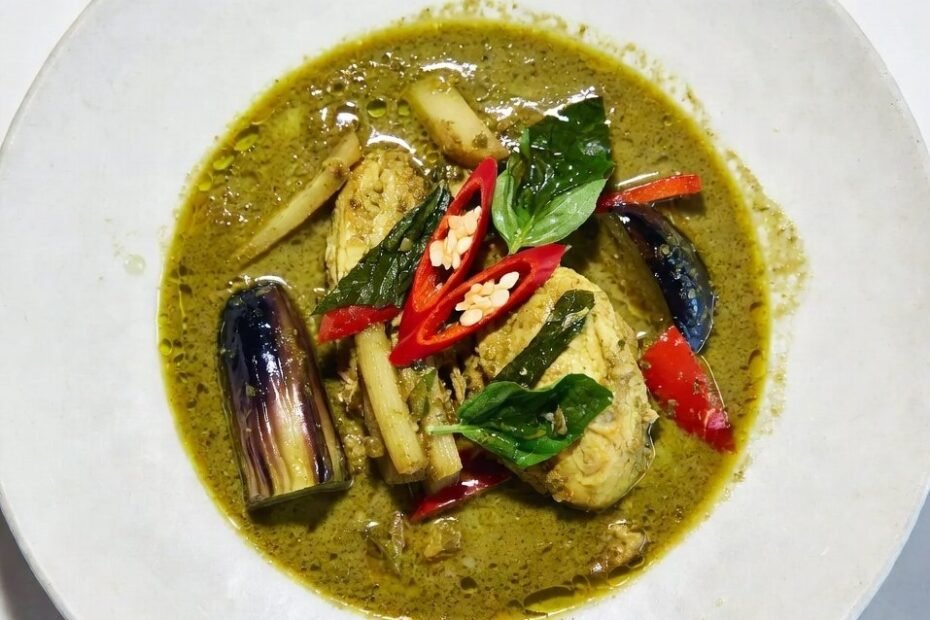
Among Thailand’s many famous dishes, Green Curry stands out as one of the most flavorful and memorable. Known in Thailand as Gaeng Keow Wan, this rich and aromatic curry combines green chilies, coconut milk, chicken, eggplant, and fragrant herbs into a meal that is both comforting and exciting.
The first thing most people notice about Green Curry is its beautiful color. The bright green shade comes from fresh green chilies blended into the curry paste. Then comes the aroma. As the curry simmers, the scent of coconut milk, herbs, spices, and chilies fills the kitchen, creating anticipation long before the first bite.
Unlike some curries that focus mainly on heat, Thai Green Curry is all about balance. It can be spicy, but it is also creamy, slightly sweet, savory, and fragrant. Every spoonful delivers layers of flavor that make the dish one of Thailand’s most beloved culinary treasures.
Served with steamed rice, Green Curry transforms simple ingredients into a meal that feels special enough for guests yet comforting enough for a family dinner. While restaurant versions are popular worldwide, making it at home allows you to experience its freshness and authenticity in a way that is hard to match.
What Is Green Curry?
Green Curry is a traditional Thai curry made with green curry paste, coconut milk, meat or vegetables, and aromatic herbs. Chicken is one of the most common proteins used, though beef, seafood, and tofu versions are also popular.
The curry gets its green color from fresh green chilies, which are blended with ingredients such as garlic, shallots, lemongrass, and herbs to create a flavorful paste.
Once cooked with coconut milk, the paste develops into a rich sauce that coats the chicken and vegetables beautifully.
Small Thai eggplants are traditionally used because they absorb the curry flavors while maintaining their texture. Their mild taste complements the richness of the coconut milk and the spice of the chilies.
Why Green Curry Is So Popular
Green Curry is often considered one of the most balanced dishes in Thai cuisine.
The creamy coconut milk softens the heat from the chilies. The herbs provide freshness. The chicken adds heartiness. The eggplants contribute texture.
Each ingredient has a purpose, and together they create a dish that feels complete.
Many people are surprised by how complex the flavor is. At first, you notice the richness of the coconut milk. Then come the herbal notes, followed by gentle sweetness and a warming chili heat that lingers pleasantly.
This balance is one of the reasons Green Curry has become a favorite far beyond Thailand.
The Ingredients That Make It Special
The heart of Green Curry is the curry paste.
Fresh green chilies provide heat and color. Garlic and shallots add depth. Lemongrass contributes citrus notes. Herbs add freshness and fragrance.
Coconut milk is equally important. It creates the silky texture that makes the curry so satisfying.
Chicken absorbs the flavors of the sauce while remaining tender and juicy.
Eggplant acts like a sponge, soaking up the curry while providing a pleasant bite.
Fresh basil added near the end gives the curry its final burst of aroma.
Ingredients
For the curry:
- 500 grams boneless chicken thighs or chicken breast, sliced
- 2 cups coconut milk
- 3 tablespoons green curry paste
- 6 small Thai eggplants, quartered
- 1 tablespoon fish sauce
- 1 teaspoon palm sugar or brown sugar
- 1 cup chicken stock or water
- 1 handful Thai basil leaves
- 2 kaffir lime leaves, torn
- 1 red chili, sliced for garnish
For serving:
- Steamed jasmine rice
Preparation Time and Cooking Time
Preparation Time: 20 minutes
Cooking Time: 30 minutes
Total Time: 50 minutes
Servings: 4
Step-by-Step Green Curry Recipe
Prepare the Ingredients
Wash and cut the eggplants into quarters.
Slice the chicken into bite-sized pieces.
Tear the kaffir lime leaves into several pieces.
Wash the basil leaves and set them aside.
Having everything prepared before cooking makes the process smooth and enjoyable.
Cook the Curry Paste
Place a large pan or wok over medium heat.
Add about half a cup of coconut milk and allow it to warm gently.
Add the green curry paste and stir continuously.
Cook for several minutes until the paste becomes fragrant and the oils begin to separate slightly from the coconut milk.
This step is important because it unlocks the flavors within the paste.
Add the Chicken
Place the sliced chicken into the pan.
Stir well so every piece becomes coated with the curry mixture.
Cook for several minutes until the chicken begins to turn opaque.
The chicken will continue cooking later, so it does not need to be fully cooked at this stage.
Add Remaining Coconut Milk
Pour in the remaining coconut milk and the chicken stock.
Stir gently and bring the curry to a gentle simmer.
The sauce should begin to look creamy and rich.
Add Eggplant
Add the quartered eggplants.
Allow the curry to simmer slowly for about fifteen minutes.
The eggplants should become tender while still holding their shape.
As they cook, they absorb the flavors of the curry sauce.
Season the Curry
Add the fish sauce and sugar.
Stir gently and taste the curry.
Adjust seasoning according to your preference.
The goal is to achieve a balance of savory, slightly sweet, creamy, and spicy flavors.
Finish with Herbs
Add the kaffir lime leaves and basil leaves.
Allow them to cook for just a minute or two.
The heat releases their fragrance and fills the curry with fresh herbal aromas.
Serve
Spoon the curry into serving bowls.
Garnish with sliced red chili.
Serve hot with steamed jasmine rice.
The rice absorbs the flavorful sauce and completes the meal perfectly.
The Secret Behind Green Curry’s Flavor
Many people assume Green Curry is simply a spicy dish, but that is only part of the story.
The coconut milk provides richness and natural sweetness.
The curry paste contributes layers of spice and herbs.
Fish sauce adds savory depth.
The basil and kaffir lime leaves bring freshness that keeps the curry from feeling heavy.
These elements work together to create a flavor profile that is complex yet approachable.
This balance is one of the reasons Green Curry remains popular among both experienced Thai food lovers and newcomers.
Why Coconut Milk Is So Important
Without coconut milk, Green Curry would be completely different.
The creamy texture softens the sharpness of the chilies and allows the flavors to blend smoothly.
Coconut milk also helps carry the aromas of the herbs and spices throughout the dish.
As the curry simmers, the coconut milk becomes infused with every ingredient, creating the luxurious sauce that makes Green Curry so comforting.
The richness never feels overwhelming because the herbs and spices keep everything balanced.
Understanding Thai Eggplant
Thai eggplants are smaller than the large eggplants commonly found in supermarkets.
Their slightly firm texture makes them ideal for curries because they hold their shape during cooking.
As they simmer in the sauce, they absorb flavor while maintaining a pleasant bite.
If Thai eggplants are unavailable, small varieties of eggplant can often be substituted successfully.
Nutrition Information
Approximate values per serving:
| Nutrient | Amount |
|---|---|
| Calories | 450-550 |
| Protein | 30g |
| Carbohydrates | 12g |
| Fat | 32g |
| Fiber | 4g |
| Sodium | 850mg |
Nutrition values may vary depending on ingredients and serving sizes.
Chicken provides high-quality protein while coconut milk contributes healthy fats. Eggplants add fiber and beneficial plant nutrients.
When served with rice, the meal becomes a satisfying source of energy and nutrition.
Tips for Home Cooks
Use full-fat coconut milk for the richest and most authentic flavor.
Cook the curry paste properly before adding other ingredients. This step develops deeper flavor throughout the dish.
Do not boil the curry aggressively. Gentle simmering keeps the coconut milk smooth and prevents separation.
Chicken thighs often remain juicier than chicken breast during cooking.
Add basil near the end of cooking so its fragrance remains fresh and vibrant.
Taste the curry before serving. Small adjustments to fish sauce or sugar can dramatically improve balance.
Fresh ingredients make a noticeable difference. Fresh basil, kaffir lime leaves, and quality coconut milk create a more authentic result.
Serve the curry immediately after cooking for the best flavor and texture.
Serving Suggestions
Green Curry is most commonly served with steamed jasmine rice.
The rice helps absorb the rich sauce and balances the heat from the chilies.
A side of lightly cooked vegetables works well alongside the curry, adding freshness to the meal.
Fresh cucumber slices can also provide a cooling contrast to the spicy sauce.
For family gatherings, Green Curry often becomes the centerpiece of the table, accompanied by rice and a few simple side dishes.
Final Thoughts
Green Curry, or Gaeng Keow Wan, is one of Thailand’s greatest culinary creations. Its combination of green chilies, coconut milk, chicken, eggplant, and fragrant herbs creates a dish that is rich, spicy, creamy, and deeply satisfying.
Every bowl tells a story of balance. The heat of the chilies meets the richness of coconut milk. The savory depth of fish sauce blends with fresh herbs and tender vegetables. Together, they create a meal that feels both comforting and exciting.
Making Green Curry at home is a rewarding experience. The aroma that fills the kitchen, the colorful appearance of the finished dish, and the incredible flavor of the sauce all make the effort worthwhile.
Whether you are discovering Thai cuisine for the first time or already love its flavors, Green Curry remains a dish worth returning to again and again. One bowl is often enough to understand why it has earned a place among the world’s most beloved curry dishes.