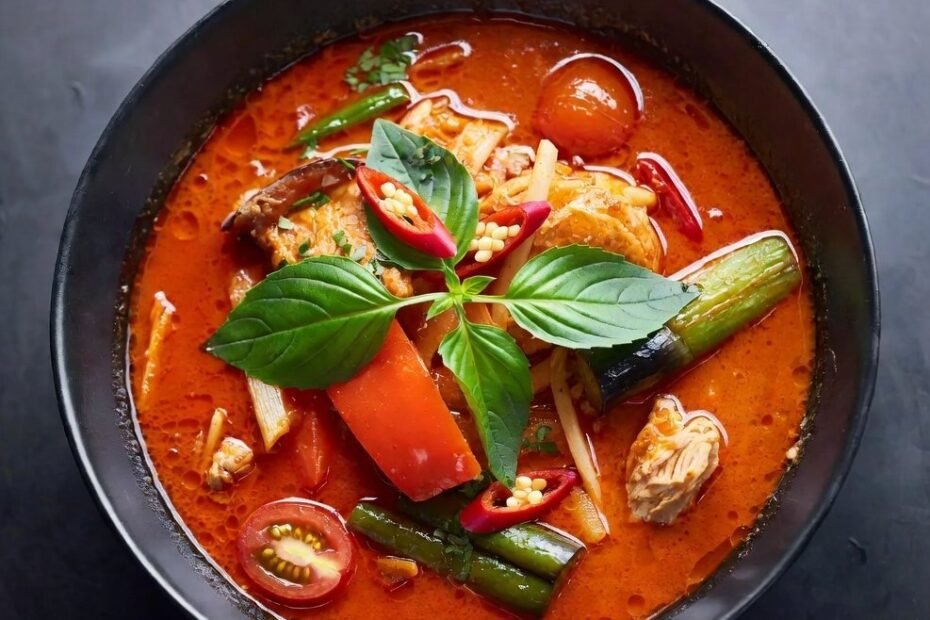
As a Thai-American chef, I have spent much of my life between two worlds. I grew up in the United States, surrounded by burgers, pizza, and barbecue, but inside our home, the aromas were completely different. Lemongrass simmered on the stove. Fish sauce sat beside the salt and pepper. Fresh herbs filled the kitchen. Food was never just food in our family—it was memory, identity, and connection.
When I was younger, I knew Thai food mostly through family dinners and local Thai restaurants. As I got older and became a professional chef, I wanted to understand the roots of the dishes I loved. That journey eventually took me across Thailand, from busy city markets to quiet countryside villages.
I tasted fiery noodle soups in the north, grilled seafood along the coast, and countless curries from roadside stalls and family-run restaurants. Every region had its own personality. Every cook had a secret ingredient or technique passed down through generations.
But among all the dishes I encountered, one remains closest to my heart: Red Curry, or Gaeng Phet.
Not because it was the most expensive meal I ate.
Not because it was the spiciest.
Not because it was served in a famous restaurant.
It became my favorite because it was the dish my grandmother cooked for me when I visited our ancestral family home near Bangkok.
Even now, whenever I make Red Curry in my restaurant kitchen, I am transported back to that moment.
My Journey Through Thailand’s Street Food Culture
Thailand is a country where food is everywhere.
The first thing I noticed while traveling was how much life revolves around eating. Streets come alive with vendors selling skewers of grilled meat, steaming bowls of noodles, tropical fruits, and fragrant curries.
In Bangkok, I often wandered through markets before sunrise. Vendors would already be preparing ingredients for the day. Giant pots simmered quietly while cooks chopped herbs with astonishing speed.
I remember hearing people greet each other with “Sawadee krub” and immediately begin discussing what they planned to eat.
Food was part of every conversation.
In small towns, I stopped at roadside stalls where families had been cooking the same recipes for decades. Sometimes there were only a few plastic tables and chairs, yet the flavors rivaled those of high-end restaurants.
One thing became clear during my travels: Thai food is about balance.
Sweet and salty.
Spicy and sour.
Rich and fresh.
No flavor exists alone.
That philosophy is beautifully reflected in Red Curry.
Arriving at My Family’s Ancestral Home
After weeks of traveling, I finally arrived at my family’s ancestral home outside Bangkok.
The house sat among fruit trees and small gardens. It felt completely different from the fast pace of the city.
My grandmother was waiting outside when I arrived.
She hugged me tightly and smiled.
“Kin khao rue yang?” she asked.
Have you eaten yet?
Anyone familiar with Thai families knows this question is practically a greeting.
Before I could answer, she was already leading me toward the kitchen.
The kitchen itself felt like stepping into another era. Large clay pots sat on wooden shelves. Fresh herbs were drying near open windows. Mortars and pestles showed years of use.
Then I noticed a familiar aroma filling the room.
Red Curry.
My grandmother was making Gaeng Phet.
The Red Curry I Will Never Forget
Many people assume Red Curry is extremely spicy because of its color.
In reality, traditional Red Curry is often milder than people expect. It has warmth and depth rather than overwhelming heat.
My grandmother’s version was rich with coconut milk, fragrant red curry paste, tender chicken, and bamboo shoots.
The curry gently simmered in a large pot while she explained every ingredient.
“Good curry takes patience,” she said.
She wasn’t talking about cooking time.
She meant understanding ingredients.
She believed every herb, spice, and vegetable had a purpose.
As we sat together eating bowls of curry over jasmine rice, I understood why recipes survive for generations.
Food tells stories.
And this particular curry told the story of our family.
What Makes Red Curry Special?
Red Curry gets its beautiful color from dried red chilies used in the curry paste.
Unlike Green Curry, which often has a sharper herbal flavor, Red Curry tends to be richer and slightly sweeter.
The coconut milk creates a creamy texture while bamboo shoots provide freshness and crunch.
The result is a curry that feels comforting and balanced.
It’s the kind of dish that welcomes both newcomers to Thai food and longtime enthusiasts.
Ingredients
For the curry:
- 500 grams chicken thighs, sliced
- 2 tablespoons red curry paste
- 2 cups coconut milk
- 1 cup chicken stock
- 1 cup bamboo shoots, drained and sliced
- 1 tablespoon fish sauce
- 1 teaspoon palm sugar or brown sugar
- 4 kaffir lime leaves
- 1 handful Thai basil leaves
- 1 red chili, sliced for garnish
For serving:
- Steamed jasmine rice
Preparation Time and Cooking Time
Preparation Time: 20 minutes
Cooking Time: 30 minutes
Total Time: 50 minutes
Servings: 4
Step-by-Step Red Curry Recipe
Prepare the Ingredients
Slice the chicken into bite-sized pieces.
Wash the basil leaves.
Tear the kaffir lime leaves into smaller pieces.
Rinse the bamboo shoots if needed.
Having everything ready before cooking makes the process easier.
Cook the Curry Paste
Heat a large pan over medium heat.
Add about half a cup of coconut milk.
When it begins to warm, stir in the red curry paste.
Cook gently for several minutes.
Soon, the kitchen will fill with an incredible aroma.
This step develops the flavor foundation of the curry.
Add the Chicken
Place the chicken into the curry mixture.
Stir until every piece becomes coated.
Cook for several minutes until the outside begins to turn opaque.
Build the Curry Sauce
Pour in the remaining coconut milk and chicken stock.
Stir gently.
Bring everything to a gentle simmer.
The sauce should look smooth and creamy.
Add the Bamboo Shoots
Add the bamboo shoots.
Allow them to simmer with the curry.
They absorb flavor while maintaining their pleasant texture.
Season the Curry
Add fish sauce and sugar.
Taste carefully.
Thai cooking is all about balance.
You should notice savory, sweet, creamy, and mildly spicy notes working together.
Finish with Herbs
Add the kaffir lime leaves and Thai basil.
Cook briefly until fragrant.
The fresh herbs bring the entire dish to life.
Serve
Ladle the curry into bowls.
Garnish with sliced red chili.
Serve immediately with steamed jasmine rice.
As my grandmother always said:
“Aroi mak.”
Very delicious.
Lessons My Grandmother Taught Me
Cooking with my grandmother taught me that recipes are more than instructions.
She never measured ingredients exactly.
Instead, she tasted constantly.
A little more fish sauce.
A little less sugar.
Another basil leaf.
Everything was adjusted according to the ingredients available that day.
As a young chef trained in professional kitchens, I initially found this approach difficult.
I wanted precise measurements.
She wanted balance.
Over time, I realized she was teaching something more valuable than a recipe.
She was teaching intuition.
Nutrition Information
Approximate values per serving:
- Calories: 450–550
- Protein: 28g
- Carbohydrates: 12g
- Fat: 34g
- Fiber: 3g
- Sodium: 850mg
Values may vary depending on ingredients and serving sizes.
The chicken provides high-quality protein, while coconut milk contributes healthy fats. Bamboo shoots add fiber and texture without many calories.
Tips for Home Cooks
Choose good-quality coconut milk. It makes a noticeable difference in the finished curry.
Do not rush the curry paste stage. Cooking the paste properly develops deeper flavor.
Simmer gently rather than boiling aggressively.
Taste frequently while seasoning.
Add basil near the end so it remains fragrant.
Serve with freshly cooked jasmine rice for the most authentic experience.
If you prefer more heat, add fresh chilies. If you prefer a milder curry, slightly reduce the amount of curry paste.
Most importantly, cook with patience.
Thai food rewards patience.
Why Red Curry Still Matters to Me
I have worked in modern kitchens with advanced equipment. I have cooked elaborate tasting menus and complicated dishes that require hours of preparation.
Yet some of my strongest food memories come from a simple bowl of Red Curry shared with my grandmother.
Whenever I smell coconut milk simmering with curry paste, I remember that small kitchen near Bangkok.
I remember hearing birds outside the window.
I remember my grandmother smiling as she stirred the pot.
I remember learning that food connects generations in ways words sometimes cannot.
Red Curry is more than a popular Thai dish.
For me, it is a reminder of family, tradition, and home.
Every bowl carries a piece of that story.
And every time I serve it to guests, I hope they experience a little of the warmth, comfort, and joy that I felt sitting at my grandmother’s table, enjoying a meal made with love and generations of wisdom.