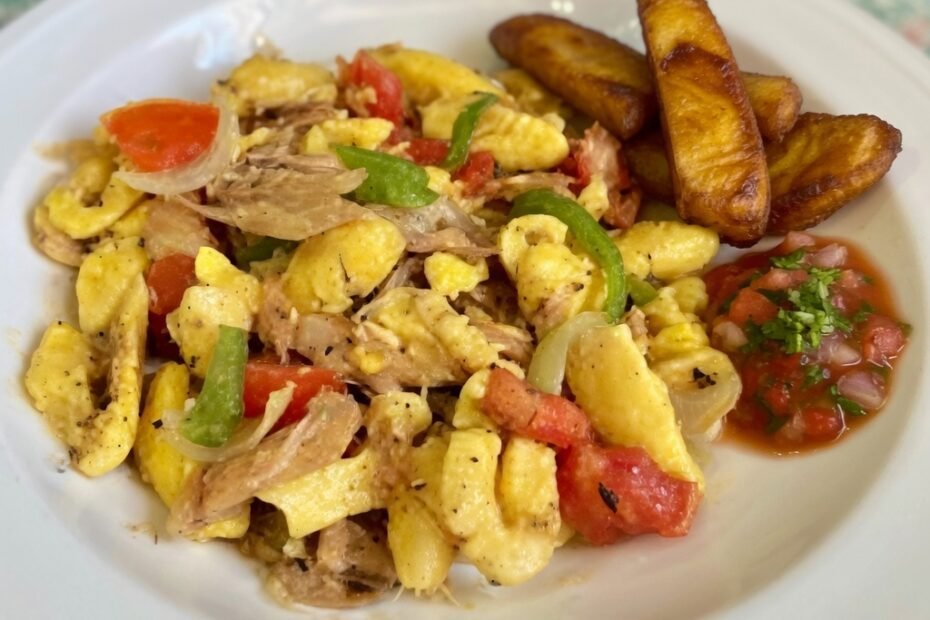
The first time I cooked ackee and saltfish on my own, I was nervous in a way I never felt in culinary school. I had handled delicate French sauces, plated dishes with tweezers, and worked in kitchens where everything had to be perfect. But this… this was different. This was home.
Ackee and saltfish is not just a meal in Jamaica. It is a feeling. It is the smell of morning in the kitchen, the sound of a pan gently sizzling, and the quiet pride of cooking something that carries generations inside it.
I grew up watching this dish come together without recipes, without measuring spoons. My grandmother would move around the kitchen like she was dancing—adding a little of this, tasting, adjusting, smiling. She would say, “Yuh cyaan rush dis. Let it cook proper.”
Now, as a trained chef, I understand technique. But ackee and saltfish taught me something deeper—respect for ingredients and patience with process.
Understanding the Dish
At its heart, ackee and saltfish is simple. But like many great dishes, simplicity hides complexity.
Ackee is a fruit, soft and buttery when cooked. It looks almost like scrambled eggs, but the texture is delicate, almost creamy. It must be handled gently, or it will break apart.
Saltfish, usually salted cod, brings the bold, salty flavor. It is preserved in salt, so it needs to be soaked and boiled before cooking.
Then come the supporting players—onions, tomatoes, thyme, and Scotch bonnet peppers. These build the flavor, layer by layer.
When everything comes together, the result is something magical. Soft ackee, flaky fish, sweet onions, a little heat from the pepper—it is balanced, comforting, and full of life.
A Morning in the Kitchen
Back home, ackee and saltfish is often a breakfast dish. Not a quick one, but one worth waking up early for.
I remember the sunlight coming through the window, the pot boiling with saltfish, and the smell of thyme filling the air. Someone would be peeling yam or shaping dumplings, and there was always conversation—about family, about life, about nothing important and everything important at the same time.
Food like this is not meant to be eaten alone. It is meant to be shared.
Step-by-Step Recipe
Here is how I prepare ackee and saltfish, the way I learned at home, with a bit of professional care but keeping the soul intact.
Ingredients:
- 2 cups ackee (fresh and properly cleaned, or canned)
- 200–250 grams salted cod (saltfish)
- 1 medium onion, sliced
- 2 cloves garlic, chopped
- 1 medium tomato, chopped
- 2–3 sprigs fresh thyme
- 1 Scotch bonnet pepper (whole or sliced, depending on heat preference)
- 2 tablespoons cooking oil
- Black pepper to taste
Preparing the Saltfish:
Start with the saltfish. It is very salty, so you need to remove the excess salt.
Soak it in water for a few hours if you have time. Then boil it in fresh water. After boiling, drain the water and flake the fish into small pieces, removing any bones.
Taste a small piece. If it is still too salty, you can boil it again briefly.
Preparing the Ackee:
If you are using fresh ackee, make sure it is properly cleaned and boiled until tender. It should be soft but still hold its shape.
If you are using canned ackee, drain it and handle it gently. It is already cooked, so you only need to warm it later.
Cooking the Dish:
Heat oil in a pan over medium heat. Add onions and garlic first. Let them soften and release their aroma.
Add the chopped tomatoes and thyme. Stir gently and let them cook down slightly.
Now add the flaked saltfish. Stir and let it cook for a few minutes so it absorbs the flavors.
Add the Scotch bonnet pepper. If you want less heat, keep it whole. If you want more spice, slice it.
Finally, add the ackee. This is the most important moment. Stir very gently. Do not break it too much. Let it warm through and mix naturally with the fish.
Add black pepper if needed. Taste before adding salt—the fish is already salty.
Let everything sit together for a few minutes, then turn off the heat.
The dish should look soft, colorful, and inviting. Not dry, not mushy—just right.
Serving the Dish
Ackee and saltfish is often served with boiled yam, green bananas, or dumplings. These sides are simple but important. They balance the richness of the dish.
I personally love it with boiled dumplings. Tear a piece, scoop up some ackee and saltfish, and take a bite. That combination—soft dough, savory fish, creamy ackee—it is something special.
Sometimes we add fried plantains on the side for a touch of sweetness. That contrast works beautifully.
Nutrition and Health
Ackee and saltfish is both nourishing and satisfying.
Saltfish provides a good source of protein, which helps build and repair the body. It also contains important minerals, though the sodium content is high, so proper soaking and boiling are important to reduce salt levels.
Ackee is rich in healthy fats and provides energy. It also contains vitamins and nutrients that support overall health. However, it must always be eaten properly prepared, as unripe ackee can be unsafe.
The vegetables—onions, tomatoes, and thyme—add vitamins, antioxidants, and flavor without extra calories.
When paired with yam or dumplings, the meal becomes balanced, providing carbohydrates for energy along with protein and fats.
Preparation and Cooking Time
- Preparation time: Around 20–30 minutes
- Soaking and boiling saltfish: 30–60 minutes depending on saltiness
- Cooking time: About 20 minutes
Overall, you can expect to spend around an hour or a little more, depending on preparation.
Tips for Home Cooks
If you are making this dish for the first time, take your time with the saltfish. Getting the salt level right is very important. Too salty, and the dish becomes overwhelming.
Handle the ackee gently. Think of it like soft scrambled eggs. Stir slowly and carefully.
Control the heat of the Scotch bonnet pepper. It is powerful. Start mild, especially if you are not used to it.
Use fresh thyme if possible. It makes a big difference in aroma and flavor.
Taste as you go. This dish is about balance—salty, soft, slightly spicy, and full of natural flavor.
And most importantly, don’t rush. This is not fast food. It is food with rhythm.
A Dish That Stays With You
Even now, after all my training, ackee and saltfish brings me back to where it all started.
In professional kitchens, everything moves fast. Orders come in, plates go out, and there is pressure to perform. But when I cook this dish, I slow down. I remember why I started cooking in the first place.
It is not about impressing anyone. It is about connection.
Every bite tells a story. Of early mornings, of family, of tradition. Of a place where food is not just eaten, but felt.
So when you make ackee and saltfish, don’t worry about making it perfect. Let it be real. Let it be warm. Let it carry a little bit of your own story too.
And when you sit down to eat, take a moment. Breathe in the aroma, take that first bite, and if you feel a sense of comfort settle in, then you know—you did it right.