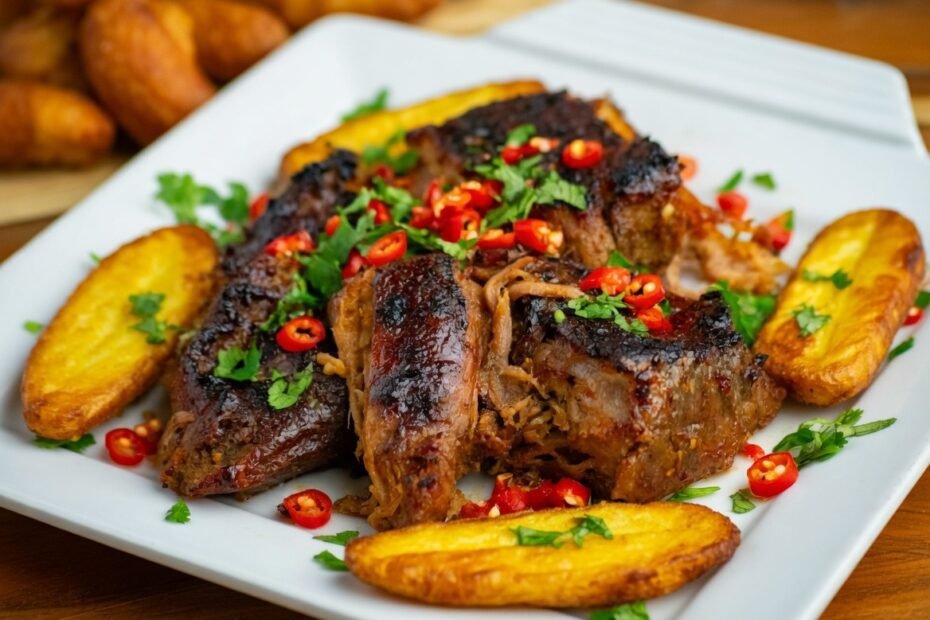
In Jamaica, few aromas are as unforgettable as jerk pork slowly cooking over an open flame. The smell travels through the air—smoky, spicy, slightly sweet—and it pulls people in from a distance. Jerk pork is not just food; it is an experience shaped by fire, patience, and bold seasoning.
This dish has deep roots in Jamaican history. The technique of jerk cooking comes from the Maroons, who preserved and cooked meat in the hills using local spices and slow smoking methods. Over time, it became one of the most iconic ways of preparing meat in Jamaica.
At its heart, jerk pork is about flavor layered over time. The pork is marinated in a rich blend of spices and herbs, then cooked slowly, traditionally over pimento wood. The result is tender meat with a smoky crust and a spicy, aromatic depth that is hard to match. It is often served with festival, a lightly sweet fried dumpling that balances the heat beautifully.
The Soul of Jerk Cooking
Jerk cooking is not just about spice. It is about how the flavors come together. The marinade is packed with ingredients that each play a role—heat from Scotch bonnet peppers, warmth from allspice, freshness from herbs, and depth from garlic and ginger.
The smoking process adds another layer. Traditionally, pork is cooked over pimento wood, which gives it a distinct aroma. Even without this wood, the essence of jerk can still be recreated with careful cooking and the right balance of flavors.
Festival, the side dish often served with jerk pork, adds contrast. Its slight sweetness and soft texture complement the spicy, smoky meat, making each bite feel complete.
Ingredients You Will Need
For the jerk pork marinade:
- 1 kg pork (shoulder or belly works well)
- 3–4 Scotch bonnet peppers
- 4 cloves garlic
- 1 small onion, chopped
- 2 spring onions
- 1 teaspoon dried thyme
- 1 teaspoon ground allspice
- 1 teaspoon ground black pepper
- 1 teaspoon cinnamon (optional)
- 1 tablespoon soy sauce
- 1 tablespoon vinegar or lime juice
- 1 tablespoon brown sugar
- Salt to taste
For cooking:
- A grill, oven, or smoker
- Optional wood chips for smoky flavor
For festival (fried dumplings):
- 1 cup all-purpose flour
- 1 tablespoon sugar
- 1 teaspoon baking powder
- A pinch of salt
- Water to form dough
- Oil for frying
Step-by-Step Cooking Method
Start by preparing the marinade. Blend Scotch bonnet peppers, garlic, onion, spring onions, thyme, allspice, black pepper, soy sauce, vinegar, and sugar into a thick paste. The mixture should be bold and aromatic.
Take the pork and make small cuts across the surface. This helps the marinade soak deep into the meat. Rub the marinade all over, making sure every part is well coated.
Let the pork rest in the marinade. A few hours will work, but overnight is ideal. This is where the flavor truly develops.
When ready to cook, preheat your grill or oven. If using a grill, aim for medium heat. Place the pork on the grill and let it cook slowly. Turn it occasionally so it cooks evenly.
If using an oven, cook at a moderate temperature, allowing the pork to roast slowly. You can finish it at a higher temperature to get a slightly charred, crispy outside.
The cooking process takes time. The meat should become tender inside while developing a dark, flavorful crust outside. The aroma at this stage is rich and smoky.
While the pork is cooking, prepare the festival. Mix flour, sugar, baking powder, and salt. Add water gradually to form a soft dough.
Shape the dough into small logs or oval pieces. Heat oil in a pan and fry them until golden brown. They should be crisp on the outside and soft inside.
Once the pork is cooked, let it rest briefly before slicing. Serve it hot with festival on the side.
Prep Time and Cook Time
- Prep time: Around 30 minutes
- Marination time: At least 4 hours, preferably overnight
- Cook time: 1.5 to 2 hours
- Total time: Approximately 2 to 3 hours (excluding marination)
Nutrition Overview
Jerk pork is a flavorful dish that provides both energy and nutrients.
- Pork is a good source of protein, supporting muscle growth and repair.
- It contains important vitamins like B vitamins, which help with energy metabolism.
- The spices used in jerk seasoning, such as allspice, garlic, and thyme, have antioxidant properties.
- Scotch bonnet peppers add vitamin C and can boost metabolism.
- Festival adds carbohydrates, providing energy, but also increases the calorie content due to frying.
- The dish can be higher in fat, especially if using pork belly, so portion control is important.
Tips for Home Cooks
Making jerk pork at home can feel like bringing a piece of Jamaica into your kitchen. A few simple tips can help you get the best results.
Take marination seriously. The longer the pork sits in the seasoning, the deeper the flavor.
Do not rush the cooking. Jerk pork benefits from slow heat. This allows the inside to stay juicy while the outside develops a rich crust.
If you do not have pimento wood, you can use wood chips or even a small amount of smoked seasoning to mimic the effect.
Control the spice level by adjusting the amount of Scotch bonnet peppers. They are very hot, so use them carefully.
Let the pork rest before slicing. This helps retain its juices and keeps it tender.
For festival, keep the dough soft but not sticky. Fry on medium heat so they cook evenly without burning.
Why This Dish Is So Iconic
Jerk pork stands out because it engages all the senses. The smell, the texture, the spice—it all comes together in a way that feels bold and alive.
It is also deeply tied to Jamaican culture. From roadside jerk pans to family gatherings, it is a dish that brings people together. The cooking process itself becomes part of the experience, with the fire, the smoke, and the anticipation building over time.
The pairing with festival adds another layer. The sweetness of the dumplings balances the spice of the pork, creating a harmony that feels complete.
Jamaican jerk pork is more than just a recipe. It is a celebration of flavor, tradition, and technique. From the spicy marinade to the slow cooking process, every step builds something memorable.
Even if you are making it at home without traditional equipment, the essence of the dish can still shine through. With patience and the right ingredients, you can create a meal that captures the spirit of Jamaican cooking.
Serve it hot, alongside freshly fried festival, and enjoy a dish that is rich, smoky, and full of character.