The first time I walked into a modern coffee shop many years ago, I felt completely lost.
The menu board looked more confusing than a science textbook. Espresso, cappuccino, latte, macchiato, flat white, mocha, americano — the names sounded stylish and exciting, but honestly, I had no idea what most of them meant.
I simply wanted coffee.
Instead, I stood there nervously while the people behind me ordered complicated drinks with complete confidence. One person asked for an oat milk caramel latte with extra foam. Another ordered a double ristretto flat white. I quietly ordered plain black coffee because it felt safest.
Later, I slowly started learning about coffee drinks one by one. And once I understood the basics, the entire coffee world suddenly became simple and fascinating.
That is the interesting thing about coffee.
At first it looks complicated.
But in reality, most coffee drinks are built from only a few basic ingredients — espresso, milk, water, foam, chocolate, and ice. The magic comes from how these ingredients are combined.
Today coffee is loved across the world. Some people drink it for energy. Others enjoy it for comfort, conversation, creativity, or relaxation. In many countries, coffee shops have become modern meeting places where people work, study, read, or spend time with friends.
But behind the trendy cafés and stylish cups lies a long and beautiful history.
Coffee has travelled across continents for centuries, carrying stories, cultures, and traditions with it.
And for beginners, understanding coffee can become a very enjoyable journey.
How Coffee Became a Global Drink
Coffee is believed to have originated in Ethiopia many centuries ago. According to popular legends, a goat herder noticed his goats becoming energetic after eating red coffee cherries from a plant.
From Ethiopia, coffee slowly travelled to Yemen and the Middle East. Early coffee houses became places where people gathered to discuss politics, poetry, trade, and ideas.
Later coffee spread to Turkey, Europe, Asia, and eventually almost every corner of the world.
Today different countries have developed their own coffee traditions.
Italy became famous for espresso culture.
Turkey became known for thick traditional coffee.
Vietnam created strong sweet coffee with condensed milk.
Ethiopia preserved ancient ceremonial coffee traditions.
In India, filter coffee became deeply loved in the south.
Coffee is no longer only a drink. It has become part of daily life in many cultures.
Understanding Espresso: The Heart of Most Coffee Drinks
Before learning different coffee drinks, beginners should understand espresso first.
Espresso is a small but concentrated coffee shot made by forcing hot water through finely ground coffee beans under pressure.
It looks small, but the flavor is strong and rich.
Most café coffee drinks are actually based on espresso. Once you understand espresso, the rest becomes much easier.
Think of espresso as the foundation.
Add hot water, and it becomes an americano.
Add steamed milk, and it becomes a latte.
Add foam, and it becomes a cappuccino.
Add chocolate, and it becomes a mocha.
So many famous coffee drinks are simply different combinations of espresso, milk, foam, and water.
Black Coffee: Simple and Honest
Black coffee is one of the simplest forms of coffee.
It contains coffee and water only, without milk or sugar. Many people enjoy black coffee because they can taste the pure flavor of the beans more clearly.
For beginners, black coffee may taste slightly bitter at first. But over time, many coffee lovers start appreciating its depth and aroma.
Different beans create different flavors. Some coffees taste nutty. Others taste fruity, chocolatey, smoky, or earthy.
Black coffee also varies depending on brewing methods like drip coffee, French press, pour-over, or espresso.
Simple black coffee teaches people to appreciate coffee itself without extra ingredients hiding the flavor.
Americano: Smooth and Beginner-Friendly
An americano is made by adding hot water to espresso.
The result is smoother and less intense than straight espresso while still carrying rich coffee flavor.
There is an interesting story that American soldiers in Europe during World War II found Italian espresso too strong. So they added water to make it more similar to the coffee they were used to drinking back home.
That simple habit eventually became the americano.
For beginners who want stronger flavor than regular coffee but less intensity than espresso, americano is often a good starting point.
Cappuccino: The Famous Coffee Shop Favorite
Cappuccino is probably one of the world’s most recognized coffee drinks.
A traditional cappuccino contains three equal parts:
- Espresso
- Steamed milk
- Milk foam
The thick foam layer gives cappuccino its soft and luxurious texture.
Many beginners enjoy cappuccino because the milk softens the bitterness of espresso while still allowing coffee flavor to remain noticeable.
In Italy, cappuccino is often considered a morning drink. Italians traditionally avoid drinking heavy milk-based coffees late in the day.
But globally, people enjoy cappuccino anytime they want.
The beautiful foam designs created by baristas also helped make cappuccino very popular in modern cafés.
Latte: Creamy and Comfortable
If cappuccino feels balanced, latte feels gentle.
A latte contains espresso with a larger amount of steamed milk and only a small layer of foam.
Because of the extra milk, lattes taste creamier and milder. Beginners who find coffee too bitter often start with lattes.
Flavored syrups like vanilla, caramel, hazelnut, and pumpkin spice are commonly added to lattes today.
Some coffee lovers criticize flavored lattes, but honestly, coffee should be enjoyable. There are no strict rules for personal taste.
The latte became especially popular because it feels comforting and easy to drink.
Flat White: Smooth Coffee with Stronger Flavor
The flat white became famous through Australia and New Zealand coffee culture.
It is similar to a latte but usually contains less milk and thinner foam. This allows the espresso flavor to remain stronger.
Many coffee lovers enjoy flat whites because they balance milk smoothness with richer coffee taste.
The texture feels silky rather than foamy.
For beginners moving beyond sweet or very milky drinks, flat white often becomes an exciting next step.
Mocha: Coffee Meets Chocolate
A mocha combines espresso, steamed milk, and chocolate.
You can think of it as a mix between hot chocolate and coffee.
For people who love desserts, mocha often becomes an easy introduction to coffee culture.
Chocolate softens coffee bitterness and creates a rich sweet flavor.
Some cafés top mochas with whipped cream, cocoa powder, or chocolate syrup, making them feel almost like dessert drinks.
Macchiato: Small but Bold
The word “macchiato” means “stained” or “marked” in Italian.
Traditionally, espresso macchiato is simply espresso with a small amount of milk foam added on top.
The milk slightly softens the espresso while keeping the flavor strong and bold.
Modern café chains created sweeter caramel macchiato versions, which are very different from traditional Italian macchiatos.
Classic macchiato is meant for people who enjoy stronger coffee taste.
Cold Coffee and the Rise of Iced Drinks
In many warm countries, cold coffee drinks became extremely popular.
Iced lattes, cold brew, frappes, and iced mochas are now common worldwide.
Cold brew is especially interesting because it is made by steeping coffee grounds in cold water for many hours instead of using hot water.
This creates smoother and less acidic flavor.
Younger coffee drinkers often enjoy iced coffee because it feels refreshing and customizable.
The Difference Between Arabica and Robusta
Beginners often hear these two names.
Arabica beans are smoother, slightly sweeter, and more aromatic. They are generally considered higher quality.
Robusta beans contain more caffeine and stronger bitterness. They are commonly used in espresso blends and instant coffee.
Different countries produce different styles of coffee depending on climate, altitude, and farming methods.
That is why coffee tasting can become a lifelong journey.
A Rare and Old Coffee Recipe: Traditional Ethiopian Spiced Coffee
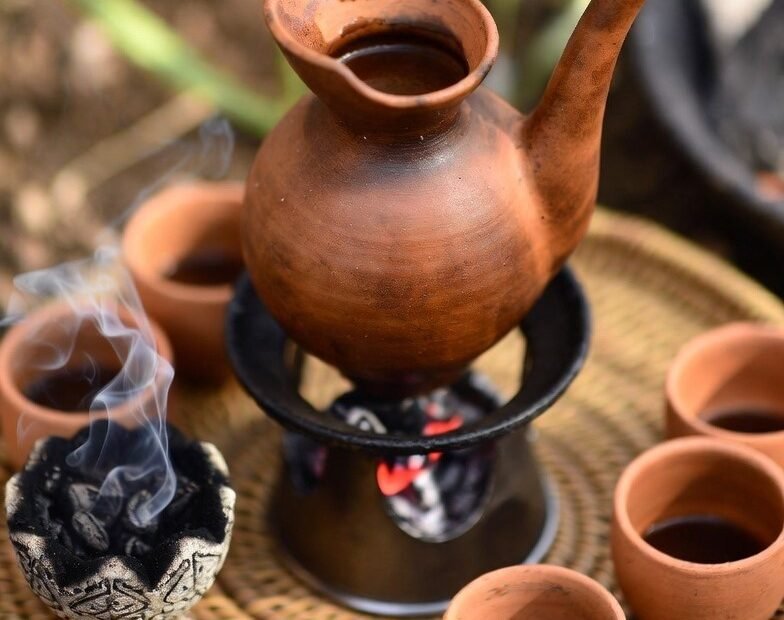
Now let me share a beautiful old coffee recipe connected to Ethiopia, one of the birthplaces of coffee culture.
This traditional-style spiced coffee is inspired by ancient Ethiopian coffee ceremonies where coffee preparation itself becomes a social and emotional experience.
The recipe is simple but deeply aromatic.
Ingredients
- 2 tablespoons freshly ground coffee
- 2 cups water
- 1 small cinnamon stick
- 2 green cardamoms lightly crushed
- 1 teaspoon honey
- Small pinch of cloves
Step-by-Step Traditional Ethiopian Spiced Coffee
Step 1: Heat the Water
- Pour water into a small pot.
- Add cinnamon, cardamom, and cloves.
- Heat slowly until the water becomes fragrant.
Step 2: Add Coffee
- Add freshly ground coffee into the hot water.
- Stir gently.
Step 3: Simmer Slowly
- Allow the coffee to simmer gently for a few minutes.
- Do not boil aggressively.
Traditional coffee was often prepared patiently over slow heat.
Step 4: Rest the Coffee
- Turn off the heat.
- Let the coffee grounds settle naturally.
Step 5: Serve Carefully
- Pour slowly into small cups.
- Add little honey if desired.
The result is rich, warm, aromatic coffee with gentle spice notes.
This old style of coffee reminds us that coffee was once more about conversation and connection than speed and takeaway cups.
Coffee Is More Than Just a Drink
The more I learned about coffee, the more I realized something important.
Coffee is not only about caffeine.
It is about moments.
Morning silence before work begins.
Long conversations between friends.
Students studying late at night.
Writers sitting beside windows during rain.
Families gathering after dinner.
Across the world, coffee quietly becomes part of people’s lives in different ways.
For beginners, the best approach is simple.
Do not feel intimidated by complicated café menus.
Start slowly.
Try different drinks.
Notice what flavors you enjoy.
Some people fall in love with strong espresso. Others prefer creamy lattes or sweet mochas.
There is no correct answer.
Coffee is personal.
And once you begin understanding the basics, the entire coffee world stops feeling confusing and starts feeling wonderfully welcoming.