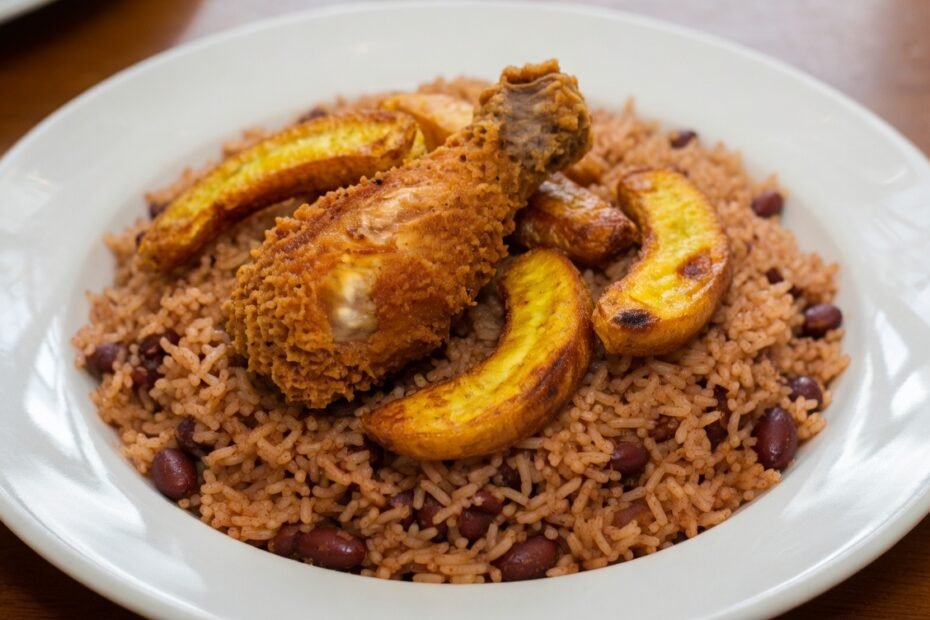
In Jamaica, no meal feels complete without a proper side dish, and rice and peas holds a special place at the table. It may look simple at first—just rice cooked with beans—but the moment you taste it, you realize it carries much more depth than expected.
Rice and peas is not just food; it is a daily comfort, a Sunday tradition, and a steady companion to many of Jamaica’s most famous dishes. Whether served alongside jerk pork, curried goat, or fried fish, it quietly ties the meal together, soaking up sauces and balancing bold flavors.
Despite its name, the “peas” are usually not green peas. They are kidney beans or sometimes gungo peas, which are small, nutty legumes. Cooked with coconut milk, herbs, and spices, they transform plain rice into something rich, aromatic, and deeply satisfying.
The Story Behind the Dish
Rice and peas reflects a style of cooking that values simplicity while building flavor through layering. It is made in one pot, with ingredients added in stages so they can blend naturally.
The use of coconut milk is what sets it apart. It gives the rice a creamy texture and a gentle sweetness. Then comes the seasoning—thyme, garlic, and the warm, slightly peppery flavor of allspice.
A touch of heat often comes from Scotch bonnet peppers, though it is usually subtle. The pepper is often added whole, allowing it to flavor the dish without overwhelming it.
This balance of flavors makes rice and peas versatile. It supports stronger dishes without competing with them, yet it is flavorful enough to enjoy on its own.
Ingredients You Will Need
For the rice and peas:
- 1 cup kidney beans (or canned beans, drained and rinsed)
- 1½ cups rice (long-grain preferred)
- 1 cup coconut milk
- 2 cups water (or more as needed)
- 1 small onion, chopped
- 2 cloves garlic, crushed
- 1 teaspoon dried thyme or fresh sprigs
- 1 whole Scotch bonnet pepper
- 1 teaspoon ground allspice or whole pimento berries
- Salt to taste
- 2 spring onions, chopped
Optional additions:
- A small piece of ginger for extra flavor
- A pinch of black pepper
Step-by-Step Cooking Method
Start by preparing the beans. If you are using dried kidney beans, soak them beforehand and cook them until tender. If using canned beans, they can be added directly after rinsing.
In a large pot, combine the beans with water and bring to a boil. Add onion, garlic, thyme, and allspice. Let this simmer for a while so the flavors begin to build.
Pour in the coconut milk. As it mixes with the bean broth, the liquid will take on a creamy texture and a light, rich color. This is the base that gives rice and peas its signature taste.
Add the whole Scotch bonnet pepper. Keep it intact if you want mild heat, or pierce it slightly if you prefer more spice.
Now add the rice. Stir gently so it spreads evenly in the pot. Add salt to taste.
Reduce the heat, cover the pot, and let it cook slowly. The rice will absorb the liquid, along with all the flavors from the beans and spices.
Avoid stirring too much once the rice is cooking, as this can make it sticky. Let it steam gently until the grains are tender and separate.
As the cooking finishes, add spring onions for a fresh touch. Remove the Scotch bonnet pepper before serving, unless you want a stronger heat.
The final dish should be fluffy, fragrant, and slightly creamy, with beans distributed throughout the rice.
Prep Time and Cook Time
- Prep time: Around 15–20 minutes
- Cook time: 30–40 minutes (longer if using dried beans)
- Total time: About 45 minutes to 1 hour
Nutrition Overview
Rice and peas is a balanced and nourishing side dish that offers both energy and essential nutrients.
- Rice provides carbohydrates, which serve as a primary source of energy.
- Kidney beans or gungo peas add protein and fiber, supporting digestion and satiety.
- Coconut milk contributes healthy fats and enhances flavor.
- The dish also contains minerals like iron and potassium from the beans.
- Herbs and spices such as thyme and allspice offer antioxidants.
- While nutritious, the dish can be calorie-dense due to coconut milk, so portion size can be adjusted as needed.
Tips for Home Cooks
Making rice and peas at home is straightforward, but a few details can make a big difference.
Use good-quality rice. Long-grain rice works best because it stays separate and fluffy.
If using dried beans, cook them until tender before adding rice. Undercooked beans can affect the texture.
Do not skip the coconut milk. It is essential for the authentic flavor.
Be careful with the Scotch bonnet pepper. Keeping it whole adds flavor without too much heat. If it bursts during cooking, the dish can become very spicy.
Measure your liquid properly. Too much can make the rice mushy, while too little can leave it undercooked.
Let the rice rest for a few minutes after cooking. This helps it settle and improves texture.
Why This Dish Is So Important
Rice and peas may seem like a side dish, but it plays a central role in Jamaican meals. It is the foundation that supports stronger flavors and completes the plate.
It is also deeply tied to tradition. In many households, it is prepared regularly, especially for family meals. The smell of coconut milk and thyme cooking together is familiar and comforting.
The dish also shows how simple ingredients can be transformed through technique and patience. With just rice, beans, and a few seasonings, something truly special is created.
Jamaican rice and peas is a perfect example of how food can be both simple and meaningful. It does not rely on complex steps or rare ingredients, yet it delivers rich flavor and comfort.
Whether served alongside a main dish or enjoyed on its own, it brings warmth and balance to the table. Each spoonful carries the gentle creaminess of coconut, the earthiness of beans, and the subtle spice of herbs.
Once you make it, you will understand why it is such an essential part of Jamaican cooking. It is not just a side dish—it is the heart of the meal.

- admin-food-prith
- admin-food-prith
- admin-food-prith
- admin-food-prith
- admin-food-prith
- admin-food-prith
- admin-food-prith
- admin-food-prith
- admin-food-prith
- admin-food-prith
- admin-food-prith
- admin-food-prith
- admin-food-prith
- admin-food-prith
- admin-food-prith
- admin-food-prith
- admin-food-prith
- admin-food-prith
- admin-food-prith
- admin-food-prith
- admin-food-prith
- admin-food-prith
- admin-food-prith
- admin-food-prith
- admin-food-prith
- admin-food-prith
- admin-food-prith
- admin-food-prith
- admin-food-prith
- admin-food-prith
- admin-food-prith
- admin-food-prith
- admin-food-prith
- admin-food-prith
- admin-food-prith
- admin-food-prith
- admin-food-prith
- admin-food-prith
- admin-food-prith
- admin-food-prith
- admin-food-prith
- admin-food-prith
- admin-food-prith
- admin-food-prith
- admin-food-prith
- admin-food-prith
- admin-food-prith
- admin-food-prith
- admin-food-prith
- admin-food-prith
- admin-food-prith
- admin-food-prith
- admin-food-prith
- admin-food-prith
- admin-food-prith
- admin-food-prith
- admin-food-prith
- admin-food-prith
- admin-food-prith
- admin-food-prith
- admin-food-prith
- admin-food-prith
- admin-food-prith
- admin-food-prith
- admin-food-prith
- admin-food-prith
- admin-food-prith
- admin-food-prith
- admin-food-prith
- admin-food-prith
- admin-food-prith
- admin-food-prith
- admin-food-prith
- admin-food-prith
- admin-food-prith
- admin-food-prith
- admin-food-prith
- admin-food-prith
- admin-food-prith
- admin-food-prith
- admin-food-prith
- admin-food-prith
- admin-food-prith
- admin-food-prith
- admin-food-prith
- admin-food-prith
- admin-food-prith
- admin-food-prith
- admin-food-prith
- admin-food-prith
- admin-food-prith
- admin-food-prith
- admin-food-prith
- admin-food-prith
- admin-food-prith
- admin-food-prith
- admin-food-prith
- admin-food-prith
- admin-food-prith
- admin-food-prith
- admin-food-prith
- admin-food-prith
- admin-food-prith
- admin-food-prith
- admin-food-prith
- admin-food-prith
- admin-food-prith
- admin-food-prith
- admin-food-prith
- admin-food-prith
- admin-food-prith
- admin-food-prith
- admin-food-prith
- admin-food-prith
- admin-food-prith
- admin-food-prith
- admin-food-prith
- admin-food-prith
- admin-food-prith
- admin-food-prith
- admin-food-prith
- admin-food-prith
- admin-food-prith
- admin-food-prith
- admin-food-prith
- admin-food-prith
- admin-food-prith
- admin-food-prith
- admin-food-prith
- admin-food-prith
- admin-food-prith
- admin-food-prith
- admin-food-prith
- admin-food-prith
- admin-food-prith
- admin-food-prith
- admin-food-prith
- admin-food-prith
- admin-food-prith
- admin-food-prith
- admin-food-prith
- admin-food-prith
- admin-food-prith
- admin-food-prith
- admin-food-prith
- admin-food-prith
- admin-food-prith
- admin-food-prith
- admin-food-prith
- admin-food-prith
- admin-food-prith
- admin-food-prith
- admin-food-prith
- admin-food-prith
- admin-food-prith
- admin-food-prith
- admin-food-prith
- admin-food-prith
- admin-food-prith
- admin-food-prith
- admin-food-prith
- admin-food-prith
- admin-food-prith
- admin-food-prith
- admin-food-prith
- admin-food-prith
- admin-food-prith
- admin-food-prith
- admin-food-prith
- admin-food-prith
- admin-food-prith
- admin-food-prith
- admin-food-prith
- admin-food-prith
- admin-food-prith
- admin-food-prith
- admin-food-prith
- admin-food-prith
- admin-food-prith
- admin-food-prith
- admin-food-prith
- admin-food-prith
- admin-food-prith
- admin-food-prith
- admin-food-prith
- admin-food-prith
- admin-food-prith
- admin-food-prith
- admin-food-prith
- admin-food-prith
- admin-food-prith
- admin-food-prith
- admin-food-prith
- admin-food-prith
- admin-food-prith
- admin-food-prith
- admin-food-prith
- admin-food-prith
- admin-food-prith
- admin-food-prith
- admin-food-prith
- admin-food-prith
- admin-food-prith
- admin-food-prith
- admin-food-prith
- admin-food-prith
- admin-food-prith
- admin-food-prith
- admin-food-prith
- admin-food-prith
- admin-food-prith
- admin-food-prith
- admin-food-prith
- admin-food-prith
- admin-food-prith
- admin-food-prith
- admin-food-prith
- admin-food-prith
- admin-food-prith
- admin-food-prith
- admin-food-prith
- admin-food-prith
- admin-food-prith
- admin-food-prith
- admin-food-prith
- admin-food-prith
- admin-food-prith
- admin-food-prith
- admin-food-prith
- admin-food-prith
- admin-food-prith
- admin-food-prith
- admin-food-prith
- admin-food-prith
- admin-food-prith
- admin-food-prith
- admin-food-prith
- admin-food-prith
- admin-food-prith
- admin-food-prith
- admin-food-prith
- admin-food-prith
- admin-food-prith
- admin-food-prith
- admin-food-prith
- admin-food-prith
- admin-food-prith
- admin-food-prith
- admin-food-prith
- admin-food-prith
- admin-food-prith
- admin-food-prith
- admin-food-prith
- admin-food-prith
- admin-food-prith
- admin-food-prith
- admin-food-prith
- admin-food-prith
- admin-food-prith
- admin-food-prith
- admin-food-prith
- admin-food-prith
- admin-food-prith
- admin-food-prith
- admin-food-prith
- admin-food-prith
- admin-food-prith
- admin-food-prith
- admin-food-prith
- admin-food-prith
- admin-food-prith
- admin-food-prith
- admin-food-prith
- admin-food-prith
- admin-food-prith
- admin-food-prith
- admin-food-prith
- admin-food-prith
- admin-food-prith
- admin-food-prith
- admin-food-prith
- admin-food-prith
- admin-food-prith
- admin-food-prith
- admin-food-prith
- admin-food-prith
- admin-food-prith
- admin-food-prith
- admin-food-prith
- admin-food-prith
- admin-food-prith
- admin-food-prith
- admin-food-prith
- admin-food-prith
- admin-food-prith
- admin-food-prith
- admin-food-prith
- admin-food-prith
- admin-food-prith
- admin-food-prith
- admin-food-prith
- admin-food-prith
- admin-food-prith
- admin-food-prith
- admin-food-prith
- admin-food-prith
- admin-food-prith
- admin-food-prith
- admin-food-prith
- admin-food-prith
- admin-food-prith
- admin-food-prith
- admin-food-prith
- admin-food-prith
- admin-food-prith
- admin-food-prith
- admin-food-prith
- admin-food-prith
- admin-food-prith
- admin-food-prith
- admin-food-prith
- admin-food-prith
- admin-food-prith
- admin-food-prith
- admin-food-prith
- admin-food-prith
- admin-food-prith
- admin-food-prith
- admin-food-prith
- admin-food-prith
- admin-food-prith
- admin-food-prith
- admin-food-prith
- admin-food-prith
- admin-food-prith
- admin-food-prith
- admin-food-prith
- admin-food-prith
- admin-food-prith
- admin-food-prith
- admin-food-prith
- admin-food-prith
- admin-food-prith
- admin-food-prith
- admin-food-prith
- admin-food-prith
- admin-food-prith
- admin-food-prith
- admin-food-prith
- admin-food-prith
- admin-food-prith
- admin-food-prith
- admin-food-prith
- admin-food-prith
- admin-food-prith
- admin-food-prith
- admin-food-prith
- admin-food-prith
- admin-food-prith
- admin-food-prith
- admin-food-prith
- admin-food-prith
- admin-food-prith
- admin-food-prith
- admin-food-prith
- admin-food-prith
- admin-food-prith
- admin-food-prith
- admin-food-prith
- admin-food-prith
- admin-food-prith
- admin-food-prith
- admin-food-prith
- admin-food-prith
- admin-food-prith
- admin-food-prith
- admin-food-prith
- admin-food-prith
- admin-food-prith
- admin-food-prith
- admin-food-prith
- admin-food-prith
- admin-food-prith
- admin-food-prith
- admin-food-prith
- admin-food-prith
- admin-food-prith
- admin-food-prith
- admin-food-prith
- admin-food-prith
- admin-food-prith
- admin-food-prith
- admin-food-prith
- admin-food-prith
- admin-food-prith
- admin-food-prith
- admin-food-prith
- admin-food-prith
- admin-food-prith
- admin-food-prith
- admin-food-prith
- admin-food-prith
- admin-food-prith
- admin-food-prith
- admin-food-prith
- admin-food-prith
- admin-food-prith
- admin-food-prith
- admin-food-prith
- admin-food-prith
- admin-food-prith
- admin-food-prith
- admin-food-prith
- admin-food-prith
- admin-food-prith
- admin-food-prith
- admin-food-prith
- admin-food-prith
- admin-food-prith
- admin-food-prith
- admin-food-prith
- admin-food-prith
- admin-food-prith
- admin-food-prith
- admin-food-prith
- admin-food-prith
- admin-food-prith
- admin-food-prith
- admin-food-prith
- admin-food-prith
- admin-food-prith
- admin-food-prith
- admin-food-prith
- admin-food-prith
- admin-food-prith
- admin-food-prith
- admin-food-prith
- admin-food-prith
- admin-food-prith
- admin-food-prith
- admin-food-prith
- admin-food-prith
- admin-food-prith
- admin-food-prith
- admin-food-prith
- admin-food-prith
- admin-food-prith
- admin-food-prith
- admin-food-prith
- admin-food-prith
- admin-food-prith
- admin-food-prith
- admin-food-prith
- admin-food-prith
- admin-food-prith
- admin-food-prith
- admin-food-prith
- admin-food-prith
- admin-food-prith
- admin-food-prith
- admin-food-prith
- admin-food-prith
- admin-food-prith
- admin-food-prith
- admin-food-prith
- admin-food-prith
- admin-food-prith
- admin-food-prith
- admin-food-prith
- admin-food-prith
- admin-food-prith
- admin-food-prith
- admin-food-prith
- admin-food-prith
- admin-food-prith
- admin-food-prith
- admin-food-prith
- admin-food-prith
- admin-food-prith
- admin-food-prith
- admin-food-prith
- admin-food-prith
- admin-food-prith
- admin-food-prith
- admin-food-prith
- admin-food-prith
- admin-food-prith
- admin-food-prith
- admin-food-prith
- admin-food-prith
- admin-food-prith
- admin-food-prith
- admin-food-prith
- admin-food-prith
- admin-food-prith
- admin-food-prith
- admin-food-prith
- admin-food-prith
- admin-food-prith
- admin-food-prith
- admin-food-prith
- admin-food-prith
- admin-food-prith
- admin-food-prith
- admin-food-prith
- admin-food-prith
- admin-food-prith
- admin-food-prith
- admin-food-prith
- admin-food-prith
- admin-food-prith
- admin-food-prith
- admin-food-prith
- admin-food-prith
- admin-food-prith
- admin-food-prith
- admin-food-prith
- admin-food-prith
- admin-food-prith
- admin-food-prith
- admin-food-prith
- admin-food-prith
- admin-food-prith
- admin-food-prith
- admin-food-prith
- admin-food-prith
- admin-food-prith
- admin-food-prith
- admin-food-prith
- admin-food-prith
- admin-food-prith
- admin-food-prith
- admin-food-prith
- admin-food-prith
- admin-food-prith
- admin-food-prith
- admin-food-prith
- admin-food-prith
- admin-food-prith
- admin-food-prith
- admin-food-prith
- admin-food-prith
- admin-food-prith
- admin-food-prith
- admin-food-prith
- admin-food-prith
- admin-food-prith
- admin-food-prith
- admin-food-prith
- admin-food-prith
- admin-food-prith
- admin-food-prith
- admin-food-prith
- admin-food-prith
- admin-food-prith
- admin-food-prith
- admin-food-prith
- admin-food-prith
- admin-food-prith
- admin-food-prith
- admin-food-prith
- admin-food-prith
- admin-food-prith
- admin-food-prith
- admin-food-prith
- admin-food-prith
- admin-food-prith
- admin-food-prith
- admin-food-prith
- admin-food-prith
- admin-food-prith
- admin-food-prith
- admin-food-prith
- admin-food-prith
- admin-food-prith