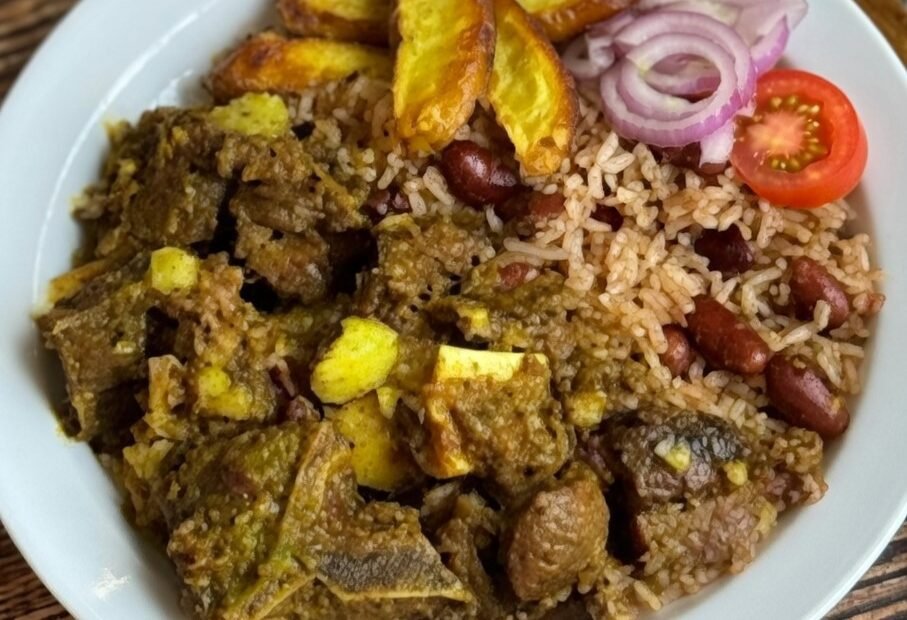
There is something deeply comforting about a pot of curried goat slowly simmering on the stove. In Jamaica, this dish is more than just food—it is a celebration. It often appears at family gatherings, weddings, and festive occasions, filling the air with rich, spicy aromas that instantly bring people together.
Curried goat tells a story of cultural blending. Influences from Indian indentured workers who brought curry spices to the Caribbean merged beautifully with local ingredients and cooking styles. Over time, the dish evolved into something uniquely Jamaican—bold, flavorful, and unforgettable.
At its heart, curried goat is about patience. The goat meat is marinated with spices, then cooked slowly until tender, soaking up every bit of flavor from the curry, herbs, and heat from Scotch bonnet peppers. It is traditionally served with rice and peas, which helps balance the spice and completes the meal.
The Flavor Story
The first thing you notice about curried goat is its aroma. The curry powder brings warmth, turmeric adds earthiness, and allspice gives a slightly sweet, peppery depth. Then comes the heat—Scotch bonnet peppers, small but powerful, giving the dish its signature kick.
But it’s not just spicy. There is a richness from slow cooking, a slight sweetness from onions, and a deep savory note from the goat itself. The gravy becomes thick and full-bodied, perfect for soaking into rice.
Ingredients You Will Need
For the marinade and curry:
- 1 kg goat meat (bone-in pieces preferred)
- 2 tablespoons curry powder
- 1 teaspoon turmeric powder
- 1 teaspoon ground allspice (pimento)
- 4 cloves garlic, crushed
- 1 thumb-sized ginger, grated
- 2 onions, chopped
- 2 spring onions, chopped
- 1–2 Scotch bonnet peppers (whole or sliced)
- 2 tablespoons vegetable oil
- Salt and black pepper to taste
- Fresh thyme sprigs
- 2 medium potatoes, chopped (optional but traditional)
- 2 cups water or stock
For serving:
- Steamed rice and peas
Step-by-Step Cooking Method
Start by washing the goat meat properly and draining it well. In a large bowl, season it with curry powder, turmeric, allspice, garlic, ginger, salt, and black pepper. Add chopped onions and spring onions, mixing everything thoroughly so the spices coat the meat evenly.
Let this marinate for at least a few hours. If you have time, leaving it overnight in the fridge makes a big difference. The longer it rests, the deeper the flavor.
When you’re ready to cook, heat oil in a heavy pot. Add a spoonful of curry powder to the oil and let it “burn” slightly for a minute. This step is important—it wakes up the spices and gives the dish its deep color and flavor.
Add the marinated goat meat into the pot. Stir well and let it brown. At this stage, the kitchen will start to smell incredible. The meat will release its juices and begin to develop a rich base.
Now add thyme and the Scotch bonnet peppers. Pour in water or stock, just enough to cover the meat. Bring it to a gentle boil, then reduce the heat and let it simmer slowly.
This is where patience comes in. Let it cook for about 1.5 to 2 hours, stirring occasionally. The meat should become tender and start falling off the bone.
About halfway through cooking, add the chopped potatoes. They will absorb the curry flavor and help thicken the gravy.
By the end, the sauce should be thick and rich, coating every piece of meat. Taste and adjust salt if needed.
Serve hot with rice and peas, letting the gravy soak into the rice.
Prep Time and Cook Time
- Prep time: Around 20–30 minutes (plus marination time)
- Marination time: Minimum 2 hours, ideally overnight
- Cook time: 1.5 to 2 hours
- Total time: Approximately 2 to 3 hours
Nutrition Overview
Curried goat is both hearty and nourishing when enjoyed in moderation.
- Goat meat is leaner than many other red meats, making it a good source of protein.
- It provides essential nutrients like iron, zinc, and vitamin B12, which support energy levels and overall health.
- The spices used—turmeric, ginger, and garlic—have natural anti-inflammatory and digestive benefits.
- The dish can be high in sodium depending on seasoning, so adjusting salt is important.
- When paired with rice and peas, it becomes a balanced meal with protein, carbohydrates, and fiber.
Tips for Home Cooks
Cooking curried goat at home might feel intimidating at first, but a few simple tips can make all the difference.
Choose the right cut of meat. Bone-in pieces are best because they add flavor to the gravy during slow cooking.
Marination is key. Do not rush this step. The spices need time to penetrate the meat.
Cook low and slow. Goat meat can be tough if rushed. Gentle simmering ensures it becomes tender and juicy.
Handle the heat carefully. Scotch bonnet peppers are very spicy. If you prefer less heat, keep them whole and remove them before serving. If you like it fiery, slice them.
Burning the curry powder in oil at the beginning is essential. It deepens the flavor and gives the dish its authentic taste.
If the gravy becomes too thick, add a little water. If it’s too thin, let it simmer uncovered to reduce.
Why This Dish Stands Out
Curried goat is not just about ingredients—it is about time, care, and tradition. Every household in Jamaica has its own version, slightly different but equally loved. Some add carrots, others adjust the spice blend, but the essence remains the same.
It is a dish that rewards patience. As it cooks, flavors build layer by layer, creating something deeply satisfying. The tender meat, the rich sauce, and the balance of spice make it unforgettable.
When served with rice and peas, it becomes a complete experience—comforting, bold, and full of character.
Final Thoughts
If you are looking to try something new yet deeply comforting, curried goat is a perfect choice. It may take time, but the result is worth every minute. The slow cooking, the spices, and the rich gravy come together to create a dish that feels both festive and homely.
Once you make it, it is likely to become one of those recipes you return to again and again—not just for the taste, but for the feeling it brings with it.

- admin-food-prith
- admin-food-prith
- admin-food-prith
- admin-food-prith
- admin-food-prith
- admin-food-prith
- admin-food-prith
- admin-food-prith
- admin-food-prith
- admin-food-prith
- admin-food-prith
- admin-food-prith
- admin-food-prith
- admin-food-prith
- admin-food-prith
- admin-food-prith
- admin-food-prith
- admin-food-prith
- admin-food-prith
- admin-food-prith
- admin-food-prith
- admin-food-prith
- admin-food-prith
- admin-food-prith
- admin-food-prith
- admin-food-prith
- admin-food-prith
- admin-food-prith
- admin-food-prith
- admin-food-prith
- admin-food-prith
- admin-food-prith
- admin-food-prith
- admin-food-prith
- admin-food-prith
- admin-food-prith
- admin-food-prith
- admin-food-prith
- admin-food-prith
- admin-food-prith
- admin-food-prith
- admin-food-prith
- admin-food-prith
- admin-food-prith
- admin-food-prith
- admin-food-prith
- admin-food-prith
- admin-food-prith
- admin-food-prith
- admin-food-prith
- admin-food-prith
- admin-food-prith
- admin-food-prith
- admin-food-prith
- admin-food-prith
- admin-food-prith
- admin-food-prith
- admin-food-prith
- admin-food-prith
- admin-food-prith
- admin-food-prith
- admin-food-prith
- admin-food-prith
- admin-food-prith
- admin-food-prith
- admin-food-prith
- admin-food-prith
- admin-food-prith
- admin-food-prith
- admin-food-prith
- admin-food-prith
- admin-food-prith
- admin-food-prith
- admin-food-prith
- admin-food-prith
- admin-food-prith
- admin-food-prith
- admin-food-prith
- admin-food-prith
- admin-food-prith
- admin-food-prith
- admin-food-prith
- admin-food-prith
- admin-food-prith
- admin-food-prith
- admin-food-prith
- admin-food-prith
- admin-food-prith
- admin-food-prith
- admin-food-prith
- admin-food-prith
- admin-food-prith
- admin-food-prith
- admin-food-prith
- admin-food-prith
- admin-food-prith
- admin-food-prith
- admin-food-prith
- admin-food-prith
- admin-food-prith
- admin-food-prith
- admin-food-prith
- admin-food-prith
- admin-food-prith
- admin-food-prith
- admin-food-prith
- admin-food-prith
- admin-food-prith
- admin-food-prith
- admin-food-prith
- admin-food-prith
- admin-food-prith
- admin-food-prith
- admin-food-prith
- admin-food-prith
- admin-food-prith
- admin-food-prith
- admin-food-prith
- admin-food-prith
- admin-food-prith
- admin-food-prith
- admin-food-prith
- admin-food-prith
- admin-food-prith
- admin-food-prith
- admin-food-prith
- admin-food-prith
- admin-food-prith
- admin-food-prith
- admin-food-prith
- admin-food-prith
- admin-food-prith
- admin-food-prith
- admin-food-prith
- admin-food-prith
- admin-food-prith
- admin-food-prith
- admin-food-prith
- admin-food-prith
- admin-food-prith
- admin-food-prith
- admin-food-prith
- admin-food-prith
- admin-food-prith
- admin-food-prith
- admin-food-prith
- admin-food-prith
- admin-food-prith
- admin-food-prith
- admin-food-prith
- admin-food-prith
- admin-food-prith
- admin-food-prith
- admin-food-prith
- admin-food-prith
- admin-food-prith
- admin-food-prith
- admin-food-prith
- admin-food-prith
- admin-food-prith
- admin-food-prith
- admin-food-prith
- admin-food-prith
- admin-food-prith
- admin-food-prith
- admin-food-prith
- admin-food-prith
- admin-food-prith
- admin-food-prith
- admin-food-prith
- admin-food-prith
- admin-food-prith
- admin-food-prith
- admin-food-prith
- admin-food-prith
- admin-food-prith
- admin-food-prith
- admin-food-prith
- admin-food-prith
- admin-food-prith
- admin-food-prith
- admin-food-prith
- admin-food-prith
- admin-food-prith
- admin-food-prith
- admin-food-prith
- admin-food-prith
- admin-food-prith
- admin-food-prith
- admin-food-prith
- admin-food-prith
- admin-food-prith
- admin-food-prith
- admin-food-prith
- admin-food-prith
- admin-food-prith
- admin-food-prith
- admin-food-prith
- admin-food-prith
- admin-food-prith
- admin-food-prith
- admin-food-prith
- admin-food-prith
- admin-food-prith
- admin-food-prith
- admin-food-prith
- admin-food-prith
- admin-food-prith
- admin-food-prith
- admin-food-prith
- admin-food-prith
- admin-food-prith
- admin-food-prith
- admin-food-prith
- admin-food-prith
- admin-food-prith
- admin-food-prith
- admin-food-prith
- admin-food-prith
- admin-food-prith
- admin-food-prith
- admin-food-prith
- admin-food-prith
- admin-food-prith
- admin-food-prith
- admin-food-prith
- admin-food-prith
- admin-food-prith
- admin-food-prith
- admin-food-prith
- admin-food-prith
- admin-food-prith
- admin-food-prith
- admin-food-prith
- admin-food-prith
- admin-food-prith
- admin-food-prith
- admin-food-prith
- admin-food-prith
- admin-food-prith
- admin-food-prith
- admin-food-prith
- admin-food-prith
- admin-food-prith
- admin-food-prith
- admin-food-prith
- admin-food-prith
- admin-food-prith
- admin-food-prith
- admin-food-prith
- admin-food-prith
- admin-food-prith
- admin-food-prith
- admin-food-prith
- admin-food-prith
- admin-food-prith
- admin-food-prith
- admin-food-prith
- admin-food-prith
- admin-food-prith
- admin-food-prith
- admin-food-prith
- admin-food-prith
- admin-food-prith
- admin-food-prith
- admin-food-prith
- admin-food-prith
- admin-food-prith
- admin-food-prith
- admin-food-prith
- admin-food-prith
- admin-food-prith
- admin-food-prith
- admin-food-prith
- admin-food-prith
- admin-food-prith
- admin-food-prith
- admin-food-prith
- admin-food-prith
- admin-food-prith
- admin-food-prith
- admin-food-prith
- admin-food-prith
- admin-food-prith
- admin-food-prith
- admin-food-prith
- admin-food-prith
- admin-food-prith
- admin-food-prith
- admin-food-prith
- admin-food-prith
- admin-food-prith
- admin-food-prith
- admin-food-prith
- admin-food-prith
- admin-food-prith
- admin-food-prith
- admin-food-prith
- admin-food-prith
- admin-food-prith
- admin-food-prith
- admin-food-prith
- admin-food-prith
- admin-food-prith
- admin-food-prith
- admin-food-prith
- admin-food-prith
- admin-food-prith
- admin-food-prith
- admin-food-prith
- admin-food-prith
- admin-food-prith
- admin-food-prith
- admin-food-prith
- admin-food-prith
- admin-food-prith
- admin-food-prith
- admin-food-prith
- admin-food-prith
- admin-food-prith
- admin-food-prith
- admin-food-prith
- admin-food-prith
- admin-food-prith
- admin-food-prith
- admin-food-prith
- admin-food-prith
- admin-food-prith
- admin-food-prith
- admin-food-prith
- admin-food-prith
- admin-food-prith
- admin-food-prith
- admin-food-prith
- admin-food-prith
- admin-food-prith
- admin-food-prith
- admin-food-prith
- admin-food-prith
- admin-food-prith
- admin-food-prith
- admin-food-prith
- admin-food-prith
- admin-food-prith
- admin-food-prith
- admin-food-prith
- admin-food-prith
- admin-food-prith
- admin-food-prith
- admin-food-prith
- admin-food-prith
- admin-food-prith
- admin-food-prith
- admin-food-prith
- admin-food-prith
- admin-food-prith
- admin-food-prith
- admin-food-prith
- admin-food-prith
- admin-food-prith
- admin-food-prith
- admin-food-prith
- admin-food-prith
- admin-food-prith
- admin-food-prith
- admin-food-prith
- admin-food-prith
- admin-food-prith
- admin-food-prith
- admin-food-prith
- admin-food-prith
- admin-food-prith
- admin-food-prith
- admin-food-prith
- admin-food-prith
- admin-food-prith
- admin-food-prith
- admin-food-prith
- admin-food-prith
- admin-food-prith
- admin-food-prith
- admin-food-prith
- admin-food-prith
- admin-food-prith
- admin-food-prith
- admin-food-prith
- admin-food-prith
- admin-food-prith
- admin-food-prith
- admin-food-prith
- admin-food-prith
- admin-food-prith
- admin-food-prith
- admin-food-prith
- admin-food-prith
- admin-food-prith
- admin-food-prith
- admin-food-prith
- admin-food-prith
- admin-food-prith
- admin-food-prith
- admin-food-prith
- admin-food-prith
- admin-food-prith
- admin-food-prith
- admin-food-prith
- admin-food-prith
- admin-food-prith
- admin-food-prith
- admin-food-prith
- admin-food-prith
- admin-food-prith
- admin-food-prith
- admin-food-prith
- admin-food-prith
- admin-food-prith
- admin-food-prith
- admin-food-prith
- admin-food-prith
- admin-food-prith
- admin-food-prith
- admin-food-prith
- admin-food-prith
- admin-food-prith
- admin-food-prith
- admin-food-prith
- admin-food-prith
- admin-food-prith
- admin-food-prith
- admin-food-prith
- admin-food-prith
- admin-food-prith
- admin-food-prith
- admin-food-prith
- admin-food-prith
- admin-food-prith
- admin-food-prith
- admin-food-prith
- admin-food-prith
- admin-food-prith
- admin-food-prith
- admin-food-prith
- admin-food-prith
- admin-food-prith
- admin-food-prith
- admin-food-prith
- admin-food-prith
- admin-food-prith
- admin-food-prith
- admin-food-prith
- admin-food-prith
- admin-food-prith
- admin-food-prith
- admin-food-prith
- admin-food-prith
- admin-food-prith
- admin-food-prith
- admin-food-prith
- admin-food-prith
- admin-food-prith
- admin-food-prith
- admin-food-prith
- admin-food-prith
- admin-food-prith
- admin-food-prith
- admin-food-prith
- admin-food-prith
- admin-food-prith
- admin-food-prith
- admin-food-prith
- admin-food-prith
- admin-food-prith
- admin-food-prith
- admin-food-prith
- admin-food-prith
- admin-food-prith
- admin-food-prith
- admin-food-prith
- admin-food-prith
- admin-food-prith
- admin-food-prith
- admin-food-prith
- admin-food-prith
- admin-food-prith
- admin-food-prith
- admin-food-prith
- admin-food-prith
- admin-food-prith
- admin-food-prith
- admin-food-prith
- admin-food-prith
- admin-food-prith
- admin-food-prith
- admin-food-prith
- admin-food-prith
- admin-food-prith
- admin-food-prith
- admin-food-prith
- admin-food-prith
- admin-food-prith
- admin-food-prith
- admin-food-prith
- admin-food-prith
- admin-food-prith
- admin-food-prith
- admin-food-prith
- admin-food-prith
- admin-food-prith
- admin-food-prith
- admin-food-prith
- admin-food-prith
- admin-food-prith
- admin-food-prith
- admin-food-prith
- admin-food-prith
- admin-food-prith
- admin-food-prith
- admin-food-prith
- admin-food-prith
- admin-food-prith
- admin-food-prith
- admin-food-prith
- admin-food-prith
- admin-food-prith
- admin-food-prith
- admin-food-prith
- admin-food-prith
- admin-food-prith
- admin-food-prith
- admin-food-prith
- admin-food-prith
- admin-food-prith
- admin-food-prith
- admin-food-prith
- admin-food-prith
- admin-food-prith
- admin-food-prith
- admin-food-prith
- admin-food-prith
- admin-food-prith
- admin-food-prith
- admin-food-prith
- admin-food-prith
- admin-food-prith
- admin-food-prith
- admin-food-prith
- admin-food-prith
- admin-food-prith
- admin-food-prith
- admin-food-prith
- admin-food-prith
- admin-food-prith
- admin-food-prith
- admin-food-prith
- admin-food-prith
- admin-food-prith
- admin-food-prith
- admin-food-prith
- admin-food-prith
- admin-food-prith
- admin-food-prith
- admin-food-prith
- admin-food-prith
- admin-food-prith
- admin-food-prith
- admin-food-prith
- admin-food-prith
- admin-food-prith
- admin-food-prith
- admin-food-prith
- admin-food-prith
- admin-food-prith
- admin-food-prith
- admin-food-prith
- admin-food-prith