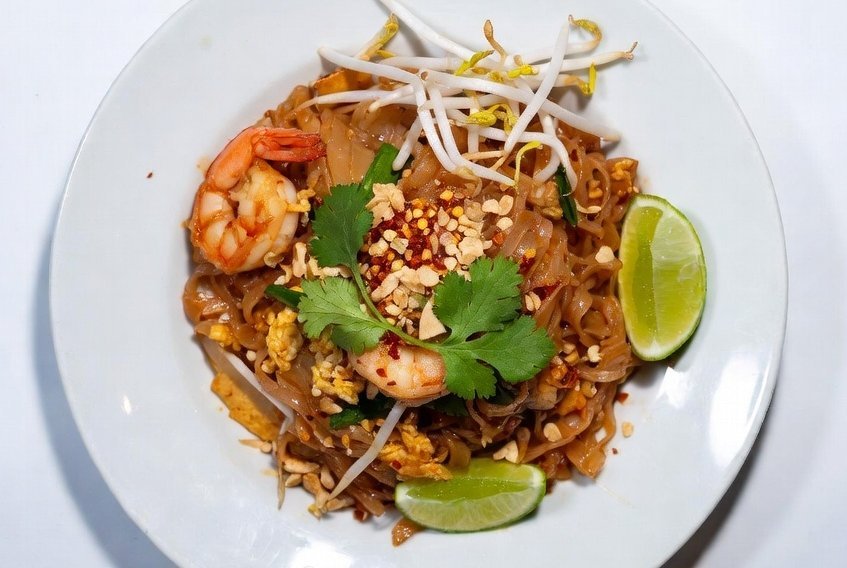
Few dishes represent Thailand as perfectly as Pad Thai. Walk through a busy street market in Thailand, and the aroma of sizzling noodles, garlic, tamarind sauce, and roasted peanuts often fills the air. Vendors skillfully toss rice noodles in hot woks while locals and travelers gather around waiting for a fresh plate.
Pad Thai is one of those rare dishes that feels comforting, exciting, and satisfying all at the same time. It combines soft rice noodles, juicy shrimp, crispy tofu, egg, crunchy bean sprouts, tangy tamarind sauce, and roasted peanuts into a meal that delivers many flavors in every bite. Sweet, sour, salty, and savory notes come together beautifully, creating a dish that has become popular around the world.
What makes Pad Thai special is its balance. Nothing overpowers anything else. Every ingredient plays an important role. The noodles provide the base, the shrimp adds sweetness from the sea, tofu brings texture, eggs add richness, bean sprouts contribute freshness, and peanuts give a satisfying crunch. The tamarind sauce ties everything together with its distinctive tangy flavor.
Although Pad Thai may seem like a restaurant dish, it can be made successfully at home with a little preparation. Once all the ingredients are ready, the cooking process is surprisingly quick.
The Story Behind Pad Thai
Pad Thai is a stir-fried noodle dish that became one of Thailand’s most recognized foods. While Thailand has many noodle dishes, Pad Thai stands out because of its unique sauce and combination of ingredients.
The word “Pad” means stir-fried in Thai cooking. The dish showcases the importance of balancing flavors, a principle that is central to Thai cuisine. Instead of focusing on a single dominant taste, Thai cooking often aims to combine sweet, sour, salty, and savory elements in harmony.
Over time, Pad Thai moved from local street food stalls to restaurants across the world. Today, it is often the first Thai dish many people try, yet it remains deeply connected to everyday Thai food culture.
Why People Love Pad Thai
One reason for Pad Thai’s popularity is that it offers something for everyone. The noodles are comforting, the sauce is flavorful, and the toppings create layers of texture.
Each forkful can be slightly different. One bite may highlight the sweetness of shrimp. Another may feature crunchy peanuts and bean sprouts. A squeeze of lime can make the flavors even brighter.
Pad Thai is also highly adaptable. Some cooks use chicken, while others prefer tofu alone. Some enjoy extra vegetables, while others like a more traditional version focused on noodles and protein.
Ingredients
For the noodles and stir-fry:
- 250 grams rice noodles
- 200 grams shrimp, peeled and cleaned
- 150 grams firm tofu, diced into small cubes
- 2 eggs
- 2 cups bean sprouts
- 3 cloves garlic, minced
- 2 tablespoons vegetable oil
- 2 green onions, sliced
- 1 lime, cut into wedges
For the Pad Thai sauce:
- 2 tablespoons tamarind paste
- 2 tablespoons fish sauce
- 1 tablespoon soy sauce
- 1 tablespoon brown sugar or palm sugar
- 2 tablespoons water
For garnish:
- ¼ cup roasted peanuts, crushed
- Extra bean sprouts
- Lime wedges
Preparation Time and Cooking Time
Preparation Time: 20 minutes
Cooking Time: 15 minutes
Total Time: 35 minutes
Servings: 4
Step-by-Step Pad Thai Recipe
Prepare the Rice Noodles
Place the rice noodles in a large bowl and cover them with warm water. Let them soak until they become flexible but not completely soft. This usually takes about 20 to 30 minutes depending on the noodle thickness.
Drain the noodles and set them aside.
Make the Sauce
In a small bowl, combine the tamarind paste, fish sauce, soy sauce, brown sugar, and water.
Stir well until the sugar dissolves completely. Taste the sauce. It should have a balance of sweet, salty, and sour flavors.
Set it aside.
Cook the Tofu
Heat one tablespoon of oil in a wok or large frying pan over medium-high heat.
Add the tofu cubes and cook until they become lightly golden on all sides. This should take several minutes.
Remove the tofu and keep it aside.
Cook the Shrimp
Add the remaining oil to the pan.
Place the shrimp in the hot pan and cook for about two minutes per side until they turn pink and opaque.
Move them to one side of the pan.
Add Garlic and Eggs
Add the minced garlic and stir for a few seconds until fragrant.
Push everything to the side and crack the eggs into the empty space.
Scramble the eggs gently until mostly cooked.
Add the Noodles
Place the soaked rice noodles into the pan.
Pour the prepared sauce over the noodles.
Using tongs or a spatula, gently toss everything together so the noodles absorb the sauce evenly.
Continue cooking for several minutes until the noodles become tender.
Combine Everything
Return the cooked tofu to the pan.
Add most of the bean sprouts and the green onions.
Toss everything together for about a minute.
The bean sprouts should remain slightly crunchy.
Finish and Serve
Transfer the Pad Thai to serving plates.
Top with crushed peanuts, extra bean sprouts, and lime wedges.
Serve immediately while hot.
A squeeze of fresh lime just before eating makes the flavors even more vibrant.
What Makes Tamarind So Important?
If there is one ingredient that defines Pad Thai, it is tamarind.
Tamarind comes from the pod of a tropical tree and has a naturally tangy flavor. It creates the signature sour note that makes Pad Thai different from many other noodle dishes.
Without tamarind, the dish may still be tasty, but it will not have the authentic character that people associate with traditional Pad Thai.
The tamarind sauce balances the sweetness of sugar and the saltiness of fish sauce, creating a flavor profile that feels complex yet harmonious.
The Role of Texture in Pad Thai
A great Pad Thai is not only about flavor. Texture is equally important.
The noodles should be tender but not mushy. The shrimp should be juicy. The tofu should have slightly crisp edges. Bean sprouts should remain crunchy. Peanuts should add a roasted crunch.
This contrast is one of the reasons the dish feels so satisfying. Every bite contains multiple textures working together.
Nutrition Information
Approximate values per serving:
| Nutrient | Amount |
|---|---|
| Calories | 430-500 |
| Protein | 24g |
| Carbohydrates | 50g |
| Fat | 15g |
| Fiber | 4g |
| Sugar | 7g |
| Sodium | 850mg |
The exact values may vary depending on ingredients and portion sizes.
Shrimp provides high-quality protein while tofu contributes plant-based protein and minerals. Bean sprouts add vitamins and freshness. Peanuts supply healthy fats and additional protein.
Tips for Home Cooks
The most common mistake when making Pad Thai is overcooking the noodles. They should be soaked until flexible rather than fully cooked before entering the pan.
Prepare all ingredients before starting to cook. Stir-frying moves quickly, and there is little time to chop vegetables once the heat is on.
Use a large wok or frying pan whenever possible. Overcrowding the pan can cause the noodles to steam instead of stir-fry.
Taste the sauce before adding it to the noodles. Everyone prefers a slightly different balance of sweet, sour, and salty flavors.
Do not cook the bean sprouts for too long. Their freshness and crunch are part of what makes Pad Thai enjoyable.
Roasted peanuts should be added just before serving to maintain their texture.
Fresh lime wedges are not merely decoration. The citrus adds brightness and helps bring all the flavors together.
Serving Suggestions
Pad Thai is often served as a complete meal on its own, but it also pairs well with light side dishes.
A simple cucumber salad offers a refreshing contrast to the rich noodles. Fresh herbs such as cilantro can add extra aroma. Some people enjoy a small bowl of clear soup alongside the noodles.
For gatherings, Pad Thai works wonderfully as part of a larger Thai-inspired meal featuring grilled vegetables, fresh salads, and tropical fruit desserts.
Final Thoughts
Pad Thai is more than just a noodle dish. It is a celebration of balance, texture, and flavor. Its combination of shrimp, tofu, egg, bean sprouts, peanuts, and tamarind sauce creates a meal that feels both comforting and exciting.
The first bite often reveals why this dish has become famous around the world. The noodles are savory, the sauce is tangy, the peanuts add crunch, and the fresh lime brings everything to life.
Making Pad Thai at home allows you to experience one of Thailand’s most beloved foods straight from your own kitchen. With a little preparation and attention to detail, you can create a restaurant-quality dish that captures the spirit of Thai street food and delivers a memorable meal for family and friends.