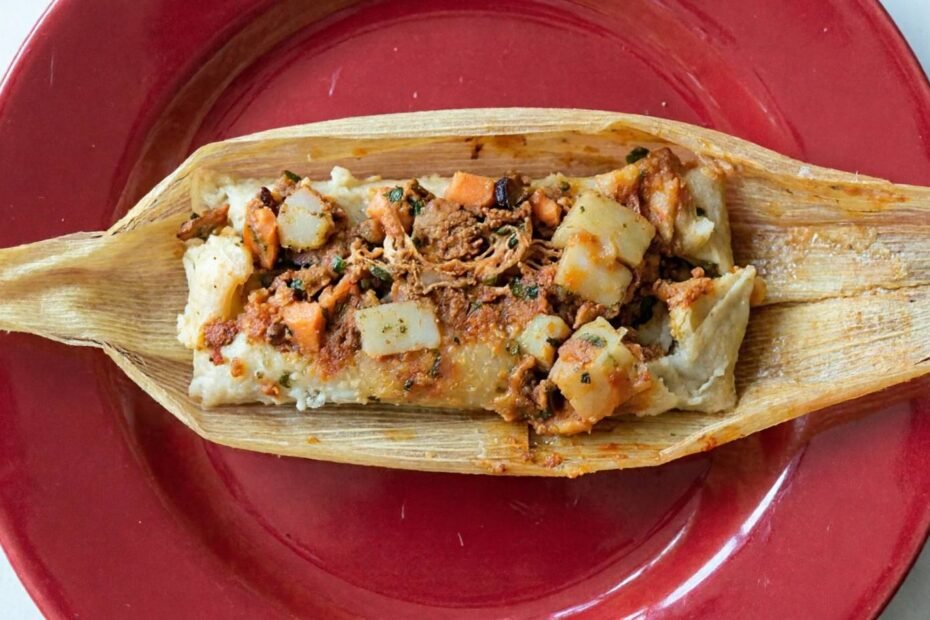
Some foods are more than recipes. They are traditions that bring families together, fill kitchens with conversation, and create memories that last for generations. Tamales Cubanos, or Cuban tamales, belong to that special group of foods. Soft, flavorful, and deeply comforting, these corn-based parcels are one of Cuba’s most cherished traditional dishes.
At first glance, Cuban tamales may remind people of Mexican tamales. Both are wrapped in corn husks and steamed. Both use corn as the main ingredient. Yet Cuban tamales have a personality of their own. They are generally less spicy, have a softer and more delicate flavor profile, and often mix seasoned meat directly into the corn dough rather than placing a large filling in the center.
The result is a dish that feels rich and satisfying while remaining simple and approachable. Every bite contains the sweetness of corn, the savoriness of meat, and the fragrance of garlic, onions, and peppers.
Across Cuba, tamales are enjoyed as a snack, lunch, dinner, or special occasion food. They are often prepared in large batches because making tamales is as much a social activity as it is a cooking project. Family members gather around a table to prepare the corn mixture, season the meat, wrap the tamales, and share stories while working together.
When the steaming process is complete and the corn husks are opened, a warm and aromatic meal is revealed. The sight and smell alone are enough to make people hungry.
The History of Cuban Tamales
Corn has played an important role in the Caribbean for centuries. Long before modern kitchens existed, indigenous communities used corn to create nourishing meals.
As different culinary traditions met and blended over time, tamales evolved into the dish known today.
Cuban cooks adapted the recipe to local tastes and ingredients. Instead of relying heavily on hot chilies and strong spices, they focused on balanced flavors created through garlic, onions, peppers, tomatoes, and well-seasoned meat.
The result is a tamale that feels distinctly Cuban.
Today, Tamales Cubanos remain a symbol of home cooking, family gatherings, and culinary tradition.
What Makes Cuban Tamales Different?
One of the biggest differences is the flavor profile.
Mexican tamales often feature spicy sauces and a wide variety of fillings.
Cuban tamales are generally milder and focus more on the natural sweetness of corn and the richness of seasoned meat.
Another difference is texture.
Many Cuban recipes combine the meat and corn mixture more closely, creating a uniform and flavorful filling throughout the tamale.
The use of sofrito, a mixture of onions, peppers, garlic, and tomatoes, also gives Cuban tamales their characteristic flavor.
These differences make Tamales Cubanos unique while still sharing a common heritage with tamales found elsewhere in Latin America.
Prep Time and Cook Time
Prep Time: 45 minutes
Cook Time: 1 hour 30 minutes
Total Time: About 2 hours 15 minutes
Serves: 10 to 12 tamales
Ingredients
For the corn dough:
- 4 cups fresh corn kernels or coarse cornmeal
- 2 cups chicken broth
- 2 tablespoons vegetable oil
- 1 teaspoon salt
For the meat filling:
- 500 grams pork shoulder or chicken thigh, finely chopped
- 1 tablespoon vegetable oil
- 1 large onion, finely chopped
- 1 green bell pepper, finely chopped
- 5 garlic cloves, minced
- 2 medium tomatoes, finely chopped
- 1 teaspoon ground cumin
- 1 teaspoon dried oregano
- 1 teaspoon paprika
- 1 teaspoon salt
- ½ teaspoon black pepper
For wrapping:
- 12 dried corn husks
- Kitchen string
Step 1: Prepare the Corn Husks
Begin by placing the dried corn husks in warm water.
Allow them to soak until they become soft and flexible.
This usually takes about thirty minutes.
Once softened, rinse them gently and set them aside.
The corn husks are not eaten, but they play an important role during steaming.
They protect the tamales while allowing them to absorb moisture and develop their characteristic aroma.
Step 2: Cook the Seasoned Meat
Heat the oil in a large skillet.
Add the chopped onion and cook until soft.
Next, add the green bell pepper and continue cooking.
Stir in the minced garlic and cook briefly until fragrant.
Add the chopped tomatoes and cook until they begin to break down.
This mixture forms the sofrito, the flavor foundation of many Cuban dishes.
Add the pork or chicken.
Cook until the meat is lightly browned.
Sprinkle in the cumin, oregano, paprika, salt, and black pepper.
Allow everything to cook together until the meat is fully cooked and flavorful.
Set the mixture aside to cool slightly.
The aroma at this stage is rich, comforting, and unmistakably Cuban.
Step 3: Prepare the Corn Mixture
Place the corn kernels or cornmeal in a large bowl.
Gradually add the chicken broth while stirring.
Add the vegetable oil and salt.
Mix until a thick, smooth mixture forms.
If using fresh corn, the mixture may be slightly textured, which adds character to the finished tamales.
Fold the cooked meat mixture into the corn mixture.
Unlike some tamale styles where the filling stays separate, Cuban tamales often blend the meat and corn together.
This creates flavor in every bite.
The mixture should be moist but not runny.
Step 4: Assemble the Tamales
Lay a softened corn husk flat on a work surface.
Place a generous spoonful of the corn and meat mixture in the center.
Fold one side of the husk over the filling.
Fold the opposite side over to enclose the mixture.
Fold the ends inward.
Tie gently with kitchen string if needed.
Repeat the process until all the mixture has been used.
At this stage, the tamales begin to look like little wrapped gifts waiting to be opened.
Each one contains the flavors of corn, meat, vegetables, and spices.
Step 5: Steam the Tamales
Arrange the wrapped tamales upright in a large steamer pot.
Add water beneath the steaming basket.
Bring the water to a gentle boil.
Cover the pot and steam the tamales for about one and a half hours.
Check occasionally to ensure the water level remains adequate.
As the tamales steam, the corn mixture firms up while remaining moist and tender.
The flavors blend together beautifully.
Once cooked, remove the tamales carefully and allow them to rest for a few minutes.
Serve warm directly in their husks.
Opening a tamale at the table is part of the experience and adds a sense of anticipation to the meal.
The Science Behind Steaming
Steaming is one of the gentlest cooking methods.
Unlike baking or frying, steaming cooks food through moist heat.
This helps the corn mixture remain soft and prevents it from drying out.
Food science research shows that steam transfers heat efficiently while preserving moisture.
This is why properly steamed tamales have a tender texture instead of becoming hard or crumbly.
The corn husks also contribute to the cooking process.
They help trap steam around the tamales while protecting them from direct contact with water.
The result is a moist, flavorful, and evenly cooked dish.
Why Sofrito Is So Important
Many Cuban recipes begin with sofrito, and tamales are no exception.
The combination of onions, peppers, garlic, and tomatoes creates layers of flavor that would be difficult to achieve otherwise.
As the vegetables cook, their natural sugars become more pronounced.
The garlic adds depth.
The tomatoes contribute richness and acidity.
Together, these ingredients transform simple meat and corn into something much more interesting.
Without sofrito, Cuban tamales would lose much of their distinctive character.
A Meal Built Around Corn
Corn is the heart of the dish.
Its natural sweetness balances the savory meat and vegetables.
Corn also provides structure and texture.
In many cultures, corn has long been valued as both a staple food and a symbol of abundance.
In Cuban tamales, it serves both purposes beautifully.
The sweet, earthy flavor of corn remains present in every bite.
Tips for Home Cooks
Soak the corn husks thoroughly before using them.
Fresh corn often provides the most authentic flavor and texture.
Do not make the corn mixture too dry.
A slightly moist mixture creates softer tamales.
Season the meat generously because it flavors the entire dish.
Keep the steaming water at a gentle boil rather than a vigorous one.
Check the water level during steaming.
Allow the tamales to rest briefly before serving.
If the mixture seems too thick, add a little extra broth.
Tamales freeze well and can be reheated by steaming again.
Preparing tamales with family or friends makes the process easier and more enjoyable.
A Cuban Tradition Wrapped in Corn Husks
Tamales Cubanos showcase the beauty of Cuban home cooking. They combine simple ingredients such as corn, meat, vegetables, and spices into a dish that feels both comforting and special.
The soft corn mixture, savory seasoned filling, fragrant sofrito, and gentle steaming process create a meal rich in flavor and tradition. Every tamale reflects the care and patience that goes into making it.
Whether served at a family gathering, shared during a celebration, or enjoyed as a comforting homemade meal, Cuban tamales continue to hold an important place in the country’s culinary heritage. Their warmth, simplicity, and satisfying flavor have made them a favorite across generations, proving that some of the most memorable foods are wrapped in the simplest packages.