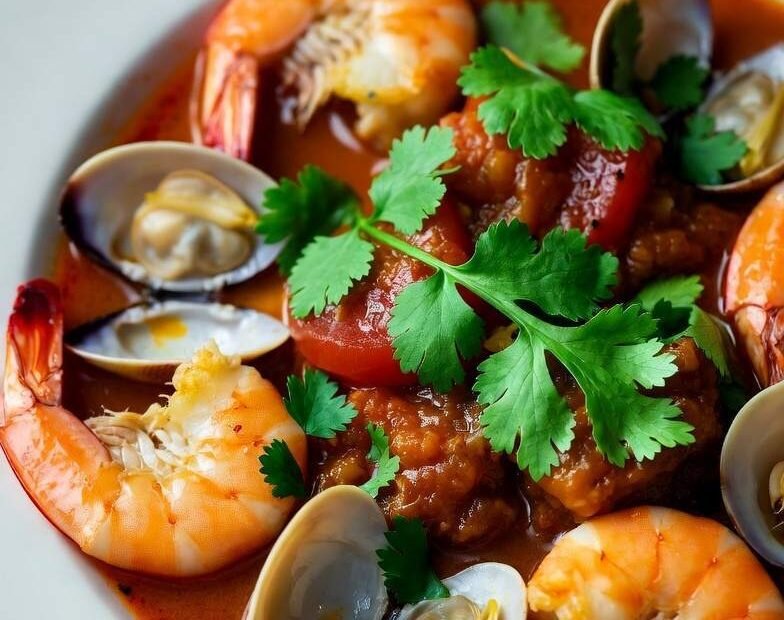
Along the sun-kissed shores of southern Portugal, where the Atlantic breeze meets golden beaches, there’s a dish that captures the very soul of the Algarve — Cataplana de Mariscos. Cooked in a traditional clamshell-shaped copper pot called the cataplana, this seafood stew is a celebration of the ocean’s bounty.
The cataplana itself is more than just cookware; it’s a symbol of Portuguese culinary heritage. Its design, which seals tightly like a pressure cooker, locks in flavors and aromas, allowing the ingredients — clams, shrimp, fish, and fragrant herbs — to simmer gently in white wine, olive oil, and garlic. The result? A dish that smells like the sea and tastes like home.
What Makes Cataplana de Mariscos So Special
Unlike heavy stews, Cataplana de Mariscos is light yet deeply flavorful. It’s not just about seafood; it’s about balance — the sweetness of onions and tomatoes, the acidity of white wine, and the freshness of cilantro, all dancing together in perfect harmony.
This dish embodies the Algarve spirit: simple ingredients, big flavor, and always shared with loved ones, often with a view of the sea and a glass of crisp vinho branco.
Ingredients
For the Stew:
- 2 tablespoons olive oil
- 1 large onion, finely sliced
- 3 cloves garlic, minced
- 1 bay leaf
- 1 medium tomato, chopped (or ½ cup canned diced tomatoes)
- ½ red bell pepper, sliced
- ½ green bell pepper, sliced
- ½ cup dry white wine
- 1 cup fish or seafood stock
- 200 g (7 oz) white fish fillet (such as cod or sea bass), cut into chunks
- 200 g (7 oz) raw shrimp, peeled and deveined
- 200 g (7 oz) clams or mussels (scrubbed clean)
- Salt and pepper to taste
- ½ teaspoon paprika
- Fresh cilantro, chopped (for garnish)
- Lemon wedges for serving
Step-by-Step Recipe
Step 1: Prepare the Aromatic Base
- In your cataplana pot (or a deep skillet if you don’t have one), heat the olive oil over medium heat.
- Add the onions and garlic, sautéing until soft and fragrant.
- Stir in the bay leaf, tomatoes, and sliced peppers. Let everything cook together for about 5 minutes, until the tomatoes begin to break down.
Step 2: Add the Liquid Gold
- Pour in the white wine and allow it to simmer for a minute to burn off the alcohol.
- Add the seafood stock, paprika, salt, and pepper. Stir gently and let the mixture simmer for another 5 minutes — the aroma should already be heavenly.
Step 3: Build the Stew
- Add the chunks of white fish first — they need a little more time to cook.
- After 3–4 minutes, add the shrimp and clams.
- Close the cataplana pot tightly (if you’re using one) and let it cook over medium-low heat for about 8–10 minutes, until the clams open and the shrimp turn pink.
Step 4: Finishing Touches
- Once done, open the pot carefully — the burst of steam and sea aroma will instantly transport you to Algarve’s coastal taverns.
- Discard any unopened clams.
- Sprinkle chopped cilantro on top and serve with lemon wedges and crusty bread to soak up the sauce.
Tips from the Algarve Kitchen
- The cataplana pot is key — its sealed design helps keep the seafood moist and flavorful.
- You can add other shellfish like mussels or squid for variety.
- Some locals add a pinch of saffron for a richer color and aroma.
- Always serve it immediately — this dish tastes best fresh from the pot!
Nutrition Facts (Per Serving)
| Nutrient | Amount |
|---|---|
| Calories | ~420 kcal |
| Protein | 40g |
| Fat | 15g |
| Carbohydrates | 20g |
| Fiber | 3g |
| Sodium | Moderate |
Prep and Cook Time
- Prep Time: 20 minutes
- Cook Time: 25 minutes
- Total Time: 45 minutes
A Taste of the Algarve Coast
Cooking Cataplana de Mariscos isn’t just about preparing a meal — it’s about embracing a rhythm. The clinking of the copper lid, the simmer of garlic and white wine, the laughter in the kitchen as family gathers around — these are the true flavors of the Algarve.
Many Portuguese families have their own version, passed down from grandparents who cooked this dish after a morning spent at the fish market. Some use richer broths; others prefer lighter flavors. But the essence remains the same: fresh seafood, good olive oil, and love in every stir.
