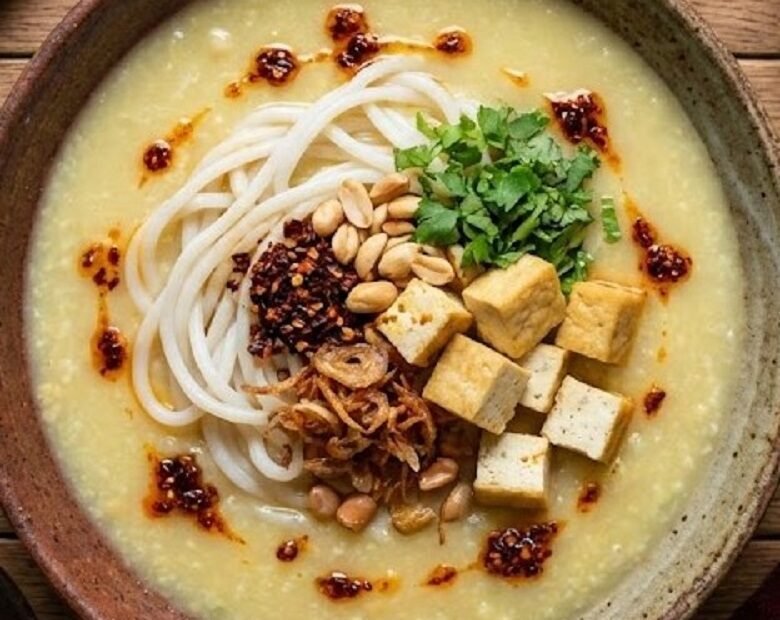
Tofu Nway is a comforting, warm dish from the Shan State of Myanmar (Burma). Despite the name, it contains no soy tofu. Instead, it is made from chickpea flour, slowly cooked into a smooth, silky porridge and served warm over rice noodles. It is topped with marinated pork, garlic oil, and simple seasonings that come together in a gentle yet deeply satisfying bowl.
Tofu Nway is not festival food or restaurant-style cooking. It is everyday comfort food. People eat it for breakfast, lunch, or on cool evenings when something warm and filling is needed. It reflects Shan cuisine, which is softer, milder, and more delicate than many central Burmese dishes.
This article explores the character of Tofu Nway, explains its components, and guides you through a clear step-by-step recipe that you can make at home.
Understanding Tofu Nway
In Burmese cuisine, the word tofu can refer to both soy-based tofu and chickpea-based tofu. Shan tofu is made from chickpea flour and comes in two forms:
- Tofu Thoke – cold chickpea tofu salad
- Tofu Nway – warm chickpea porridge
Tofu Nway is thicker than soup but softer than pudding. It is poured hot over rice noodles and topped with cooked pork, garlic oil, and sometimes chili oil. The dish is mild, warming, and easy to digest.
Unlike heavy curries, Tofu Nway focuses on texture and balance. Each element is simple, but together they create a complete meal.
Components of Tofu Nway
A traditional bowl of Tofu Nway has four main parts:
- Rice noodles – soft and neutral, forming the base
- Chickpea porridge – creamy, warm, and mildly nutty
- Marinated pork – adds savoury depth
- Garlic oil and toppings – bring aroma and richness
None of these elements are heavily spiced. The flavour comes from careful cooking and layering.
Ingredients Required
For the Chickpea Porridge
- 1 cup chickpea flour (besan)
- 3½ cups water
- 1/2 teaspoon turmeric powder
- Salt to taste
- 1 tablespoon neutral oil
For the Rice Noodles
- 250 grams fresh or dried rice noodles
- Water for boiling
For the Marinated Pork
- 250 grams pork (minced or finely chopped)
- 1 tablespoon soy sauce
- 1 teaspoon ginger paste
- 1 teaspoon garlic paste
- 1/2 teaspoon black pepper
- 1 tablespoon oil
For Garlic Oil
- 5–6 garlic cloves, finely chopped
- 3 tablespoons oil
Optional Toppings
- Chili oil (to taste)
- Chopped spring onions
- Crushed roasted peanuts
Step-by-Step Recipe
Step 1: Preparing the Chickpea Mixture
In a bowl, mix chickpea flour with 1 cup of water. Whisk well to remove all lumps.
This step is important. Any lumps will affect the final texture of the porridge.
Step 2: Cooking the Chickpea Porridge
Heat oil in a saucepan over low heat. Add the chickpea slurry, remaining water, turmeric, and salt.
Cook on low to medium heat, stirring constantly. The mixture will slowly thicken. This takes about 12–15 minutes.
Stir continuously to prevent sticking or lumps. The porridge should become smooth, glossy, and pourable.
Once thickened, reduce heat to very low and keep warm.
Step 3: Preparing the Pork
Heat oil in a pan over medium heat. Add garlic and ginger paste and sauté briefly.
Add marinated pork and cook until fully done and lightly browned. This takes about 6–8 minutes.
Set aside once cooked.
Step 4: Making Garlic Oil
Heat oil in a small pan over low heat. Add chopped garlic and cook slowly until lightly golden.
Remove from heat immediately to prevent burning. Set aside.
Step 5: Cooking the Rice Noodles
Boil rice noodles according to package instructions. Drain and rinse briefly with warm water.
Keep noodles warm before serving.
Step 6: Assembling the Bowl
Place a portion of rice noodles in a serving bowl. Spoon hot chickpea porridge generously over the noodles.
Top with cooked pork, garlic oil, and optional toppings like chili oil or spring onions.
Serve immediately while warm.
Preparation Time and Cooking Time
- Preparation Time: 25 minutes
- Cooking Time: 30 minutes
- Total Time: Approximately 55 minutes
Nutrition Information (Approximate per serving)
- Calories: 450–500 kcal
- Protein: 22–25 g
- Fat: 18–22 g
- Carbohydrates: 45–50 g
- Key Nutrients: Plant protein, Iron, Fibre, B vitamins
Chickpea flour provides sustained energy and is easy to digest. Combined with pork and noodles, Tofu Nway is a balanced, filling meal.
How Tofu Nway Is Traditionally Served
Tofu Nway is always served warm. It is eaten slowly, often with a spoon and chopsticks. The porridge keeps the dish hot longer, making it ideal for cool weather or mornings.
In Shan homes, it is sometimes served without pork for a vegetarian version, relying on garlic oil and chili oil for flavour.
Tips for Home Cooks
Stir Constantly
Chickpea flour thickens quickly. Constant stirring is essential.
Use Low Heat
High heat will cause lumps or burning at the bottom.
Adjust Thickness
Add warm water if the porridge becomes too thick.
Serve Immediately
Tofu Nway tastes best when freshly made and warm.
Keep Flavours Gentle
This dish is about comfort, not strong spice.
Variations You Can Try
- Replace pork with chicken or mushrooms
- Add tofu cubes for a vegetarian version
- Use shallots instead of garlic for a softer aroma
- Add a small splash of soy sauce to the porridge for depth
Each variation keeps the spirit of the dish intact.
Why Tofu Nway Is So Comforting
Tofu Nway feels like a warm blanket in a bowl. The smooth porridge, soft noodles, and gentle toppings work together without overpowering each other. It fills you up without feeling heavy.
This is the kind of food people grow up with and remember fondly. It is simple, nourishing, and honest.
Final Thoughts
Tofu Nway represents the softer side of Burmese cuisine. It shows how humble ingredients like chickpea flour and noodles can become something deeply satisfying through careful cooking.
If you enjoy warm, soothing meals with mild flavours and rich textures, Tofu Nway is a dish worth making at home. It brings a quiet, comforting taste of Shan State straight to your table.
