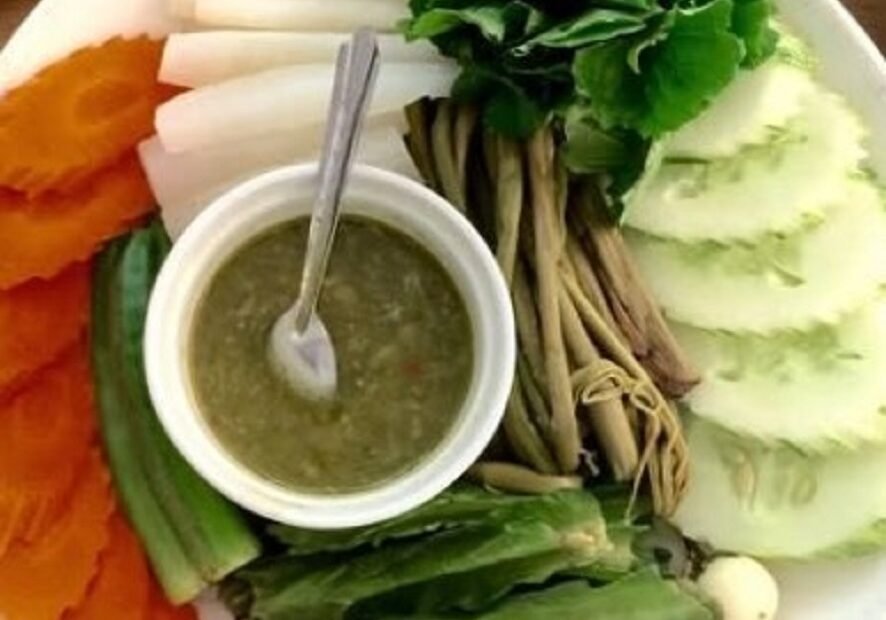
Ngapi Yay is one of the most traditional and deeply rooted dishes of Myanmar (Burma). It is not a curry, not a stew, and not a side dish in the usual sense. It is a fermented fish paste dip, served with boiled or fresh vegetables, and it represents the everyday food culture of Burmese households.
To someone unfamiliar, Ngapi Yay may seem simple or even intimidating because of its strong aroma. But for Burmese people, it is comfort food. It is eaten daily in many homes and is valued for its bold flavour, nutrition, and ability to turn plain vegetables and rice into a satisfying meal.
This article explains what Ngapi Yay is, how it is traditionally prepared, and how you can make a home-friendly version while respecting its authentic character.
Understanding Ngapi Yay
Ngapi is fermented fish paste, made by salting and fermenting small fish or shrimp. It is similar in idea to fermented fish products found across Southeast Asia, but Ngapi has its own texture, aroma, and flavour profile.
Ngapi Yay specifically refers to a dip made from ngapi, usually mixed with:
- Garlic
- Chilies
- Oil
- Sometimes onions or tomatoes
It is not heavily cooked. The goal is to soften and balance the fermented flavour, not hide it. Ngapi Yay is usually eaten with:
- Boiled vegetables
- Fresh vegetables
- Plain rice
In Burmese meals, Ngapi Yay often replaces curries when people want something light, simple, and fast.
Cultural Importance of Ngapi Yay
Ngapi Yay is more than food. It reflects the Burmese idea of balance and practicality. Fermentation allows fish to be preserved for long periods, making it accessible even in rural areas.
In many Burmese households, a small bowl of Ngapi Yay sits in the centre of the table, shared by everyone. Each person dips vegetables or rice into it. It brings people together and encourages slow, mindful eating.
It is also a dish that changes from region to region. Coastal areas may use stronger ngapi, while inland areas prepare milder versions.
Ingredients Required
Main Ingredients
- 3 tablespoons ngapi (fermented fish paste)
- 8–10 garlic cloves
- 4–6 dried red chilies (adjust to taste)
- 2 tablespoons peanut oil or neutral oil
- Salt to taste (use carefully)
- 1 teaspoon lime juice (optional)
Optional Ingredients
- 1 small onion, finely chopped
- 1 small tomato, finely chopped
For Serving
- Boiled vegetables such as:
- Long beans
- Cabbage
- Okra
- Eggplant
- Pumpkin
- Fresh vegetables such as:
- Cucumber
- Green mango
- Carrots
- Steamed white rice
Step-by-Step Recipe
Step 1: Preparing the Chilies
Soak dried red chilies in warm water for 10–15 minutes until soft. Drain and set aside.
This helps reduce bitterness and makes them easier to grind.
Step 2: Roasting Garlic
Heat a small pan on low heat. Add garlic cloves and dry-roast them until lightly browned and aromatic. Turn them often to avoid burning.
Roasting mellows the sharpness of garlic and adds depth to the dip.
Step 3: Grinding the Base
In a mortar and pestle or grinder, add soaked chilies and roasted garlic. Grind into a coarse paste.
The texture should be rustic, not smooth.
Step 4: Adding Ngapi
Add ngapi to the chili-garlic paste and grind again until well combined.
At this stage, the aroma will be strong. This is normal and expected.
Step 5: Cooking the Dip Lightly
Heat oil in a small pan over low heat. Add the paste and cook gently for 3–5 minutes, stirring continuously.
Do not fry on high heat. The aim is to soften the raw edges, not cook it heavily.
Step 6: Optional Additions
If using onion or tomato, add them now and cook for another 2–3 minutes until softened.
These additions are optional and mainly used to balance strong ngapi.
Step 7: Final Adjustments
Taste carefully. Add salt only if needed. Finish with a few drops of lime juice if desired.
Remove from heat and let it cool slightly before serving.
Preparation Time and Cooking Time
- Preparation Time: 20 minutes
- Cooking Time: 10 minutes
- Total Time: Approximately 30 minutes
Nutrition Information (Approximate per serving)
- Calories: 120–150 kcal
- Protein: 8–10 g
- Fat: 8–10 g
- Carbohydrates: 3–4 g
- Key Nutrients: Protein, Calcium, Probiotics, Omega-3 fatty acids
Ngapi Yay is nutrient-dense despite its small portion size. Fermentation adds beneficial bacteria that support digestion.
How Ngapi Yay Is Traditionally Served
Ngapi Yay is served at room temperature or slightly warm. It is placed in a small bowl at the centre of the table.
People dip:
- Boiled vegetables
- Fresh vegetables
- Rice
The vegetables cool and balance the strong flavour of the dip.
Tips for Home Cooks
Start Small
Ngapi has a strong taste. Use less at first and adjust gradually.
Use Low Heat
High heat can make the dip bitter and overpowering.
Balance Is Key
Garlic, chili, and oil should balance the fermented flavour, not hide it.
Ventilate Your Kitchen
The aroma can be strong. Good ventilation helps.
Respect the Dish
Do not try to turn it into a curry or sauce. It is meant to be simple.
Variations You Can Try
- Add roasted shrimp paste instead of fish-based ngapi
- Add a pinch of sugar for mild sweetness
- Add fresh green chilies for sharper heat
- Skip cooking and serve as a raw dip for a more intense flavour
Each variation reflects personal taste and regional habits.
Why Ngapi Yay Is Loved
Ngapi Yay represents everyday wisdom in Burmese cooking. It shows how fermentation, simplicity, and shared eating create nourishment beyond calories.
It may not be flashy, but it is deeply satisfying. Once you understand its balance, it becomes addictive.
Final Thoughts
Ngapi Yay is an honest dish. It does not try to impress. It exists to feed, to preserve, and to connect people with their food traditions.
Served with vegetables and rice, it offers a complete and nourishing meal that is rich in flavour and culture. If you are curious about authentic Burmese food, Ngapi Yay is a powerful place to start.
