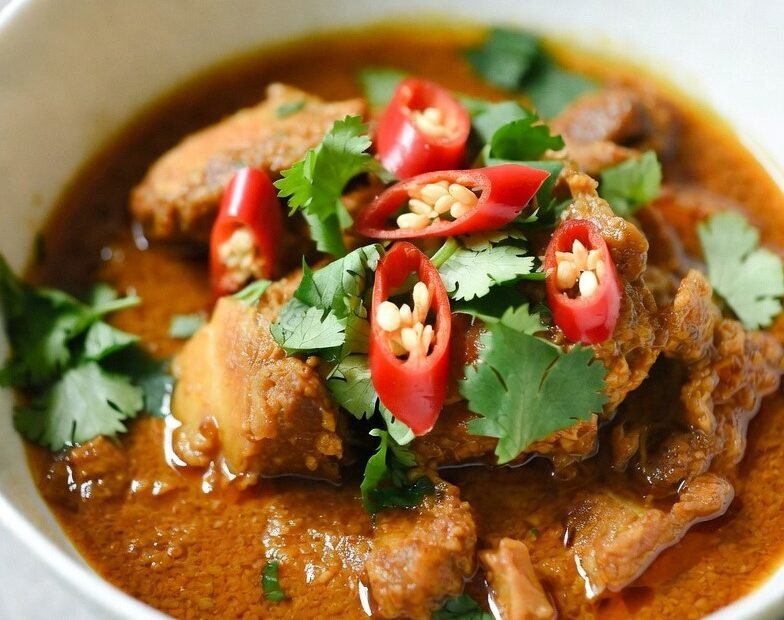
Burmese Pork Curry is a deeply satisfying dish from Myanmar (Burma) that reflects the country’s regional diversity and slow, thoughtful cooking style. Rich pieces of pork are gently cooked until tender, absorbing layers of flavour from garlic, ginger, spices, and oil. In northern regions of Myanmar, the curry is noticeably spicier and bolder. In coastal areas, tamarind is added to bring a gentle sourness that balances the richness of the pork.
Unlike many pork curries from other parts of Asia, Burmese Pork Curry is not heavy with sauces or complex spice blends. It focuses on technique, patience, and balance. The curry is oily but not greasy, bold but not overpowering. Served with plain rice, it becomes a comforting and filling meal that stays true to Burmese home cooking traditions.
This article explores the character of Burmese Pork Curry, its regional variations, and a detailed step-by-step recipe you can follow easily at home.
Understanding Burmese Pork Curry
Burmese cuisine often uses pork as a main protein, especially in central and northern regions. Pork curries are cooked slowly, allowing the fat to render and enrich the gravy naturally. Instead of thick gravies, Burmese curries usually have a light sauce with oil floating on top. This oil is not wasteful; it carries flavour and aroma.
Two regional styles stand out:
- Northern Style: Spicier, with more dried chillies and stronger heat
- Coastal Style: Slightly tangy, using tamarind to cut through the richness of pork
Both styles rely on garlic, ginger, turmeric, and onions as the foundation. Tomatoes and coconut milk are usually avoided, keeping the curry clean and focused.
Ingredients Required
Main Ingredients
- 800 grams pork belly or pork shoulder, cut into medium chunks
- 3 large onions, finely sliced
- 10–12 garlic cloves, crushed or finely chopped
- 2 tablespoons ginger paste
- 1 teaspoon turmeric powder
- 1 to 1½ teaspoons dried chilli powder (adjust to taste)
- 1/2 teaspoon black pepper powder
- Salt to taste
- 5 tablespoons peanut oil or neutral cooking oil
- 1 to 1½ cups water
For Coastal Variation (Optional)
- 1 tablespoon tamarind pulp (adjust to taste)
Optional Aromatics
- 2 bay leaves
- 1 small cinnamon stick
These are optional and should remain subtle.
Step-by-Step Recipe
Step 1: Preparing the Pork
Wash the pork pieces and drain well. Pat them dry with a kitchen towel. Keep them at room temperature for about 15 minutes before cooking.
Choose pork with some fat. Lean pork will turn dry and lack the richness that defines this curry.
Step 2: Slow Cooking the Onions
Heat oil in a heavy-bottomed pot over medium heat. Add sliced onions and a small pinch of salt. Cook slowly, stirring often.
This step takes time, around 15–18 minutes. The onions should become soft, translucent, and lightly golden. Do not rush or brown them aggressively. Properly cooked onions create the base flavour of the curry.
Step 3: Adding Garlic and Ginger
Add the crushed garlic to the onions and cook for 1–2 minutes until fragrant. Lower the heat and add ginger paste.
Stir gently and cook for another 2 minutes. The mixture should smell warm and aromatic, not sharp.
Step 4: Adding Spices
Add turmeric powder, chilli powder, black pepper, and salt. Stir well to combine with the onion mixture.
Cook for about 30 seconds on low heat. Avoid burning the spices by stirring continuously.
Step 5: Adding the Pork
Add the pork pieces to the pot and increase heat slightly. Stir well so each piece is coated with the spice mixture.
Cook uncovered for 8–10 minutes. The pork will release fat and juices. This step is important for building depth of flavour.
Step 6: Slow Simmering
Add water, bay leaves, and cinnamon stick if using. Stir gently and bring to a light simmer.
Cover the pot, reduce heat to low, and cook slowly for 45–50 minutes. Stir occasionally to prevent sticking. The pork should become tender, and oil may separate and float on top.
This slow cooking is essential. Pork needs time to soften properly.
Step 7: Coastal Tamarind Addition (Optional)
If making the coastal version, add tamarind pulp during the last 10 minutes of cooking. Stir gently and taste.
The curry should have a mild tang that balances the richness of the pork, not a sharp sourness.
Step 8: Final Taste and Rest
Taste and adjust salt and spice. Switch off the heat and let the curry rest for 10–15 minutes before serving.
Resting allows the flavours to deepen and settle.
Preparation Time and Cooking Time
- Preparation Time: 25 minutes
- Cooking Time: 70–75 minutes
- Total Time: Approximately 100 minutes
Nutrition Information (Approximate per serving)
- Calories: 520–580 kcal
- Protein: 25–28 g
- Fat: 45–48 g
- Carbohydrates: 7–9 g
- Key Nutrients: Iron, Zinc, Vitamin B12
This is a rich, energy-dense dish due to the pork fat and oil. It is best enjoyed in moderate portions with plain rice and simple side dishes.
How Burmese Pork Curry Is Served
Burmese Pork Curry is always served with plain white rice. The rice absorbs the rich oil and balances the bold flavours.
A typical Burmese meal may also include:
- A light vegetable soup
- Boiled or stir-fried greens
- Pickled vegetables or fresh herbs
The goal is balance, not excess.
Tips for Home Cooks
Choose the Right Cut
Pork belly or shoulder works best. Fat is essential for flavour and texture.
Be Patient
Do not rush the cooking. Slow heat makes the pork tender and flavourful.
Adjust Spice Carefully
Northern versions can be spicy, but start mild and increase gradually.
Tamarind Needs Balance
Add tamarind slowly and taste. Too much will overpower the curry.
Oil on Top Is Normal
A thin layer of oil is traditional and adds aroma and richness.
Regional Variations You Can Try
- Northern Style: Increase dried chilli powder and add fresh green chillies
- Coastal Style: Add tamarind and reduce chilli slightly
- Everyday Home Style: Reduce oil and cook with less water for a drier curry
All variations stay simple and ingredient-focused.
Why Burmese Pork Curry Stands Out
This curry reflects the Burmese approach to food: calm, thoughtful, and grounded. It does not rely on heavy spice mixes or complicated steps. Instead, it trusts time and technique.
The richness of pork, the warmth of turmeric and ginger, and the optional tang of tamarind come together in a way that feels satisfying without being overwhelming. It is a dish that fills the home with aroma and brings people to the table without hurry.
Final Thoughts
Burmese Pork Curry is a dish built on patience and balance. Whether you choose the spicier northern style or the tangy coastal version, the result is a comforting, deeply flavoured curry that pairs perfectly with rice.
If you enjoy slow-cooked meat, clean flavours, and regional food traditions, this Burmese classic is well worth adding to your home cooking repertoire.
