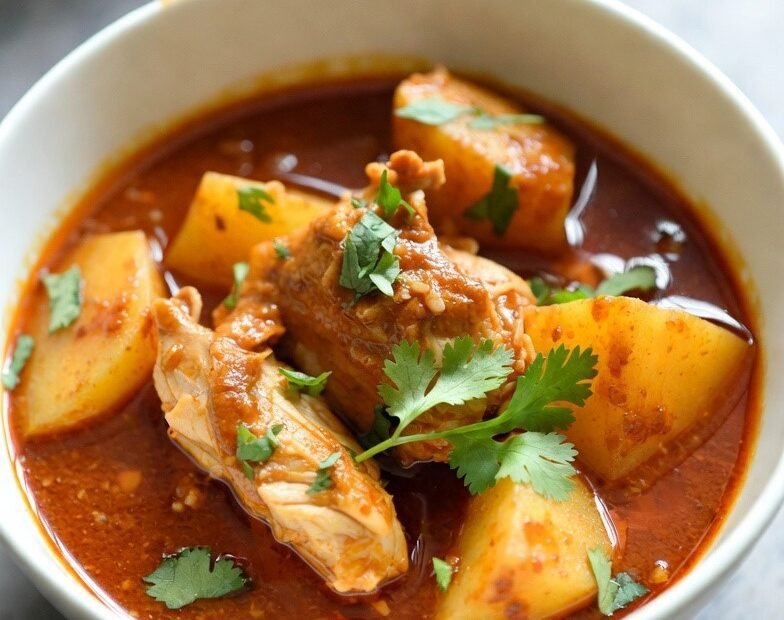
Burmese Chicken Curry is a quiet, soulful dish from Myanmar (formerly Burma). It does not try to impress with heavy spices or fiery heat. Instead, it wins hearts with patience, balance, and depth of flavour. Slowly cooked chicken, plenty of garlic and ginger, warm turmeric, and a light oil-based gravy come together to create a curry that feels both homely and nourishing.
In Burmese homes, curries are often cooked slowly and eaten with plain rice. The focus is on the natural taste of the main ingredient. Burmese Chicken Curry follows this philosophy. It is simple, aromatic, and deeply satisfying, making it perfect for everyday meals as well as relaxed family lunches.
This article walks you through the story of Burmese Chicken Curry, its unique cooking style, and a detailed step-by-step recipe that you can easily make at home.
Understanding Burmese Chicken Curry
Burmese cuisine sits at a crossroads of Indian, Thai, and Chinese food traditions, yet it has its own strong identity. Curries from Myanmar are usually less creamy than Indian curries and less spicy than Thai ones. Oil plays an important role, but it is used gently, not excessively.
Burmese Chicken Curry is typically cooked with:
- Minimal spices
- No tomatoes
- No cream or coconut milk
- A slow-cooking method that allows flavours to develop naturally
Turmeric gives the curry its golden colour, garlic and ginger form the backbone of flavour, and onions provide sweetness. The result is a clean, comforting curry that feels light yet filling.
This is the kind of food that tastes even better the next day.
Ingredients Required
Main Ingredients
- 750 grams chicken (bone-in pieces preferred)
- 3 medium onions, finely sliced
- 10–12 garlic cloves, finely chopped or crushed
- 2 tablespoons ginger paste
- 1 teaspoon turmeric powder
- 1 teaspoon paprika or mild chilli powder (optional)
- Salt to taste
- 1/2 teaspoon black pepper powder
- 4–5 tablespoons peanut oil or any neutral oil
- 1 cup water (adjust as needed)
Optional Aromatics
- 1 small cinnamon stick
- 2 bay leaves
These spices are optional and used in small amounts to add warmth, not strong flavour.
Step-by-Step Recipe
Step 1: Preparing the Chicken
Wash the chicken pieces thoroughly and drain well. Pat dry with a kitchen towel. Keep the chicken at room temperature for 10–15 minutes before cooking.
This helps the chicken cook evenly and absorb flavours better.
Step 2: Slow Cooking the Onions
Heat oil in a heavy-bottomed pan or pot over medium heat. Add the sliced onions and a pinch of salt. Cook slowly, stirring often.
Do not rush this step. The onions should soften and turn lightly golden, not brown. This can take 12–15 minutes. Slow-cooked onions form the natural sweetness and body of the curry.
Step 3: Adding Garlic and Ginger
Once the onions are soft and fragrant, add the chopped garlic. Cook for 1–2 minutes until the raw smell disappears. Then add ginger paste and stir gently.
Lower the heat and cook for another 2 minutes. The mixture should smell warm and aromatic, not sharp.
Step 4: Adding Spices
Add turmeric powder, black pepper, and paprika or mild chilli powder if using. Stir well so the spices coat the onion mixture evenly.
Cook for about 30 seconds on low heat. Avoid burning the spices.
Step 5: Adding the Chicken
Add the chicken pieces to the pot. Increase heat slightly and stir to coat the chicken with the spice and onion mixture.
Cook uncovered for 5–7 minutes, turning the chicken occasionally. The chicken will release its own juices. This step helps seal in flavour.
Step 6: Slow Simmering
Add water and bay leaves or cinnamon if using. Stir gently and bring the curry to a light simmer.
Cover the pot and reduce heat to low. Let the chicken cook slowly for 30–35 minutes, stirring occasionally. The oil may begin to separate slightly on top, which is a good sign.
The gravy should be light, not thick or creamy.
Step 7: Final Taste and Rest
Taste and adjust salt if needed. Switch off the heat and let the curry rest for 10 minutes before serving.
Resting allows the flavours to settle and deepen.
Preparation Time and Cooking Time
- Preparation Time: 20 minutes
- Cooking Time: 50–55 minutes
- Total Time: Approximately 75 minutes
Nutrition Information (Approximate per serving)
- Calories: 380–420 kcal
- Protein: 30–32 g
- Fat: 25–28 g
- Carbohydrates: 6–8 g
- Key Nutrients: Iron, Vitamin B6, Zinc, Curcumin from turmeric
This curry is high in protein and relatively low in carbohydrates. Since it does not use cream or coconut milk, it feels lighter than many rich curries while still being satisfying.
How Burmese Chicken Curry Is Served
Burmese Chicken Curry is always served with plain white rice. The rice balances the gentle oiliness of the curry and absorbs the flavours beautifully.
In traditional Burmese meals, the curry is often accompanied by:
- A simple vegetable side dish
- A light soup
- Fresh or pickled vegetables
The idea is to keep the meal balanced and not overpower the main dish.
Tips for Home Cooks
Use Bone-In Chicken
Bone-in pieces give better flavour and keep the curry juicy during slow cooking.
Do Not Rush the Onions
Slow-cooked onions are essential. If rushed, the curry will taste flat.
Keep the Spices Minimal
This is not a spicy curry. Let garlic, ginger, and turmeric do the work.
Oil Separation Is Normal
A little oil floating on top is traditional and adds richness.
Rest Before Serving
Letting the curry sit for a few minutes improves the taste significantly.
Variations You Can Try
- Add potatoes cut into large chunks for a heartier curry
- Use chicken thighs only for extra tenderness
- Add a small splash of fish sauce for deeper umami (optional)
- Increase ginger slightly if you enjoy warming flavours
Always keep changes subtle to maintain the Burmese character of the dish.
Why This Curry Feels Special
Burmese Chicken Curry teaches an important lesson in cooking: good food does not need complexity. It needs care, patience, and respect for ingredients.
The slow cooking allows flavours to develop naturally. The absence of heavy spices makes it easy to digest. The aroma of garlic, ginger, and turmeric feels comforting and familiar, even if you are trying Burmese food for the first time.
This is the kind of dish that fits quietly into your regular cooking routine and stays there.
Final Thoughts
Burmese Chicken Curry is simple, honest food. It does not shout for attention, but once you taste it, you understand its charm. Served with hot rice, it becomes a complete, nourishing meal that suits both everyday dinners and relaxed weekend lunches.
If you enjoy gentle flavours, slow cooking, and comfort food with depth, this Burmese classic deserves a place in your kitchen.
