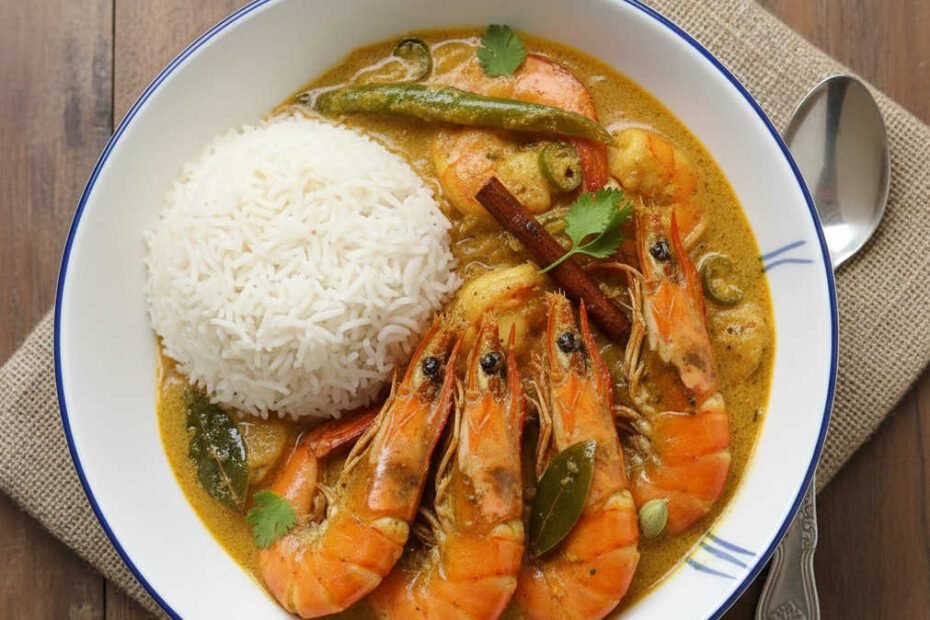
If there is one dish that quietly announces a special day in a Bengali home, it is Chingri Malaikari or Malai Curry. Rich, fragrant, and gently sweet, this iconic preparation from West Bengal turns humble prawns into a royal delicacy using coconut milk, whole spices, and mustard oil. It is not loud or spicy like many Indian curries; instead, it is subtle, elegant, and deeply comforting. Bengalis often say, “Eita ekdom bhalo ranna”—this is proper cooking.
Chingri means prawns, malai refers to creaminess (here from coconut milk), and curry is the gently spiced gravy that brings everything together. Traditionally served with plain steamed rice (shada bhaat), this dish is a staple during festivals, family lunches, and celebratory meals. It is also one of the first Bengali dishes people think of when talking about refined Eastern Indian cuisine.
In this article, we will explore the soul of Chingri Malai Curry, understand its ingredients, and walk through a detailed step-by-step recipe that you can easily make at home.
The Soul of Chingri Malaikari
Unlike many prawn curries across India, Chingri Malai Curry does not rely on tomatoes, onions in excess, or heavy spice powders. The magic lies in balance. Coconut milk adds sweetness and body, green chillies provide gentle heat, and whole spices lend aroma rather than sharpness. The prawns are lightly fried, not overcooked, so they stay soft and juicy.
Another defining feature is the use of mustard oil, which gives the dish its unmistakable Bengali character. The sharpness of mustard oil, when balanced with coconut milk, creates a flavour that is unique and instantly recognisable.
This is not everyday food. It is cooked when guests come, during pujo, or when the family wants something special yet familiar. As Bengalis say, “Kom jinish, kintu shundor”—few ingredients, but beautiful.
Ingredients Required
For the Prawns
- 500 grams large prawns (preferably tiger prawns), cleaned and deveined
- 1/2 teaspoon turmeric powder
- Salt to taste
For the Curry
- 3 tablespoons mustard oil
- 2 tablespoons ghee (optional but traditional)
- 2–3 green cardamom pods
- 1 small cinnamon stick
- 2 bay leaves
- 1 teaspoon sugar (adjust to taste)
- 3–4 green chillies, slit lengthwise
- 1 teaspoon ginger paste
- 1/2 teaspoon cumin powder
- 1/2 teaspoon coriander powder
- 1/2 teaspoon turmeric powder
- 1 cup thick coconut milk
- 1/2 cup thin coconut milk or warm water
- Salt to taste
Step-by-Step Recipe
Step 1: Preparing the Prawns
Wash the prawns thoroughly and pat them dry. Marinate them lightly with turmeric powder and salt. Do not add chilli or spices at this stage. Keep aside for 10 minutes.
This simple seasoning helps remove the raw smell and gives the prawns a nice colour.
Step 2: Lightly Frying the Prawns
Heat mustard oil in a wide pan or kadai. Let the oil smoke slightly, then lower the heat. Gently place the prawns in the oil and fry them for about 30–40 seconds on each side. They should just turn pink and slightly golden.
Remove the prawns immediately and keep aside. Do not overcook, or they will become rubbery. Ekhanei onekey bhul kore—this is where many people go wrong.
Step 3: Tempering the Oil
In the same oil, add ghee if using. Now add bay leaves, cardamom pods, and cinnamon stick. Fry on low heat until the spices release their aroma. Your kitchen will already start smelling festive.
Step 4: Building the Base
Add ginger paste and sauté gently for a minute. Do not brown it. Now add turmeric powder, cumin powder, and coriander powder. Stir well on low heat, adding a splash of thin coconut milk or water to prevent burning.
This spice base should look smooth and fragrant, not dry.
Step 5: Adding Coconut Milk
Pour in the thin coconut milk and bring it to a gentle simmer. Add salt and sugar. Taste the gravy—it should have a mild sweetness that does not overpower.
Now add the slit green chillies. They give heat without making the curry spicy.
Step 6: Adding the Prawns
Slide the fried prawns back into the pan. Let them simmer gently for 3–4 minutes so they absorb the flavours. Stir carefully to avoid breaking the prawns.
Step 7: Finishing with Thick Coconut Milk
Lower the heat and add the thick coconut milk. Stir gently and cook for another 2 minutes. Do not let the curry boil vigorously after adding thick coconut milk, or it may split.
Switch off the heat once the gravy turns creamy and glossy. Let it rest for 5 minutes before serving. Ektu darailei shob rosh bhalo kore boshbe—resting helps the flavours settle.
Preparation Time and Cooking Time
- Preparation Time: 20 minutes
- Cooking Time: 25 minutes
- Total Time: Approximately 45 minutes
Nutrition Information (Approximate per serving)
- Calories: 420–450 kcal
- Protein: 28–30 g
- Fat: 32–35 g
- Carbohydrates: 6–8 g
- Omega-3 Fatty Acids: High
- Key Nutrients: Vitamin B12, Selenium, Healthy fats from coconut
Chingri Malai Curry is rich and indulgent, but it also offers high-quality protein and essential minerals from prawns. Coconut milk provides healthy fats, making it filling and satisfying. Best enjoyed in moderation, especially if you are watching calorie intake.
Serving Suggestions
Chingri Malaikari is traditionally served with plain steamed rice. The rice absorbs the creamy gravy beautifully, making each bite comforting. Some people also enjoy it with basmati rice or ghee bhaat for a more luxurious meal.
Avoid strong side dishes. A simple cucumber salad or shukto pairs well. Let the curry remain the hero of the plate.
Tips for Perfect Chingri Malaikari
- Always use fresh or properly thawed prawns
- Do not over-spice; subtlety is key
- Mustard oil is essential for authentic flavour
- Add sugar carefully; the dish should be mildly sweet, not dessert-like
- Never boil thick coconut milk on high heat
A Dish of Celebration and Comfort
Chingri Malaikari is not just food; it is memory. It reminds many Bengalis of Sunday lunches, white tablecloths, steel plates, and elders saying, “Aro ektu nao”—take some more. It is a dish that teaches restraint in cooking, respect for ingredients, and the beauty of balance.
Whether you are cooking it for guests or for yourself, take your time with this recipe. Let the aromas fill your kitchen, and enjoy the quiet luxury that this classic Bengali dish brings to the table.
