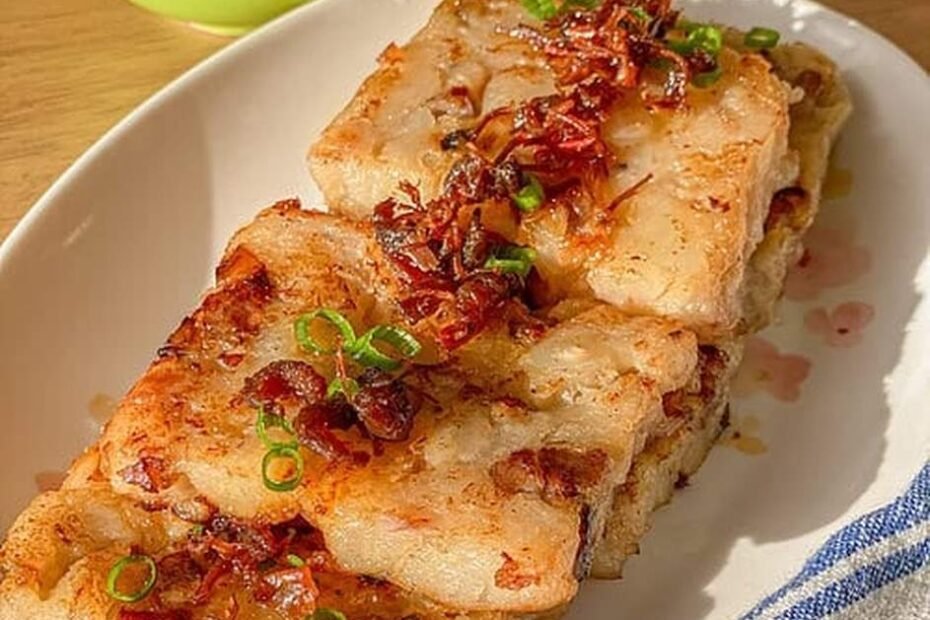
Turnip Cake, known in Cantonese as Lo Bak Go and often written as Luobago, is one of the most iconic dishes in Guangdong’s dim sum tradition. Despite the English name, the key ingredient is the Chinese white radish (daikon), not the Western turnip. Soft, savory, aromatic, and full of umami, this steamed-and-pan-fried cake has earned a beloved spot on dim sum carts across Guangzhou, Hong Kong, and overseas Chinatowns.
This in-depth article explores its origins, flavors, preparation techniques, and a detailed step-by-step recipe you can recreate at home. You will also find nutritional information, prep and cooking times, and tips for achieving the ideal texture.
Understanding the Charm of Turnip Cake
Turnip Cake is a dish that captures the essence of Cantonese cooking: simple ingredients transformed through technique and balance. At dim sum restaurants, Luobago arrives as golden pan-fried slices, crispy on the outside and soft on the inside. The interior is a blend of grated radish, rice flour, umami-rich cured meats, dried shrimp, and aromatics.
Its flavor is savory and comforting, with bursts of sweetness from the radish, saltiness from the preserved sausage, and subtle chewiness from rehydrated mushrooms. This balance of textures and flavors is exactly why this dish is a dim sum essential.
History and Cultural Significance
Turnip Cake’s origins lie in southern China, especially in Guangdong and Fujian provinces, where rice-based cakes and radish dishes were common. Over centuries, chefs refined the formula into what is now a dim sum staple.
Luobago is especially popular during Lunar New Year celebrations. Rice cakes symbolize prosperity and rising fortune, and Turnip Cake, with its blend of humble roots and luxurious cured meats, represents both grounding and abundance. Its popularity has since spread far beyond special occasions, and today it is enjoyed year-round across dim sum houses worldwide.
Ingredients Used in Turnip Cake
Traditional Luobago includes a combination of radish, rice flour, and flavorful mix-ins. While regional variations exist, the classic ingredients are:
Main Ingredients
- Chinese white radish (daikon)
- Rice flour
- Water
- Salt and white pepper
- Neutral oil
Common Add-Ins
- Chinese dried shrimp
- Chinese sausage (lap cheong)
- Dried shiitake mushrooms
- Cantonese cured pork or bacon pieces
- Scallions
These add-ins are what give Turnip Cake its signature savory depth.
Equipment Needed
- Large wok or deep pan
- Mixing bowl
- Steamer (or pot with steaming rack)
- Loaf pan or square cake pan
- Grater
- Pan for frying slices
Step-by-Step Recipe for Authentic Luobago
Prep Time: 25 minutes
Cook Time: 60 minutes (steaming and frying)
Total Time: 85 minutes
Yield: One medium loaf pan (serves 4–6)
Ingredients
Base
- 1 medium daikon radish (about 900 g), peeled and grated
- 1 cup rice flour
- 3 tablespoons cornstarch
- 1 teaspoon salt
- ¼ teaspoon white pepper
- 1 tablespoon oil
Mix-Ins
- 2 Chinese sausages, diced
- ¼ cup dried shrimp, rinsed and chopped
- 4 dried shiitake mushrooms, soaked and diced
- 2 tablespoons finely chopped cured pork belly or bacon (optional)
- 2 scallions, chopped
For Frying
- Oil as needed
Instructions
1. Prepare and Partially Cook the Radish
- Grate the daikon radish using the large holes of a grater.
- Place the grated radish, along with its juice, in a large pan or wok.
- Add 1 teaspoon salt and cook over medium heat for about 10 minutes until it softens and releases liquid.
- Do not evaporate all the liquid; this moisture is essential for the cake’s structure.
- Once soft, turn off the heat and set aside.
2. Prepare the Mix-Ins
- Rehydrate the dried mushrooms in warm water for 20 minutes and dice them.
- Rinse dried shrimp, then chop finely.
- Dice Chinese sausage and cured pork if using.
- Heat a small amount of oil in a pan.
- Stir-fry the sausage, mushrooms, shrimp, and cured pork until fragrant.
- Add the scallions and stir briefly before switching off the heat.
- Combine this mixture with the cooked radish.
3. Prepare the Batter
- In a separate bowl, mix rice flour and cornstarch.
- Add about 1 cup of the radish liquid gradually. If the radish didn’t release enough liquid, add warm water to make up the difference.
- The resulting batter should be thick but pourable.
- Combine the flour batter with the radish and mix-ins. Stir well to create a cohesive mixture.
4. Steam the Turnip Cake
- Brush oil inside a loaf pan or square cake pan.
- Pour the mixture into the pan and smooth the top.
- Place the pan into a steamer.
- Steam on medium-high heat for 50–55 minutes.
- To test doneness: insert a chopstick or skewer. It should come out clean.
- Remove from the steamer and allow the cake to cool completely.
- Once cooled, refrigerate for at least 2 hours to firm up for slicing.
5. Pan-Fry Before Serving
- Remove the cake from the pan and slice into 1-inch pieces.
- Heat oil in a pan over medium heat.
- Fry the slices until golden and crisp on both sides.
- Serve warm with soy sauce or chili sauce.
Flavor Variations
Turnip Cake is wonderfully adaptable. Some common versions include:
Vegetarian Turnip Cake
Omit sausages and shrimp, replace with more mushrooms and fried shallots.
XO Sauce Turnip Cake
Toss fried slices with XO sauce for an extra layer of umami.
Pan-Seared Spicy Turnip Cake
Add chopped chili or Sichuan pepper oil to the frying step.
Lotus Root Turnip Cake
Some chefs mix in diced lotus root for added crunch.
These variations show how Luobago continues to evolve without losing its Cantonese core.
Nutrition Information (Approximate Per Serving)
- Calories: 210–260
- Carbohydrates: 28–32 g
- Protein: 4–8 g
- Fat: 10–12 g
- Fiber: 2–3 g
- Sodium: moderate to high (varies with cured meats and soy sauce)
Turnip Cake is relatively balanced in macronutrients and provides additional minerals from daikon, such as potassium and vitamin C. The calorie content depends heavily on the quantity of sausage and the frying step.
Tips for Perfect Luobago at Home
Do not drain the radish
The liquid released during cooking is essential to hydrate the rice flour.
Stir the mixture thoroughly
Uneven mixing can create flour pockets or soggy sections.
Cool completely before slicing
A warm turnip cake will fall apart. Chilling helps it firm up.
Use medium heat for frying
Gentle heat ensures crispiness without burning.
Add cornstarch for smoothness
It improves texture and prevents the cake from becoming too dense.
Do not over-steam
Over-steaming can turn the cake mushy and affect its structure.
Serving Suggestions
Turnip Cake is typically served as part of a dim sum spread. It pairs beautifully with:
- Light soy sauce
- Chili garlic sauce
- XO sauce
- Oyster sauce drizzle
At home, it also makes a wonderful breakfast or snack. Some people enjoy it with congee or plain tea, as its savory flavor complements mild foods.
The Appeal of Homemade Turnip Cake
While restaurant versions are delicious, homemade Luobago offers advantages:
- You control the level of salt and oil.
- You can adjust the texture, making it firmer or more tender.
- You can choose your preferred mix-ins or create new variations.
- You enjoy it at peak freshness, when flavors have melded perfectly.
Making Turnip Cake from scratch also deepens your appreciation for the craft behind Cantonese cooking. The transformation of grated radish and rice flour into a savory, satisfying cake is a reminder of how traditional techniques elevate simple ingredients.
Final Thoughts
Turnip Cake (Luobago) is a cornerstone of Cantonese cuisine and a beloved dish at dim sum tables across Guangdong and the world. Its soft interior, crisp exterior, and umami-rich mix-ins make it uniquely comforting and deeply flavorful.
With the detailed recipe and techniques shared here, you can recreate authentic Cantonese Luobago in your own kitchen. As you practice and refine your method, you’ll discover why this seemingly simple dish has remained a dim sum classic for generations.
Enjoy the process, savor the results, and experience a true taste of Guangdong at home.
