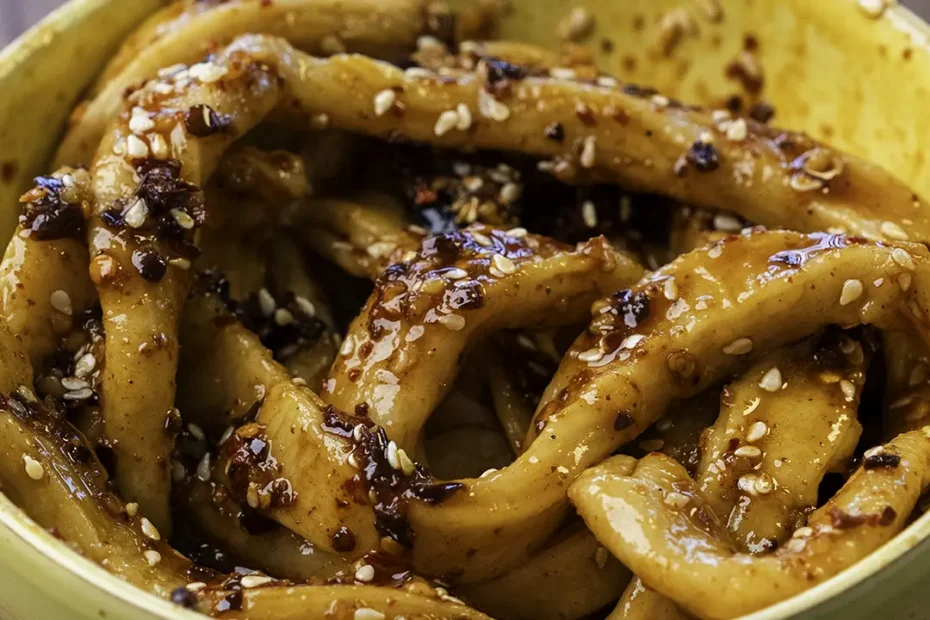
Deep in the heart of Tianshui, a historic city in Gansu Province known for its Buddhist caves and Silk Road charm, there’s a dish that captures the flavors, warmth, and liveliness of northwestern China — Tianshui Guagua (天水呱呱).
Despite its playful name (which literally means “goo-goo” or “soft-soft”), this is a serious comfort food — a smooth, chewy wheat-based noodle dish bathed in red chili oil, garlic, and vinegar, balanced perfectly between spicy, tangy, and fragrant.
Locals say you can’t visit Tianshui without tasting Guagua. Whether served from a tiny street stall or in a family kitchen, it’s a dish that speaks of simplicity, community, and bold Gansu flavors.
The Story Behind Tianshui Guagua
Tianshui sits along the ancient Silk Road, where traders and travelers carried more than just goods — they carried ideas and recipes. The people of Gansu have long thrived on hearty, wheat-based foods like noodles, dumplings, and pancakes, thanks to the region’s dry climate and abundance of grains.
Guagua was born out of that tradition. It’s made from wheat batter, not dough, which is steamed and sliced into slippery strips or pieces. These chewy pieces are then tossed with garlic water, sesame paste, chili oil, vinegar, and soy sauce — a combination that creates layers of flavor in every bite.
The dish became a local specialty in Tianshui and soon spread across Gansu. Street vendors sell it from morning till late night, its bright red oil and fragrant aroma drawing in crowds. For many, Guagua isn’t just food — it’s nostalgia, a reminder of home.
The Unique Texture of “Guagua”
What makes Tianshui Guagua different from other noodle dishes is its texture. The batter, made from wheat flour and water, is poured thinly into trays and steamed until soft and elastic. Once cooled, it’s cut into thin strips — not unlike jelly noodles, but more firm and bouncy.
When mixed with chili, garlic, and sesame, the noodles soak up all the flavor, giving each bite that irresistible combination of heat, tang, and nuttiness.
It’s light yet satisfying — the kind of dish that can be a snack, a lunch, or even a late-night craving.
Ingredients for Authentic Tianshui Guagua
Serves: 3–4
Prep Time: 30 minutes
Cook Time: 20 minutes
Total Time: 50 minutes
For the Guagua Batter:
- 1 cup all-purpose flour
- 1 cup water (plus more if needed)
- Pinch of salt
- ½ tsp vegetable oil (to prevent sticking)
For the Sauce:
- 3 tbsp sesame paste (tahini can be used as substitute)
- 3 tbsp light soy sauce
- 2 tbsp rice vinegar
- 1 tbsp chili oil (adjust to taste)
- 1 tbsp minced garlic (about 3–4 cloves)
- 1 tsp sugar
- 1 tbsp warm water (to thin the sauce if needed)
Optional Garnishes:
- Chopped scallions
- Crushed peanuts or sesame seeds
- Fresh cilantro leaves
Step-by-Step Recipe for Tianshui Guagua
Step 1 – Make the Batter
In a large bowl, combine flour, water, and a pinch of salt.
Whisk continuously until smooth — the texture should be similar to pancake batter, thin and lump-free.
If it’s too thick, add a bit more water. If it’s too thin, sprinkle in some extra flour.
This step is crucial — the consistency determines how soft or firm your Guagua will be.
Step 2 – Steam the Batter
Lightly oil a flat heatproof tray or plate to prevent sticking.
Pour a thin layer of batter (about ¼ inch thick) onto the tray.
Place it in a steamer and cook for 5–6 minutes, until the surface looks set and slightly glossy.
Remove the tray, let it cool for a minute, and gently peel the steamed sheet from the tray.
Repeat until all batter is used.
You’ll end up with soft, elastic sheets of wheat “noodles.”
Step 3 – Cut the Guagua
Once the sheets have cooled, stack them on top of each other and cut into thin strips (around 1 cm wide).
You can also cut them into diamond or square shapes, depending on local style — in Tianshui, both are common.
Place all the cut pieces in a large mixing bowl.
Step 4 – Make the Sauce
In another bowl, whisk together:
- Sesame paste, soy sauce, vinegar, chili oil, garlic, and sugar.
Add a tablespoon of warm water to loosen the paste if needed.
Taste and adjust: more chili oil for spice, more vinegar for tang, or a dash of sugar for balance.
Step 5 – Mix It All Together
Pour the sauce over the Guagua noodles.
Toss well so every piece is evenly coated and glistening.
Top with chopped scallions, cilantro, and crushed peanuts or sesame seeds.
Serve at room temperature — or chilled on a hot summer day, just as locals enjoy it in Gansu.
The Flavor of Gansu in a Bowl
The first mouthful of Tianshui Guagua is unforgettable — garlic hits first, sharp and bold, followed by the rich creaminess of sesame paste, and finally, the slow burn of chili oil.
Each noodle is silky and chewy, yet light, absorbing every drop of flavor.
It’s a perfect balance — spicy, sour, savory, and slightly sweet — the kind of taste that lingers pleasantly long after the meal ends.
This dish mirrors the personality of Gansu itself: simple on the surface, but full of depth and history once you take a closer look.
Nutrition Information (Per Serving Approx.)
| Nutrient | Amount |
|---|---|
| Calories | 420 kcal |
| Protein | 9 g |
| Fat | 16 g |
| Carbohydrates | 58 g |
| Fiber | 3 g |
| Sodium | 750 mg |
Nutrition Highlights
- Carbohydrate-rich for energy, ideal for lunch or a light dinner.
- Healthy fats from sesame paste and chili oil support heart health.
- Low in cholesterol, as it’s a plant-based dish.
- Rich in flavor, so small portions can be satisfying.
Prep and Cook Time
| Step | Duration |
|---|---|
| Batter Preparation | 10 min |
| Steaming | 20 min |
| Cutting and Mixing | 20 min |
| Total Time | 50 minutes |
Tips for Perfect Tianshui Guagua
- Keep the batter smooth – whisk thoroughly to avoid lumps.
- Steam thin layers – thicker sheets will turn rubbery.
- Cool completely before cutting – warm sheets can stick or tear.
- Balance the sauce – sesame paste and vinegar must complement each other.
- Serve fresh – Guagua tastes best when freshly mixed and still glossy.
Variations You’ll Find Across Gansu
While Tianshui’s Guagua is the most famous, other parts of Gansu have their own versions:
- Qin’an Guagua: Slightly spicier with extra chili oil and garlic.
- Wushan Guagua: Served with cucumber and shredded carrots for crunch.
- Lanzhou Guagua: Includes a dash of soy sauce and vinegar-heavy dressing.
Each reflects its region’s taste and local produce — but the heart of the dish remains the same: soft noodles and bold flavors.
The Charm of Tianshui Street Food
If you walk through Tianshui’s evening markets, you’ll find steaming baskets lined up and vendors calling out cheerfully, “来碗呱呱吧!” (Lái wǎn Guagua ba!) — “Come, have a bowl of Guagua!”
Locals gather around small tables, chatting and laughing as they eat. The air smells of sesame and spice, and bowls are emptied fast.
It’s not fine dining. It’s everyday life, captured in a bowl — warm, messy, and absolutely delicious.
Final Thoughts
Tianshui Guagua isn’t a dish that tries too hard. It’s humble, affordable, and full of character — a true taste of northwestern China’s food culture.
Whether you make it at home or find it on a bustling street corner in Gansu, this dish will leave you smiling. It’s proof that sometimes, the simplest combinations — flour, water, chili, and garlic — can create the most unforgettable flavors.
So next time you crave something light yet flavorful, skip the noodles and try Guagua — Gansu’s silky, spicy, and soulful wheat delight.
