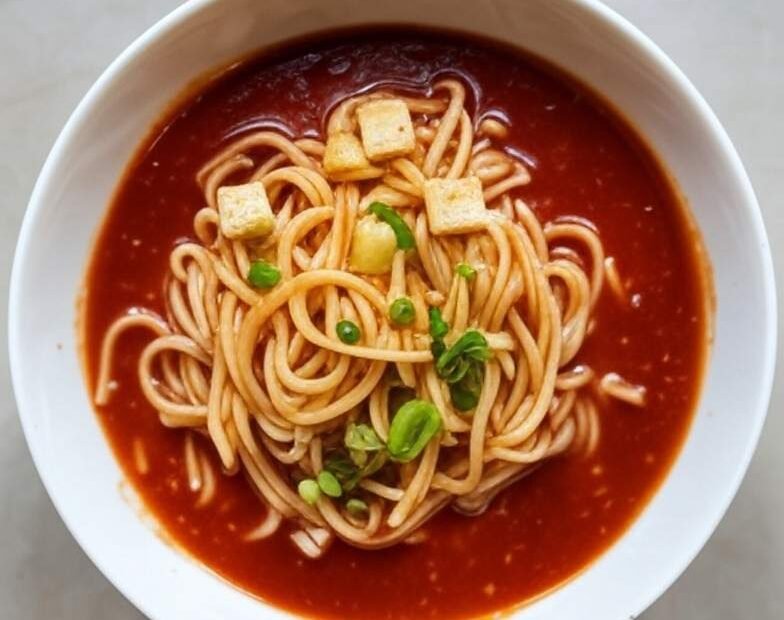
Among the many culinary treasures born along China’s ancient Silk Road, few dishes express the warmth and depth of northwestern home cooking like Saozi Noodles (臊子面, Saozi Mian). Originating in Gansu and Shaanxi provinces, this beloved noodle dish blends fiery chili oil, tender meat, tangy vinegar, and chewy handmade noodles into a perfect harmony of flavors and textures.
Saozi Noodles aren’t just food — they’re a story in a bowl. Traditionally, this dish was served at weddings, harvest celebrations, and festivals. It represents hospitality and abundance, a symbol of sharing comfort with friends and family. Over time, it became a daily meal for people across northwestern China, especially in Gansu, where wheat flour and bold spices dominate the cuisine.
Let’s dive deep into this iconic dish — its origins, unique flavors, and a complete step-by-step guide to making authentic Saozi Noodles at home.
What Are Saozi Noodles?
At first glance, Saozi Noodles might look like just another spicy noodle soup, but it’s much more nuanced than that.
The word “Saozi” (臊子) refers to the finely diced meat and vegetables that form the rich, aromatic topping. Unlike large meat chunks or clear broths, Saozi is all about small, uniform pieces cooked together with chili, vinegar, garlic, and soy sauce to create a flavor-packed sauce.
This sauce is poured over wheat noodles and finished with a steaming ladle of hot broth, turning it into a balanced combination of spicy, sour, savory, and umami flavors.
Each region — and sometimes each family — has its own version. In Gansu, it’s typically spicier and oilier, while in Shaanxi, it leans toward sour and aromatic.
The Cultural Significance of Saozi Noodles
In Gansu, noodles aren’t just a meal — they’re a part of life. From the Lanzhou Beef Noodles to Niangpi, the province’s cuisine celebrates the versatility of wheat. Saozi Noodles hold a special place because they represent home-cooked warmth.
In rural areas, it’s still common for families to prepare Saozi Noodles on weekends, gathering everyone around the table as the fragrant sauce simmers in the kitchen. It’s a meal that unites generations.
The Flavor Profile
What makes Saozi Noodles unforgettable is their balanced complexity:
- Spicy – from chili oil and dried red peppers
- Sour – from a splash of vinegar
- Savory – from soy sauce and slow-cooked meat
- Aromatic – from garlic, ginger, and scallions
- Comforting – from the wheat noodles that soak up every drop of flavor
It’s a full sensory experience — bold yet harmonious, satisfying yet refreshing.
Ingredients for Authentic Gansu-Style Saozi Noodles
Serves: 4
Prep Time: 30 minutes
Cook Time: 40 minutes
Total Time: 1 hour 10 minutes
For the Noodles
- 2 cups all-purpose flour
- ½ cup water (adjust as needed)
- Pinch of salt
(Alternatively, use fresh or dried wheat noodles if short on time.)
For the Saozi Sauce
- 200 g pork (or beef/lamb), finely diced
- 1 medium potato, diced
- 1 carrot, diced
- ½ cup tofu, diced (optional)
- 1 tomato, chopped
- 2 tbsp soy sauce
- 1 tbsp dark soy sauce
- 2 tbsp vinegar (black vinegar preferred)
- 2 tbsp chili oil (adjust to taste)
- 1 tbsp doubanjiang (fermented chili bean paste)
- 2 cloves garlic, minced
- 1 small piece ginger, minced
- 1 tsp Sichuan peppercorn (optional but authentic)
- 2 tbsp cooking oil
- Salt to taste
For the Broth
- 4 cups chicken or vegetable stock
- 1 tsp sesame oil
- A few scallions for garnish
Step-by-Step Recipe for Saozi Noodles
Step 1 – Make the Noodle Dough
- Mix flour and salt in a large bowl.
- Slowly add water while kneading until a smooth, elastic dough forms.
- Cover the dough with a damp cloth and let it rest for 20–30 minutes.
- Roll it out into thin sheets and cut into strips, or use a pasta roller for even noodles.
- Dust with flour to prevent sticking and set aside.
Step 2 – Prepare the Saozi Base
- Heat 2 tbsp of cooking oil in a wok or deep pan.
- Add Sichuan peppercorns and let them sizzle briefly to release their aroma.
- Remove them after a few seconds to avoid bitterness.
- Add garlic and ginger, stir-fry until fragrant.
- Add the minced meat and stir-fry until browned and slightly crisp.
Step 3 – Add Vegetables and Seasonings
- Add diced potatoes, carrots, tofu, and tomato. Stir well.
- Add doubanjiang, soy sauce, dark soy sauce, and vinegar.
- Pour in a bit of stock (½ cup) to help the ingredients absorb flavor.
- Cook for about 10 minutes until the vegetables are tender and the sauce thickens.
- Drizzle in chili oil to finish the sauce with a glossy, spicy sheen.
This thick, flavorful mixture is the heart of the dish — your Saozi.
Step 4 – Prepare the Broth
In a separate pot, heat 4 cups of chicken or vegetable stock with a drizzle of sesame oil. Keep it hot until ready to serve.
Step 5 – Cook the Noodles
- Boil a large pot of water.
- Add noodles and cook until just tender (2–3 minutes for fresh noodles).
- Drain and rinse briefly in cool water to prevent sticking.
Step 6 – Assemble the Bowl
- Place a serving of noodles in each bowl.
- Spoon a generous amount of Saozi sauce on top.
- Pour in a ladle of hot broth.
- Garnish with chopped scallions, cilantro, or an extra spoon of chili oil if you like heat.
Serving Suggestions
- Add a fried egg for protein and color.
- Serve with pickled vegetables on the side to balance the spice.
- In some Gansu homes, vinegar and chili oil are placed on the table for people to adjust their bowl to taste.
Nutrition Information (Per Serving Approx.)
| Nutrient | Amount |
|---|---|
| Calories | 420 kcal |
| Protein | 22 g |
| Carbohydrates | 60 g |
| Fat | 10 g |
| Fiber | 3 g |
| Sodium | 900 mg |
Nutrition Highlights
- High in carbohydrates for long-lasting energy.
- Rich in protein from meat and tofu.
- Balanced spice and vinegar support digestion.
- Low in sugar and uses natural fats from chili oil and sesame oil.
For a lighter version, you can reduce oil and use lean meat or tofu as the protein source.
Prep and Cook Time
| Task | Duration |
|---|---|
| Dough and Noodles | 30 min |
| Sauce Preparation | 20 min |
| Cooking and Assembly | 20 min |
| Total Time | 1 hour 10 minutes |
Tips for Perfect Saozi Noodles
- Cut everything small and even – true Saozi texture comes from uniform pieces that mix smoothly with the noodles.
- Balance spice and sourness – adjust chili oil and vinegar based on your preference.
- Use fresh noodles – chewy noodles hold the sauce better than dry ones.
- Don’t skip the vinegar – it brings the dish to life and balances the oil.
- Add the broth just before serving – it keeps the noodles from turning soggy.
The Soul of Gansu Cuisine
Saozi Noodles capture everything special about Gansu’s food culture — bold flavors, handmade textures, and a balance of heat and tang. It’s a dish that doesn’t rely on luxury ingredients but transforms simple elements — flour, meat, and vegetables — into something deeply comforting.
In Gansu homes, the smell of simmering Saozi sauce means it’s time for family to gather. It’s the taste of togetherness — spicy enough to warm you in winter, yet tangy enough to refresh you in summer.
Every bite tells a story of the Silk Road, of travelers who brought spices and ideas, and of families who turned them into something lasting.
Final Thoughts
If you’ve never tried making Saozi Noodles, you’re in for a treat. It’s not just a recipe — it’s a glimpse into China’s northwestern culinary heart.
With its bright chili oil, hearty sauce, and chewy noodles, this dish offers everything you’d want in a comforting meal: warmth, spice, and satisfaction.
Whether you enjoy it on a quiet evening or share it with friends, Saozi Noodles bring people together — one steaming, fragrant bowl at a time.
