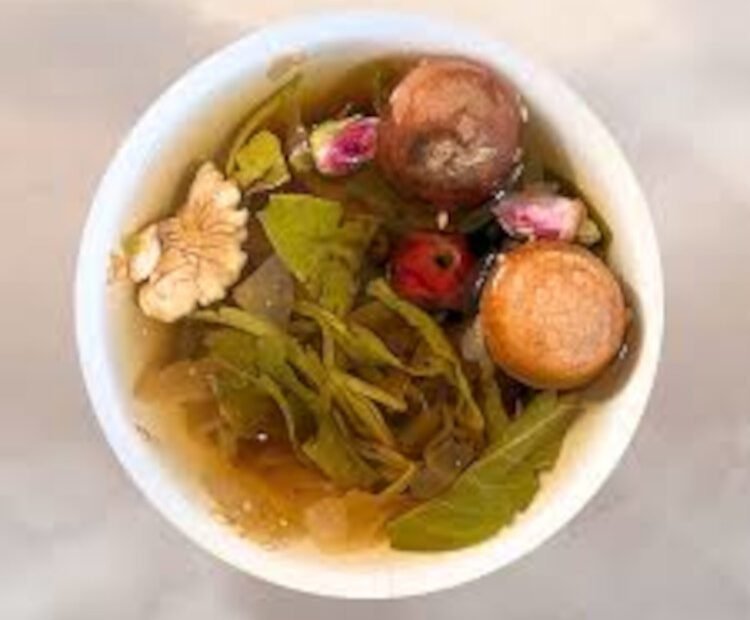
Among the many unique culinary treasures of Gansu province, Sanpaotai stands apart—not because it is a heavy meal like hand-grab mutton or a hearty staple like Jiaotuan, but because it represents hospitality, culture, and centuries of Silk Road history. Sanpaotai is not simply tea; it is a ritual, a warm gesture, and a symbolic beverage deeply tied to the Hui communities of northwest China.
Served in a three-layered ceremonial manner—hence the name Sanpaotai, meaning “Three-Poured Bowl”—this fragrant preparation blends green tea, dried fruits, nuts, rose petals, and sometimes rock sugar. Each “pour” of water reveals a new stage of aroma and flavor. For anyone seeking to understand the culinary soul of Gansu, experiencing Sanpaotai is essential.
This article explores the background, ingredients, cultural significance, preparation steps, and even a home-friendly recipe so you can bring this historic tradition to your kitchen.
What Is Sanpaotai?
Sanpaotai (三泡台) is a traditional layered tea from Gansu, especially popular in the Tianshui and Linxia regions. It is typically made with:
- Green tea leaves
- Jujubes (Chinese red dates)
- Goji berries
- Longan
- Dried apricot or pear
- Walnuts or almonds
- Rose petals
- Rock sugar
These ingredients are placed in a special glass cup or bowl in three distinct layers. Hot water is poured over them, creating a changing infusion with each top-up.
Why “Three Pours”?
The name refers to:
- First Pour: Light, floral, aromatic
- Second Pour: Deeper, sweeter, fuller
- Third Pour: Mildly earthy, delicate, finishing taste
Unlike typical tea that weakens with each refill, Sanpaotai becomes more expressive, revealing flavors gradually as the fruits soften and the nuts release aroma.
Cultural Significance of Sanpaotai
Sanpaotai is strongly tied to hospitality. In Gansu’s Hui Muslim communities, offering Sanpaotai to a guest is a gesture of respect and warmth. It is served during family gatherings, religious celebrations, business meetings, and sometimes as a soothing daily beverage.
The ritual layers reflect ideas of patience and gratitude—qualities valued deeply along the ancient Silk Road. Even today, tea houses in Gansu prepare Sanpaotai with great care, often brewing it tableside to emphasize its ceremonial nature.
What Makes Sanpaotai Unique?
Sanpaotai is unlike conventional tea for several reasons:
1. Complex Ingredients
It incorporates multiple dried fruits, nuts, and flowers, providing natural sweetness and fragrance without additives.
2. Layered Brewing Process
The structure ensures that each refill of hot water produces a new flavor experience.
3. Aromatic and Visual Elements
The colorful ingredients—red jujubes, golden longan, pink rose petals—create a beautiful presentation inside the cup.
4. Naturally Nutritious
Packed with antioxidants, vitamins, and minerals from dried fruits and green tea, Sanpaotai is both healthy and energizing.
Ingredients Used in Sanpaotai
A typical Sanpaotai bowl contains:
- Green tea leaves
- Chinese red dates
- Longan (dried)
- Goji berries
- Raisins
- Dried apricots or dried pears
- Rock sugar
- Walnuts or almonds
- Rose petals
Tea houses sometimes add more exotic ingredients like ginseng slices or chrysanthemum flowers, but the classic version keeps it simple.
Prep Time & Cook Time
Prep Time: 10 minutes
Cook Time: 5 minutes (mainly heating water)
Total Time: 15 minutes
Servings: 2 cups of Sanpaotai
Ingredients for Homemade Sanpaotai
Base Tea Ingredients
- 1 teaspoon green tea leaves
- 2 dried red dates, sliced
- 1 tablespoon goji berries
- 1 tablespoon dried longan
- 1 tablespoon raisins
- 2–3 dried apricot halves or dried pear slices
- 2–3 walnut halves or 5–6 almonds
- ½ teaspoon edible rose petals
- 1 teaspoon rock sugar (optional)
Equipment
- Tall glass cup or heat-resistant mug
- Kettle
- Small strainer (optional)
How to Make Sanpaotai: Step-by-Step Recipe
Step 1: Prepare the Ingredients
Rinse the dried fruits briefly under cold water to remove dust.
Pat them dry or let them drain for 2–3 minutes.
Crack the walnuts slightly for better aroma release.
Step 2: Set the First Layer (Tea Base)
At the bottom of your glass cup, add:
- Green tea leaves
- Rock sugar (if using)
The tea leaves form the base aroma, while the sugar slowly dissolves during the first pour.
Step 3: Build the Second Layer (Fruits)
Add:
- Red dates
- Longan
- Raisins
- Dried apricots
This is the sweetness and softness layer. Over time, they release flavor into the water.
Step 4: Add the Third Layer (Nuts and Flowers)
On top, place:
- Walnuts or almonds
- Goji berries
- Rose petals
This top layer adds fragrance, visual appeal, and a mild nutty tone.
Step 5: First Pour
Heat water to 80–85°C (hot but not boiling).
Pour it gently along the sides of the cup to avoid burning the tea leaves.
Let it steep for 2–3 minutes.
The first pour is light, floral, and aromatic.
Step 6: Enjoy the First Brew
Sip slowly. You may stir lightly to blend flavors, but many prefer to enjoy the layers gradually.
Step 7: Second Pour
Refill the cup with hot water (same temperature).
This time, the fruits begin to soften, releasing more sweetness.
The second brew is deeper and rounder.
Step 8: Third Pour
Top up once more.
By now, the longan and dates fully expand, and the nuts release subtle oils.
The third brew is mellow but richly satisfying.
You can continue pouring up to five or six times, although the first three are considered the true essence of Sanpaotai.
Serving Suggestions
Sanpaotai is best served:
- In a transparent glass to showcase its colors
- With light snacks like sunflower seeds or nuts
- Alongside conversations—it is a social beverage
- Warm, never iced
To enhance flavor, some people add:
- A splash of honey
- Chrysanthemum flowers
- A small piece of dried ginger
But the classic version remains the most beloved.
Nutrition Profile of Sanpaotai
The exact nutritional breakdown varies depending on the ingredients used, but overall, Sanpaotai is a vitamin-rich, antioxidant-packed drink.
Nutrition (Approx. per serving)
- Calories: 80–120
- Carbohydrates: 15–25 g
- Protein: 1–3 g
- Fat: 1–4 g
- Fiber: 1–3 g
- Vitamins: A, C, B2, B6
- Key Compounds: Polyphenols, antioxidants, natural sugars
Benefits
- Boosts energy from natural sugars in dried fruits
- Improves circulation thanks to goji berries
- Supports immunity due to antioxidants
- Aids digestion due to warm temperature and gentle fruits
- Promotes relaxation through its aromatic herbs
Because it contains no artificial ingredients, Sanpaotai is considered a wholesome and gentle drink suitable for daily consumption.
Tips for Making Perfect Sanpaotai
- Use high-quality green tea for best aroma.
- Do not use boiling water—it can make the tea bitter.
- Rinse dried fruits lightly but don’t soak them too long.
- Use a tall glass so the layers remain visible.
- Adjust sweetness by increasing or decreasing fruits or rock sugar.
- Always pour hot water slowly along the side of the glass.
Why You Should Try Sanpaotai
Sanpaotai is more than a drink—it’s a journey through Gansu’s culture, hospitality, and centuries-old traditions. From its layered construction to its evolving flavor with each pour, Sanpaotai invites you to slow down, appreciate subtle aromas, and experience the warmth of northwest China in a simple cup.
For food enthusiasts interested in regional flavors, tea lovers searching for something unique, or bloggers exploring Silk Road cuisine, Sanpaotai is a beautiful, meaningful ritual to recreate at home.
