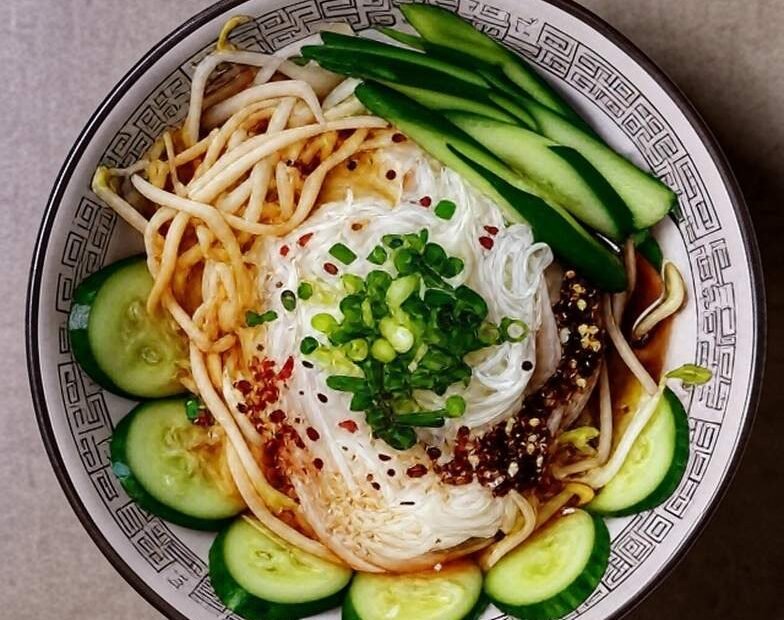
If you travel through the bustling streets of Lanzhou or Tianshui in Gansu province during a summer afternoon, you’ll spot locals sitting under shaded stalls, happily slurping from bowls filled with translucent ribbons of noodles, crisp cucumber, and a glossy, tangy sauce. That refreshing dish is Niangpi (酿皮) — a cool, chewy noodle made from wheat or rice flour, often topped with chili oil, vinegar, and garlic sauce.
Unlike Lanzhou’s famous beef noodles, which are served steaming hot, Niangpi is served cold, making it one of northwest China’s most beloved summer foods. It’s light, spicy, and deeply satisfying — the kind of dish that cools your body while igniting your taste buds.
In this post, we’ll dive into what makes Niangpi so special, how it’s prepared from scratch, and why it’s a dish that beautifully represents the culinary heritage of Gansu and Shaanxi.
What Is Niangpi?
Niangpi literally translates to “fermented skin” or “steamed skin,” referring to the soft, elastic noodles made by washing the starch out of flour dough, letting it settle, and then steaming the resulting gluten and starch mixture into thin sheets. These sheets are then cut into wide noodles and mixed with various toppings.
It’s a dish with humble origins — a simple meal for farmers and street vendors — but over time it became an iconic regional delicacy found across northwestern China.
Each province has its variation:
- Gansu Niangpi tends to be chewier with bold chili oil.
- Shaanxi Niangpi uses more vinegar and garlic for extra punch.
- Qinzhou Niangpi (a sub-style) is thicker, with extra sesame paste.
Why Niangpi Is So Special
The magic of Niangpi lies in its texture and temperature. It’s both smooth and chewy, cool yet spicy. Every bite carries layers — the softness of the noodles, the crunch of cucumber, the heat of chili oil, and the tang of vinegar.
It’s also entirely meat-free, relying on umami from garlic, soy, and sesame — perfect for vegetarians and those looking for a light, refreshing meal.
Ingredients for Traditional Niangpi
Serves: 4
Prep Time: 1 hour (plus resting)
Cook Time: 45 minutes
Difficulty: Moderate
For the Noodles:
- 500 g all-purpose flour
- 250–300 ml water
- A pinch of salt
For the Sauce:
- 3 tbsp soy sauce
- 2 tbsp black vinegar
- 1 tbsp sesame paste (tahini can substitute)
- 2 tbsp chili oil (homemade or store-bought)
- 1 tsp minced garlic
- 1 tsp sugar
- 1 tbsp sesame oil
For the Toppings:
- 1 cucumber, julienned
- Bean sprouts (optional, lightly blanched)
- Chopped cilantro
- Crushed peanuts or sesame seeds for garnish
Step-by-Step Recipe for Niangpi
Step 1 – Make the Dough
- In a large bowl, mix flour and salt, then slowly add water to form a smooth dough.
- Knead it for 10–12 minutes until firm and elastic.
- Cover with a damp cloth and let it rest for 1 hour — this allows the gluten to form properly.
Step 2 – Wash the Dough to Extract Starch
This is the signature part of Niangpi making.
- Place the dough in a large bowl filled with water.
- Start kneading it underwater — you’ll notice the water turning white. This is the starch being released.
- Continue washing and kneading for about 10–15 minutes.
- When only a rubbery lump (called mianjin, or gluten) remains, remove it.
- Let the starch water sit undisturbed for 4–6 hours (or overnight).
After resting, you’ll notice a thick white layer (the starch) settled at the bottom and clear water on top. Carefully pour off the water, keeping the starch.
Step 3 – Make the Gluten (Optional but Traditional)
The rubbery lump left after washing the dough can be steamed or fried later. In traditional stalls, this gluten is cut into pieces and added back into the finished dish for extra texture.
If you’d like to include it:
- Steam the gluten lump for 20 minutes.
- Let it cool and slice into small bite-sized cubes.
Step 4 – Prepare the Noodle Sheets
- Stir the settled starch until it becomes a smooth batter — similar to pancake batter.
- Lightly oil a round, flat plate or shallow pan.
- Pour in a thin layer of batter (just enough to coat the bottom).
- Place in a steamer and steam for 2–3 minutes until the sheet becomes translucent.
- Remove and let it cool.
- Repeat until all batter is used.
When cooled, stack the sheets and cut them into 1-inch-wide strips. These are your Niangpi noodles!
Step 5 – Make the Sauce
- In a small bowl, whisk together soy sauce, vinegar, sesame paste, sesame oil, chili oil, minced garlic, and sugar.
- Adjust the flavors — more vinegar for tanginess, more chili for heat.
- If the sesame paste is too thick, thin it with a spoonful of warm water.
The sauce should be balanced: savory, tangy, spicy, and slightly nutty.
Step 6 – Assemble the Dish
- Place the cut noodle strips into a large bowl.
- Add cucumber, bean sprouts, and gluten cubes (if using).
- Pour over the sauce and toss gently to coat everything evenly.
- Top with cilantro, crushed peanuts, or sesame seeds.
Serve chilled — Niangpi tastes best when cool and refreshing.
What Does Niangpi Taste Like?
A good Niangpi should be:
- Chewy and elastic from the steamed starch noodles.
- Cool and refreshing with crisp cucumber and garlic aroma.
- Balanced — spicy, sour, salty, and slightly sweet.
It’s often compared to a Chinese salad, but it’s heartier and more complex. Some say Niangpi captures the “flavor of Gansu summer” — bright, lively, and full of contrast.
Nutritional Information
| Component | Approx per Serving |
|---|---|
| Calories | 400–450 kcal |
| Protein | 10–12 g |
| Carbohydrates | 70–80 g |
| Fat | 10–15 g |
| Fiber | 2–3 g |
Nutrition Highlights
- Low in fat and cholesterol-free (if no meat is added)
- Rich in carbohydrates for energy
- Sesame paste and chili oil add healthy fats
- Cucumber and bean sprouts provide vitamins and freshness
Prep and Cook Time
| Task | Time |
|---|---|
| Dough prep and resting | 1 hour |
| Washing dough and settling starch | 4–6 hours (inactive time) |
| Steaming noodle sheets | 30–40 minutes |
| Sauce and assembly | 15 minutes |
| Total time: | ~6–7 hours (mostly waiting) |
While Niangpi takes time to prepare, most of it is resting — once you get the rhythm, it’s easier than it looks.
Tips for Perfect Niangpi
- Patience is key: The starch needs time to settle properly.
- Thin batter = soft noodles; thick batter = chewy noodles. Adjust based on your preference.
- Use cold water when washing dough — it keeps gluten firm and prevents the starch from dissolving too much.
- Chill before serving: The colder it is, the better it tastes.
- Experiment with toppings: Add shredded carrots, tofu, or even boiled egg for variation.
A Taste of Gansu’s Simplicity
In Gansu, Niangpi isn’t just food — it’s part of daily life. Street vendors serve it from big metal bowls, often alongside a tangy mung bean jelly called Liangfen. On hot afternoons, friends gather at open-air noodle shops, sharing laughter and chilled Niangpi under colorful umbrellas.
It’s a dish that represents northwestern China’s resilience and creativity — making something delicate and delicious out of simple flour and water.
Final Thoughts
Niangpi is more than just a noodle dish — it’s an experience. Every step, from washing the dough to tasting that first chilled bite, connects you with centuries of Chinese street food tradition.
It teaches patience, celebrates texture, and proves that simplicity often hides the greatest complexity.
So next time you crave something cool, spicy, and different, skip the salad — make a bowl of Niangpi, the pride of Gansu, and discover why these silky noodles have captivated generations.
In short:
- Origin: Gansu, China
- Texture: Chewy and cool
- Taste: Spicy, tangy, nutty, and refreshing
- Perfect for: Hot days, light lunches, and curious cooks who love authentic regional dishes.
