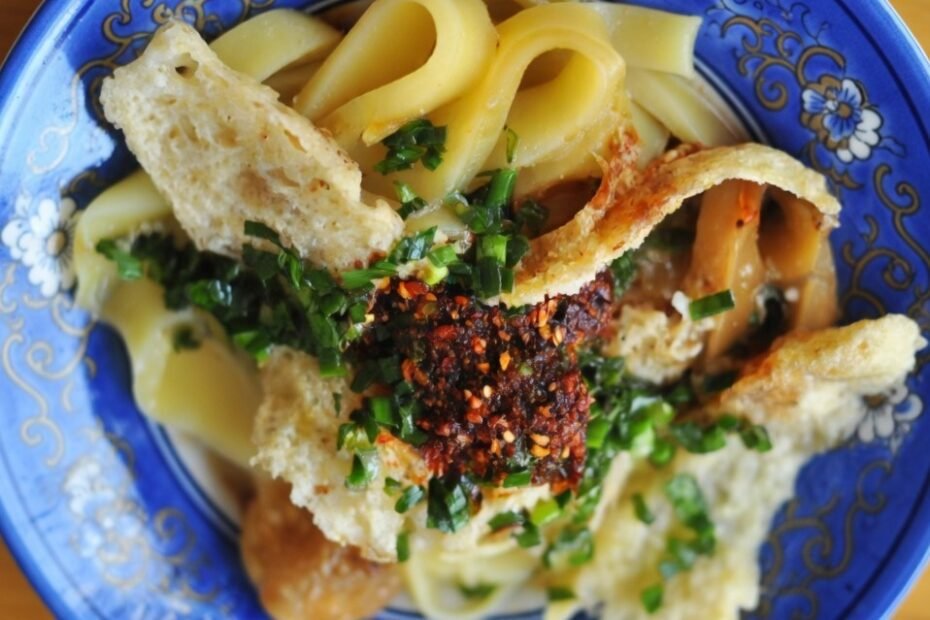
If there is one dish that perfectly captures the cool, refreshing side of northwest Chinese cuisine, it is Niangpi. Originating from Gansu province, especially around Lanzhou and Xi’an regions, this dish is loved for its soft noodles, bold flavors, and unique chewy texture.
Niangpi is very different from hot noodle soups. It is served cold, making it especially popular in warmer weather. The dish combines wheat-based noodles with a spicy, tangy sauce, crunchy vegetables, and sometimes gluten pieces. Every bite is a mix of smooth, chewy, spicy, and refreshing.
Let’s take a closer look at what makes Niangpi special and how you can prepare it at home.
What Makes Niangpi Unique
Niangpi stands out because of how the noodles are made. Instead of simply kneading flour and cutting it into strips, the dough is washed to separate starch and gluten.
The starch is then turned into soft, jelly-like sheets that are cut into noodles. The remaining gluten is cooked separately and added back as a topping.
This process creates two textures in one dish:
- Smooth and slippery rice-like noodles
- Firm and chewy gluten pieces
The sauce is another highlight. It usually includes vinegar, garlic, chili oil, and sesame paste. The flavor is bold but balanced, with sour, spicy, nutty, and savory notes all coming together.
Ingredients You Will Need
For the dough and noodles
- 2 cups all-purpose flour
- 1 cup water
- A pinch of salt
For the gluten
- The gluten extracted from the dough
For the sauce
- 2 tablespoons chili oil
- 1 tablespoon soy sauce
- 1 tablespoon Chinese black vinegar (or regular vinegar)
- 1 teaspoon sesame paste or tahini
- 2 cloves garlic (minced)
- Salt to taste
For toppings
- 1 cucumber (julienned)
- Bean sprouts (blanched)
- Fresh coriander
- Optional: crushed peanuts or sesame seeds
Making the Dough and Extracting Starch
Start by mixing flour, salt, and water to form a soft dough. Knead it until smooth, then let it rest for about 30 minutes.
Now place the dough in a large bowl of water. Gently knead and squeeze it in the water. You will notice the water turning milky. This is the starch being released.
Pour out the starchy water into another bowl and keep it aside. Add fresh water to the dough and repeat the washing process several times until the water runs almost clear.
At this point, what remains in your hand is the gluten. Set it aside for later.
Let the collected starchy water sit undisturbed for a few hours. The starch will settle at the bottom, and clear water will float on top. Carefully pour off the top layer of water.
You are left with a thick starch paste.
Making the Niangpi Sheets
Stir the starch paste well. It should have a smooth, pourable consistency.
Take a flat plate or tray and lightly grease it. Pour a thin layer of the starch mixture onto the plate.
Steam this plate over boiling water for a few minutes until the layer becomes firm and slightly translucent.
Remove the plate and let it cool. Once cooled, gently peel off the sheet. Repeat the process with the remaining batter.
Stack the sheets and cut them into wide noodle-like strips.
Cooking the Gluten
Take the gluten you set aside earlier. It will feel elastic and slightly rubbery.
Steam it for about 15–20 minutes until cooked. Let it cool, then cut it into small bite-sized pieces.
These pieces will add a chewy texture that contrasts with the soft noodles.
Preparing the Sauce
In a bowl, mix chili oil, soy sauce, vinegar, sesame paste, minced garlic, and salt.
Taste and adjust as needed. You can add a little sugar if you want a slight sweetness, or more vinegar if you prefer a stronger tang.
The sauce should be bold and flavorful because it will coat the mild noodles.
Assembling the Dish
Place the cut Niangpi noodles in a bowl.
Add cucumber strips, bean sprouts, and gluten pieces.
Pour the sauce over everything and toss gently to coat.
Finish with fresh coriander and a sprinkle of peanuts or sesame seeds if you like.
Serve immediately, preferably slightly chilled.
Taste and Texture Experience
Niangpi is all about contrast.
The noodles are soft, smooth, and slightly slippery. The gluten is firm and chewy. The vegetables add crunch and freshness.
The sauce ties everything together. It is spicy from chili oil, tangy from vinegar, and rich from sesame paste.
Each bite feels light yet satisfying, making it a perfect dish when you want something refreshing but still flavorful.
Nutrition Information
Niangpi is a balanced dish, though its nutritional value depends on how much sauce and oil you use.
- Calories: Around 350–500 per serving
- Carbohydrates: High, from wheat starch noodles
- Protein: Moderate, mainly from gluten
- Fat: Moderate, depending on chili oil and sesame paste
- Fiber: Comes from vegetables like cucumber and sprouts
Because it is not deep-fried and includes fresh vegetables, it can be a relatively healthy option when prepared with moderate oil.
Preparation and Cooking Time
- Prep time: About 45 minutes (excluding resting time)
- Resting and settling time: 2–3 hours
- Cooking time: Around 30 minutes
- Total time: Around 3 to 4 hours
Most of the time goes into waiting for the starch to settle, so plan ahead.
Tips for Home Cooks
Making Niangpi at home is a rewarding experience, but a few tips can make it easier.
Be patient while washing the dough. This step is important for getting the right texture in both noodles and gluten.
Make sure the starch water is well-settled before using it. This ensures smooth and firm sheets.
Keep the noodle layers thin when steaming. Thick layers may not cook evenly.
Grease your plate lightly to prevent sticking. This helps you peel off the sheets easily.
If the starch mixture feels too thick, add a little water. If it is too thin, let it settle longer.
Taste your sauce before mixing it with noodles. Adjusting flavors at this stage makes a big difference.
Chill the noodles slightly before serving for the best experience, especially in warm weather.
Niangpi is a beautiful example of how simple ingredients can be transformed into something unique. The process may seem unusual at first, especially washing the dough to separate starch and gluten, but it is exactly this method that gives the dish its signature texture.
Once you try it, you will understand why it is so popular across Gansu and nearby regions. It is light, refreshing, and full of flavor, making it perfect for everyday meals or something different when you want to explore new cuisines.
Making it at home might take some time the first time, but the result is worth it. It is not just cooking—it is an experience that connects you with a traditional technique passed down through generations.
