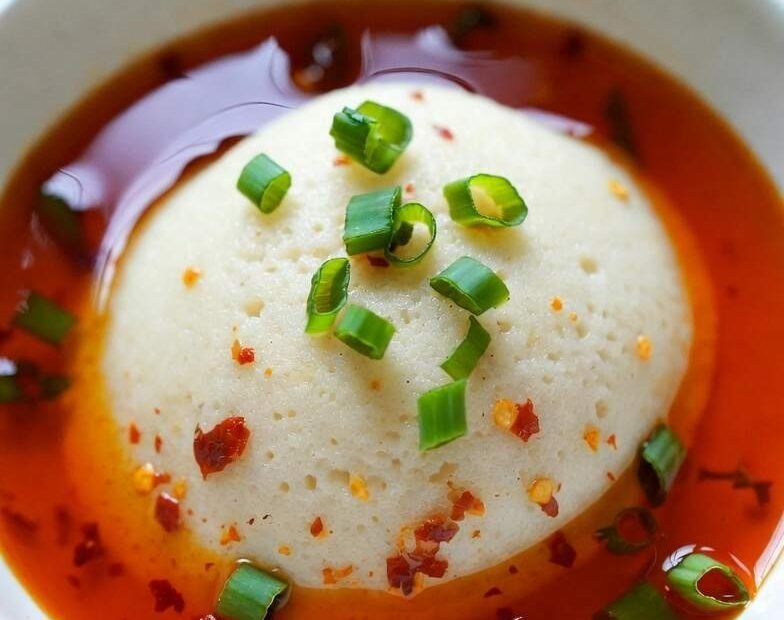
Gansu province in northwest China has given the culinary world many rustic, ancient, and deeply comforting dishes. One of the most unique among them is Jiaotuan, a thick, dough-like, spoon-able dish made primarily from roasted wheat or buckwheat flour. Its texture is soft yet resilient, its flavor earthy and warm, and its cultural roots run deep in the historical Silk Road region. For generations, families across Gansu have relied on this hearty dish as a source of energy, especially in the cold and arid terrain.
Although Jiaotuan may appear simple, its beauty lies in its minimalism. With just a few ingredients—flour, water, salt, and sometimes a drizzle of chili oil—it transforms into a nourishing meal that is surprisingly satisfying. This article explores the origins, flavors, preparation method, nutritional aspects, and a detailed step-by-step recipe so you can experience Jiaotuan in your own kitchen.
What Is Jiaotuan?
Jiaotuan (搅团), sometimes translated as “stirred dough,” is a traditional food from Gansu, particularly common in rural communities. Unlike noodles, bread, or dumplings, Jiaotuan is a semi-solid dish that sits somewhere between porridge and dough. It is made by slowly pouring roasted flour into vigorously boiling water while stirring constantly, allowing the mixture to thicken without forming lumps.
Depending on the region, Jiaotuan might be served plain, enjoyed with chili oil, or paired with savory accompaniments like pickled vegetables, lamb gravy, or stir-fried chili sauce. Its simplicity has made it an everyday staple, but its warm, hearty nature also makes it a comforting soul food.
Why Jiaotuan Holds Cultural Significance
Centuries ago, roasted flour was one of the most practical ingredients for travelers along the Silk Road. It stored well, resisted spoilage, and provided quick energy. Jiaotuan became popular not only because of its convenience but also because it required no elaborate equipment—just a pot, water, and a stirring tool.
Families prepared it during harvest seasons, cold winters, and busy farming days when quick but filling meals were essential. Today, Jiaotuan remains a nostalgic food that connects modern households to Gansu’s agrarian heritage.
Flavors and Texture: What Makes Jiaotuan Special
Jiaotuan has a uniquely silky and elastic texture, similar to a very soft dough. The roasted flour brings a nutty aroma, and when topped with chili oil, garlic paste, or vinegar, the contrast of rich, warm dough and sharp condiments creates a dialogue of flavors.
It is:
- Earthy and nutty
- Soft yet springy
- Mild, making it perfect for strong toppings
- Comforting and warm
Its ability to pair well with both mild and bold flavors is one reason it has stayed beloved through centuries.
Ingredients Used in Jiaotuan
The basic version uses:
- Roasted flour (wheat or buckwheat)
- Salt
- Boiling water
Optional toppings include:
- Chili oil
- Crushed garlic
- Vinegar
- Sesame paste
- Sautéed chili sauce
- Pickled radish or vegetables
These additions elevate the dish from a simple staple to a flavorful, hearty bowl.
Prep Time & Cook Time
Prep Time: 10 minutes
Cook Time: 10 minutes
Total Time: 20 minutes
Servings: 2–3 people
Ingredients for Homemade Jiaotuan
For the Jiaotuan Base
- 1 cup roasted wheat or buckwheat flour
- 2½ cups boiling water
- ½ teaspoon salt
Optional Toppings
- 2 tablespoons chili oil
- 1 teaspoon minced garlic
- 1 teaspoon light soy sauce
- ½ teaspoon vinegar
- Finely chopped scallions
- A sprinkle of ground Sichuan pepper (optional)
How to Make Jiaotuan: Step-by-Step Recipe
Step 1: Prepare the Flour
If you cannot find pre-roasted flour, lightly dry-roast regular flour in a pan over low heat until it turns aromatic and slightly golden. This step enhances its flavor and prevents raw flour notes in the final dish.
Allow it to cool.
Step 2: Boil the Water
Bring a pot of water to a rolling boil.
A continuous boil is essential—Jiaotuan thickens properly only when the water temperature is very high.
Add salt to the boiling water.
Step 3: Start Pouring the Flour
Reduce the heat slightly but keep the water bubbling. Slowly pour the roasted flour into the center of the pot in a thin stream.
The key to good Jiaotuan is never stopping the stirring.
Step 4: Stir Vigorously
Use chopsticks or a wooden spatula to stir rapidly in one direction.
You will see the mixture transform from watery to thick and elastic.
Make sure no dry flour pockets remain.
Step 5: Adjust Consistency
After 3–5 minutes of stirring, Jiaotuan becomes glossy and smooth.
If it appears too thick, add a splash of boiling water. If too thin, add a teaspoon of flour slurry.
Step 6: Serve Hot
Transfer the Jiaotuan into serving bowls while hot.
Its texture should be smooth, slightly springy, and able to hold shape on a spoon.
Step 7: Add Toppings
Drizzle chili oil, add minced garlic, and sprinkle spring onions. A dash of vinegar or soy sauce adds brightness.
Mix gently and enjoy while steaming warm.
Serving Suggestions
Jiaotuan is flexible—it can be eaten as a full meal or a side dish. Try pairing it with:
- Pickled cabbage
- Spicy lamb broth
- Light vegetable stir-fries
- Sesame paste dressing
For a more modern twist, some people top it with crispy fried onions or spicy bean paste.
Nutrition Profile of Jiaotuan
The nutritional value depends on the flour used—wheat or buckwheat—but generally, Jiaotuan is a wholesome, energizing meal.
Nutrition (Approx. per serving)
- Calories: 250–350
- Carbohydrates: 50–60 g
- Protein: 6–10 g
- Fat: 5–10 g (depending on toppings)
- Fiber: 3–6 g
- Vitamins: B1, B2, B3 (from whole grains)
- Minerals: Iron, magnesium, potassium
Why It’s Nutritious
- Roasted flour retains good amounts of fiber and minerals
- Provides long-lasting energy, ideal for cold climates
- Low in fat unless topped heavily
- Buckwheat flour version is gluten-free and richer in minerals
Jiaotuan is not only filling but also gentle on the stomach, making it suitable for all ages.
Tips for Perfect Jiaotuan
- Pour flour slowly to avoid lumps
- Always stir in one direction for elasticity
- Use freshly roasted flour for best flavor
- Serve immediately—Jiaotuan thickens as it cools
- Add toppings right before eating
Why You Should Try Making Jiaotuan at Home
Jiaotuan may not be as famous globally as Chinese noodles or dumplings, but it offers a deeply traditional taste of northwest China. Its simplicity is exactly what makes it charming. With very few ingredients, you create a warm, comforting dish rooted in centuries of heritage.
If you enjoy exploring lesser-known regional foods, want an easy meal, or simply love learning about ancient Silk Road culinary traditions, Jiaotuan is a wonderful dish to try.
