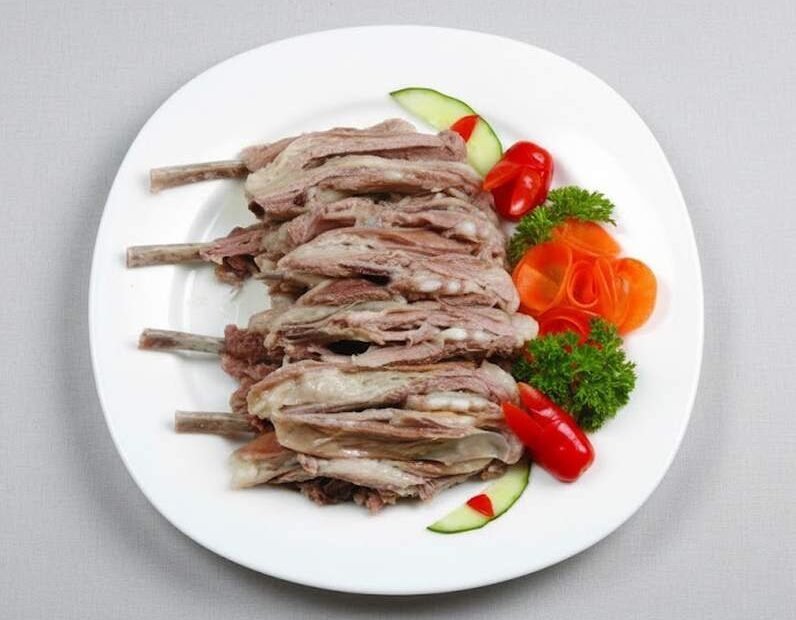
In the heart of Gansu province, where the ancient Silk Road once connected East and West, there exists a dish that perfectly captures the essence of nomadic life and frontier hospitality — Hand-Grab Mutton (手抓羊肉, Shǒu Zhuā Yáng Ròu).
It’s a simple name, but behind it lies centuries of cultural heritage. This dish represents the spirit of the northwestern Chinese people, especially the Hui and Tibetan communities who inhabit Gansu’s vast grasslands and mountain regions.
As the name suggests, Hand-Grab Mutton isn’t eaten with chopsticks or spoons. Traditionally, diners grab the tender, juicy mutton with their hands, dipping it into flavorful salt or chili powder, and savoring the pure taste of slow-cooked lamb. It’s earthy, primal, and deeply satisfying — a dish that warms the body and soul alike.
Let’s explore the story, preparation, and taste of this traditional Gansu delicacy — and learn how to make it right in your own kitchen.
The Story Behind Hand-Grab Mutton
Hand-Grab Mutton has roots in ancient nomadic cuisine. Herding families in Gansu, Qinghai, and Xinjiang would slaughter sheep for special occasions — weddings, festivals, or when welcoming important guests.
Because nomads often cooked outdoors, simplicity was key. The mutton was boiled in large cauldrons with water, salt, and a few aromatics. The goal wasn’t to mask the flavor but to highlight the meat’s natural richness.
When ready, people would sit together on rugs or low stools, tear off tender pieces with their hands, and enjoy the meal communally. This act of eating together symbolized unity, respect, and abundance.
Today, Hand-Grab Mutton is still a beloved regional specialty across Gansu. You can find it in small family-run eateries, Muslim restaurants, and roadside stalls where steam rises from big pots filled with lamb bones and broth.
The Essence of the Dish
What makes Hand-Grab Mutton distinct from other lamb dishes is its minimal seasoning. The meat’s flavor comes through naturally — fragrant, slightly sweet, and rich in fat.
The broth is clear and delicate, infused only with ingredients like:
- Onions for sweetness
- Ginger for warmth
- Star anise and bay leaves for a subtle aroma
The final dish is served hot and unadorned, often alongside a bowl of dipping salt mixed with cumin, chili, and pepper. It’s rustic but deeply satisfying.
Ingredients for Authentic Gansu-Style Hand-Grab Mutton
Serves: 4
Prep Time: 20 minutes
Cook Time: 1 hour 40 minutes
Total Time: 2 hours
Main Ingredients
- 1.5 kg lamb (with bones preferred — shoulder or ribs)
- 10 cups water (enough to fully cover the meat)
- 1 large onion, quartered
- 4 slices fresh ginger
- 2 bay leaves
- 2 star anise
- 1 tsp salt (to start, adjust later)
For the Dipping Salt
- 1 tsp coarse salt
- ½ tsp ground cumin
- ½ tsp chili powder (optional)
- ¼ tsp Sichuan pepper powder (optional)
Optional Accompaniments
- Steamed flatbread (Nang) or rice
- Fresh herbs like cilantro
- Vinegar or chili oil for added flavor
Step-by-Step Recipe for Hand-Grab Mutton
Step 1 – Prepare the Meat
- Rinse the lamb pieces thoroughly under cold water to remove blood and impurities.
- Place them in a large pot and cover with water. Bring to a boil.
- Once boiling, skim off the foam that rises to the surface. This ensures a clear broth.
- Drain the water and rinse the meat again briefly.
This step, known as “blanching,” removes any strong odors or impurities, a key step in traditional Chinese meat preparation.
Step 2 – Simmer the Mutton
- Return the cleaned lamb to the pot.
- Add 10 cups of fresh water, onion, ginger, bay leaves, and star anise.
- Bring it to a gentle boil, then reduce heat to a low simmer.
- Add 1 teaspoon of salt.
Let it cook slowly for 1.5 to 2 hours, depending on the cut. The goal is tender meat that easily pulls from the bone but still holds its shape.
As it cooks, the kitchen fills with a rich, comforting aroma — simple yet irresistible.
Step 3 – Prepare the Dipping Salt
While the mutton simmers, mix together:
- Coarse salt
- Ground cumin
- Chili powder
- Sichuan pepper powder (optional)
This aromatic mixture is what diners dip their mutton into just before eating. In Gansu, this blend is known as “Huíjiāo yán” (回椒盐) — a seasoning mix that enhances but doesn’t overpower the meat.
Step 4 – Test for Doneness
Check the meat after 90 minutes. If it pulls apart easily with gentle pressure, it’s ready.
If the lamb is still tough, continue simmering for another 15–20 minutes. The broth should remain clear and golden, with a thin layer of fat glistening on top.
Step 5 – Serve the Dish
- Remove the mutton from the pot using tongs.
- Place it on a wooden board or large serving plate.
- Pour a bit of hot broth over it to keep it moist.
- Serve immediately, accompanied by bowls of dipping salt.
Traditional etiquette? Forget forks and knives — grab a piece with your hand, dip it into the salt, and take a hearty bite.
For a more complete meal, serve with a small bowl of the clear broth, flatbread, and perhaps a simple salad or pickled vegetables.
The Taste Experience
Your first bite of Hand-Grab Mutton might surprise you with its purity. There’s no heavy spice, no strong sauces — just the natural sweetness of lamb, balanced by the gentle perfume of ginger and onion.
Each piece has a succulent texture: soft yet firm, juicy but not greasy. The dipping salt brings a spark of warmth and complexity, highlighting the lamb’s richness.
This is a dish best eaten slowly — savoring the meat, the broth, and the comforting simplicity of flavors that connect you to centuries of Gansu cooking traditions.
Nutrition Information (Per Serving Approx.)
| Nutrient | Amount |
|---|---|
| Calories | 480 kcal |
| Protein | 35 g |
| Fat | 36 g |
| Carbohydrates | 2 g |
| Sodium | 750 mg |
Nutrition Highlights
- High in protein – supports muscle and tissue repair
- Healthy fats from lamb help maintain energy levels
- Collagen and minerals from bones promote joint health
- Naturally low in carbs and sugar-free
For a leaner version, you can use lamb leg instead of shoulder or ribs and trim off visible fat.
Prep and Cook Time
| Task | Duration |
|---|---|
| Cleaning and Blanching | 20 min |
| Simmering | 1 hr 40 min |
| Serving Preparation | 10 min |
| Total Time | 2 hours 10 minutes |
Tips for Perfect Hand-Grab Mutton
- Choose quality lamb – Fresh, young lamb gives the best tenderness and flavor.
- Don’t rush the simmering – Slow cooking ensures the meat stays moist.
- Use minimal spices – Too many seasonings can mask the lamb’s natural aroma.
- Skim the broth often – This keeps it clear and light.
- Serve hot – The flavor and texture are best when freshly cooked.
Variations Across Regions
In Gansu, the dish is often pure and simple, while in Xinjiang, cooks might add onions, carrots, or cumin to the broth for extra aroma. In Qinghai, the broth is served separately as a soup course, and diners often drink it after finishing the meat.
Regardless of region, the ritual is the same — hands, laughter, and togetherness.
The Spirit of Gansu in Every Bite
To taste Hand-Grab Mutton is to experience the soul of northwestern China — bold, honest, and full of heart. It tells a story of shepherds on the plains, of families gathering around a steaming pot, and of centuries-old traditions passed through generations.
Every region along the Silk Road has its own food identity, but Gansu’s dishes — simple, humble, and rich with meaning — stand out for how deeply they connect people to the land and to each other.
When you grab that piece of tender lamb, warm from the broth, and dip it into a pinch of spicy salt, you’re not just tasting food — you’re tasting history.
Final Thoughts
Hand-Grab Mutton may look rustic, but it’s a dish of deep sophistication, balancing the purity of ingredients with time-honored technique.
Whether served in a small Gansu kitchen or a festive outdoor gathering, it brings warmth, conversation, and joy. Try making it at home, and you’ll understand why this simple, soulful dish has endured for centuries.
Sometimes, the best flavors are the ones you grab with your hands — and share with your heart.
