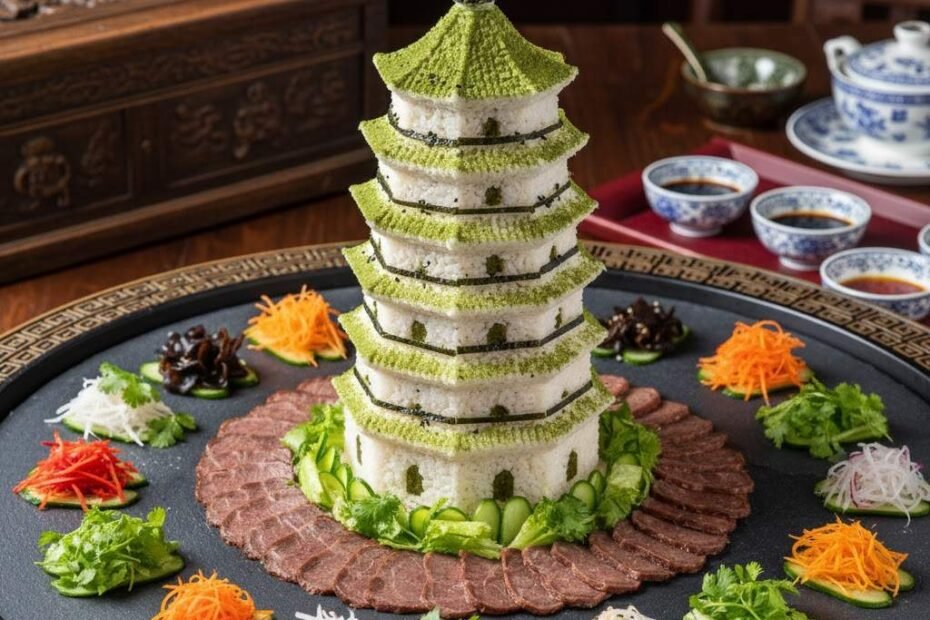
Have you ever tasted a dish that looks like a historic landmark? In the heart of Gansu Province, nestled along the Yellow River in Lanzhou (anciently known as Jincheng or “Golden City”), there’s a cold appetizer that does exactly that. Jincheng Baita (金城白塔), meaning “Golden City White Pagoda,” is a stunning assembled cold meat platter meticulously arranged to resemble the famous White Pagoda (Baita) – Lanzhou’s seven-story, octagonal Buddhist pagoda perched on Baita Mountain.This dish isn’t just food; it’s edible art that pays homage to one of Lanzhou’s most cherished symbols. If you’re exploring Gansu cuisine or planning a Chinese banquet, Jincheng Baita is a must-try for its visual wow factor and delicious layers of flavor. Let’s dive deep into its history, significance, how to make it at home, and why it deserves a spot on your table.
The Story Behind Jincheng Baita
Lanzhou, the capital of Gansu, has long been a crossroads of cultures along the ancient Silk Road. The real White Pagoda was originally built during the Yuan Dynasty and rebuilt in the Ming era as a tribute to a Tibetan lama. Its elegant white tiers rising against the Yellow River backdrop have inspired poets, artists, and yes – chefs.Jincheng Baita the dish emerged as part of traditional Gansu banquet cuisine, particularly in state banquets and high-end restaurants in Lanzhou. Chefs took inspiration from the pagoda’s distinctive multi-tiered structure: eight sides, seven (or sometimes simplified to five or six) visible levels, tapering toward the top like a graceful tower.Unlike hot stir-fries or steaming noodle bowls that dominate Northwest Chinese food, this is a cold dish (liang cai) served at the start of a meal to stimulate the appetite. It’s a perfect example of “food carving” and plating artistry in Chinese culinary tradition, similar to how other regions shape melons or fruits into sculptures. The goal? To wow guests before they even take a bite.In Lanzhou restaurants, it’s often presented on a large round or square platter, with the “pagoda” rising 30-50 cm tall. The white color comes from blanched or lightly seasoned meats, evoking the pagoda’s lime-washed exterior, while garnishes add subtle accents.
What Makes Jincheng Baita Special?
What sets it apart from a regular cold cut platter?
- Visual Drama: It’s not just piled – it’s architecturally stacked with precise layers, often using toothpicks or skewers hidden inside for stability.
- Texture Variety: Tender boiled meats, crunchy vegetables, chewy offal, and silky eggs create a symphony in every bite.
- Balanced Flavors: Lightly seasoned with garlic, chili oil, vinegar, and sesame – fresh, tangy, spicy, and aromatic without overpowering.
- Halal-Friendly Options: In Muslim-influenced Gansu (home to many Hui people), versions often use only beef, lamb, or chicken, avoiding pork.
While the classic version uses pork-based items, modern adaptations in halal restaurants substitute with beef tongue, tripe, or lamb.
Step-by-Step Recipe:
Make Your Own Jincheng Baita at HomeThis home-friendly version serves 6-8 as an appetizer and builds a simplified 5-6 tier pagoda about 35cm tall. It’s impressive but doable with patience!
Ingredients (for the meats and components)
- 300g pork tongue (or beef tongue for halal)
- 300g pork heart (or beef heart)
- 300g pork liver
- 200g pork belly or skin (for “white” layers)
- 200g chicken gizzard
- 200g yellow shrimp (cooked and peeled) or squid for variety
- 2 cucumbers (for base and green accents)
- 2 carrots (julienned for color)
- 1 bunch cilantro or parsley
- 100g jellyfish (optional, for chewy texture – pre-soaked)
- 4 hard-boiled eggs (sliced for white layers)
Seasoning Sauce (mix together)
- 4 tbsp light soy sauce
- 3 tbsp Chinkiang black vinegar
- 2 tbsp sesame oil
- 3 tbsp chili oil (adjust to taste)
- 4 cloves garlic, minced
- 1 tsp sugar
- 1 tbsp toasted sesame seeds
- Salt and white pepper to taste
Prep Time, Cook Time & Nutrition Info
- Prep Time: 2 hours (mostly cleaning and boiling)
- Cook Time: 1.5 hours (boiling in batches)
- Total Time: 4-5 hours (including cooling)
- Servings: 8 | Calories per serving: ~280 kcal
- Nutrition Highlights (approximate per serving): Protein 28g (high from lean meats), Fat 18g, Carbs 6g (low), rich in iron, B-vitamins, collagen (from skin/offal), and low sodium if you control the sauce.
Step-by-Step Instructions
- Clean the Meats Thoroughly
Rinse all offal and meats under cold water. Soak liver in milk or water with a splash of vinegar for 30 minutes to remove bitterness. Blanch pork skin in boiling water for 5 minutes, scrape clean, then boil again. - Cook in Flavored Broth
Prepare a large pot of master stock: water + 2 slices ginger, 3 scallions, 2 star anise, 1 tbsp Sichuan peppercorns, 2 tbsp Shaoxing wine, salt.- Boil pork tongue and heart for 60-90 minutes until tender.
- Boil liver for 20-25 minutes (don’t overcook or it gets chalky).
- Boil gizzards and belly/skin for 45-60 minutes.
- Poach shrimp if raw (1-2 minutes).
Let everything cool completely in the broth for better flavor, then refrigerate 1-2 hours – cold slicing is key!
- Slice Uniformly
Slice all meats paper-thin (1-2mm) against the grain. Aim for large, even pieces:- Tongue and heart: long oval slices
- Liver: rectangular pieces
- Skin/belly: translucent squares
- Eggs: perfect rounds
Keep slices chilled.
- Build the Base
On a large round or square platter (at least 40cm), create a green “mountain” base with thick cucumber slices arranged in a circle. This represents Baita Mountain. - Assemble the Pagoda Layers (the fun part!)
Start wide at the bottom, narrowing upward. Use toothpicks discreetly for support.- Layer 1 (bottom, widest): Alternate pork skin and cucumber slices in an octagonal ring.
- Layer 2: Overlap tongue and heart slices, slightly smaller diameter.
- Layer 3: Liver and egg slices for a paler “white” tier.
- Layer 4: Gizzard and jellyfish/shrimp for texture contrast.
- Layer 5: More tongue or mixed meats.
- Top Tier: A small pyramid of carrot julienne or a single shrimp crowned with cilantro “finial.”
Make each level overhang slightly like traditional eaves. Aim for 8 sides on larger layers.
- Garnish and Sauce
Sprinkle sesame seeds and cilantro leaves. Just before serving, drizzle the seasoning sauce evenly over the entire tower so it cascades down the layers. - Serve
Present whole for photos and applause, then gently dismantle with chopsticks or tongs so guests can mix pieces with sauce.
Tips for Perfect Jincheng Baita
- Practice slicing – uniformity is everything.
- Keep everything ice-cold during assembly to prevent slipping.
- For height and stability, insert a central bamboo skewer hidden inside.
- Vegetarian version? Use layered tofu skin, mushrooms, and colorful vegetables.
Why You’ll Love This Dish
Jincheng Baita isn’t just Instagram-worthy; it’s healthy, protein-packed, and refreshingly light – perfect after heavy Gansu lamb dishes or Lanzhou beef noodles. The combination of tender meats with tangy-spicy sauce wakes up the palate, embodying the Northwest Chinese love for bold yet balanced flavors.Next time you’re craving something beyond the usual charcuterie board, channel ancient Lanzhou and build your own edible White Pagoda. Your guests will be talking about it long after the platter is empty!
