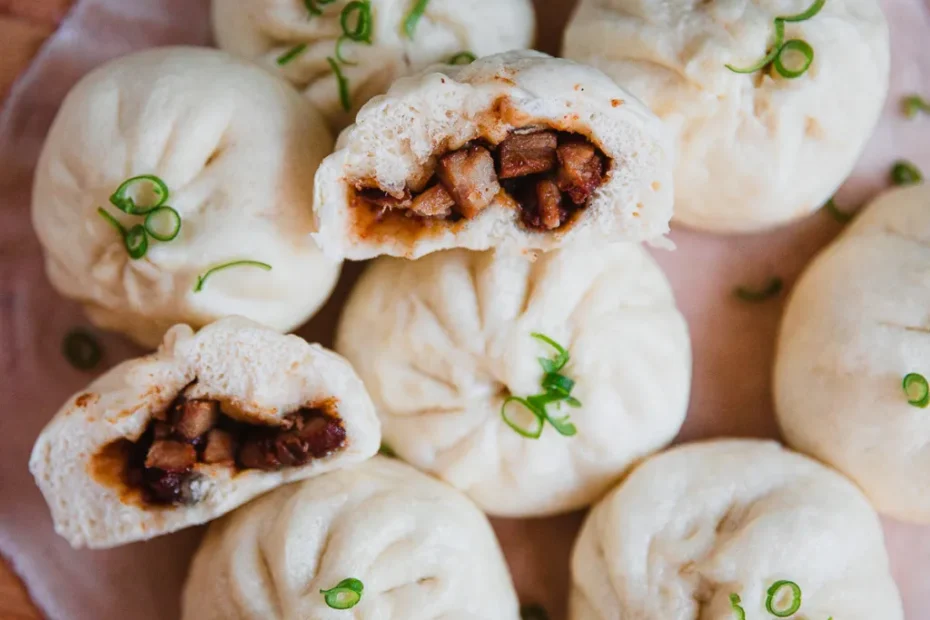
Char Sui Bao, also written as Char Siu Bao or 叉烧包, is one of the most iconic dishes in Cantonese dim sum culture. These soft, fluffy buns filled with sweet, savory barbecue pork are a staple in teahouses across Guangdong and Hong Kong. Among steamed buns worldwide, few have captured hearts as consistently as this one. The contrast between the cloud-like, white exterior and the glossy, fragrant pork filling makes Char Sui Bao both comforting and irresistible.
In dim sum tradition, dishes often reflect a balance between culinary technique and cultural heritage. Char Sui Bao does exactly that. It represents the fusion of Cantonese-style char siu barbecue with traditional steamed bread-making methods. The result is a bun that is simple on the outside yet layered with flavor and history on the inside.
This article explores the origins of Char Sui Bao, what makes it unique, and how to prepare it at home using clear, reliable steps. Whether you are familiar with dim sum or discovering it for the first time, this guide will give you everything you need to master this beloved dish.
The Cultural Significance of Char Sui Bao
Dim sum is more than a style of food; it is a social ritual. Families gather in teahouses over steaming baskets of dumplings, buns, and snacks while sipping tea and catching up with one another. Char Sui Bao plays a role in almost every dim sum setting. It is often one of the first items ordered, especially for children, thanks to its mildly sweet and approachable flavor.
The bun itself is an adaptation of earlier Chinese steamed breads. Traditional northern-style baozi are denser and filled with savory meats or vegetables. Cantonese cooks transformed this idea by pairing their signature char siu pork with a softer, sweeter dough and steaming it just long enough for the buns to slightly crack open at the top. These natural splits are considered desirable, symbolizing a light and airy dough.
What Makes a Great Char Sui Bao
A perfect Char Sui Bao balances three important qualities:
A Tender, Fluffy Dough
The dough should be soft, white, and light. The slight sweetness comes from sugar in the dough, which also contributes to the bun’s signature softness.
A Glossy, Sweet-Savory Filling
Char siu filling is made from chopped Cantonese barbecue pork cooked in a thick sauce of soy, sugar, oyster sauce, and aromatics. The filling should be sticky, rich, and slightly caramelized.
A Characteristic “Bloom” on Top
During steaming, the bun should naturally split open slightly. This shows the dough is airy and well-proofed.
Prep Time and Cook Time
Prep Time: 1 hour 20 minutes
Rising Time: 1 hour
Cook Time: 15 minutes
Total Time: Around 2 hours 35 minutes
Servings: 12 to 14 buns
Ingredients
For the Dough
- 2 cups all-purpose flour
- 1 cup cake flour
- 1 tablespoon baking powder
- 1/3 cup sugar
- 1/2 cup warm water
- 2 teaspoons active dry yeast
- 2 tablespoons vegetable oil
- 1 tablespoon cornstarch (optional, for extra softness)
For the Pork Filling
- 250 g cooked Cantonese-style char siu, finely chopped
- 1 tablespoon vegetable oil
- 1 tablespoon light soy sauce
- 1 tablespoon oyster sauce
- 1 tablespoon hoisin sauce
- 1 tablespoon sugar
- 1/2 cup water
- 1 tablespoon cornstarch mixed with 1 tablespoon water
- 1 teaspoon sesame oil
Step-by-Step Recipe for Authentic Char Sui Bao
Step 1: Prepare the Dough
In a small bowl, combine warm water, sugar, and yeast. Let it rest for about 10 minutes until it becomes foamy. This step ensures the yeast is active.
In a large mixing bowl, combine the all-purpose flour, cake flour, cornstarch, and baking powder. Mix well. Create a well in the center and pour in the yeast mixture and vegetable oil. Stir until a rough dough forms.
Knead the dough for 8 to 10 minutes until smooth. Cover with a damp cloth and let it rise for one hour or until doubled in size.
Step 2: Prepare the Char Siu Filling
Heat oil in a pan over medium heat. Add the chopped char siu and stir for one minute. Add soy sauce, oyster sauce, hoisin sauce, and sugar. Stir to combine and let the mixture simmer.
Pour in half a cup of water and bring to a boil. Lower the heat and add the cornstarch slurry. Stir until the sauce thickens and becomes glossy. Finish with a touch of sesame oil.
Set the filling aside to cool completely. Cool filling is easier to wrap and prevents the dough from getting soggy.
Step 3: Divide and Shape the Dough
Once the dough has doubled in size, punch it down gently to remove air. Knead briefly and then roll it into a long log. Cut into 12 to 14 equal pieces.
Roll each piece into a ball and flatten it into a small disc about 3 inches wide. The edges should be thinner than the center to help hold the filling.
Step 4: Add the Filling
Place a spoonful of char siu filling in the center of each dough disc. Gather the edges upward, pinch to seal, and then gently turn the bun seam-side down. Lightly roll the bun between your hands to smooth the surface.
Place each bun on a small square of parchment paper so it does not stick to the steamer.
Step 5: Steam the Buns
Arrange the buns in a steamer basket, leaving enough space for expansion. Cover with the lid and steam over medium-high heat for 12 to 15 minutes. Avoid lifting the lid mid-steaming, as this can deflate the buns.
When done, the buns should be white, soft, and slightly split on top. Remove from heat and serve hot.
Serving Suggestions
Char Sui Bao is traditionally served as part of dim sum. While delicious on its own, it pairs wonderfully with jasmine tea, oolong tea, or light soups. These buns also make a useful portable snack and can be reheated by gentle steaming.
To turn the dish into a full dim sum experience, serve alongside Har Gao, Siu Mai, turnip cake, and congee.
Nutrition Information (Approximate per Bun)
- Calories: 210
- Protein: 7 g
- Fat: 4 g
- Carbohydrates: 36 g
- Sodium: 320 mg
Char Sui Bao is moderately calorie-dense due to the dough and sweetened filling. However, because the buns are steamed rather than baked or fried, they remain relatively light compared to many other snacks.
Tips for Perfect Char Sui Bao
Use Cake Flour for Softness
The combination of all-purpose and cake flour gives the buns their tender, fluffy texture. Cake flour helps achieve the snow-white, pillow-like appearance.
Do Not Overstuff
Using too much filling can cause the buns to burst or collapse during steaming. A spoonful is usually enough.
Keep the Filling Cool
Warm filling softens the dough and makes it hard to shape the buns properly.
Maintain Steady Heat When Steaming
Uneven steam can cause the buns to wrinkle or collapse. Medium-high steam is ideal.
Allow Space Between Buns
They expand significantly and need room to bloom.
Why Char Sui Bao Continues to Matter
Char Sui Bao remains a timeless classic of Cantonese cuisine because it bridges tradition and comfort. Its ingredients are simple, but the technique requires attention and care. Every family or dim sum establishment may have its own variation of the filling or dough, but the essence stays the same: soft bun, sweet-savory pork, and the warm satisfaction of a well-loved dish.
For many people, these buns are tied to memories of family gatherings, early-morning dim sum outings, and festive occasions. Making them at home becomes more than just cooking. It becomes a way of preserving cultural heritage while sharing something delicious with others.
Final Thoughts
Char Sui Bao is a dish that invites patience and rewards care. With its comforting texture and aromatic filling, it is easy to understand why it is one of the most ordered items at dim sum tables around the world. Following the steps in this guide, you can create buns that are soft, flavorful, and true to Cantonese tradition.
Whether you steam them for a weekend brunch or a special gathering, Char Sui Bao offers warmth and satisfaction in every bite.
