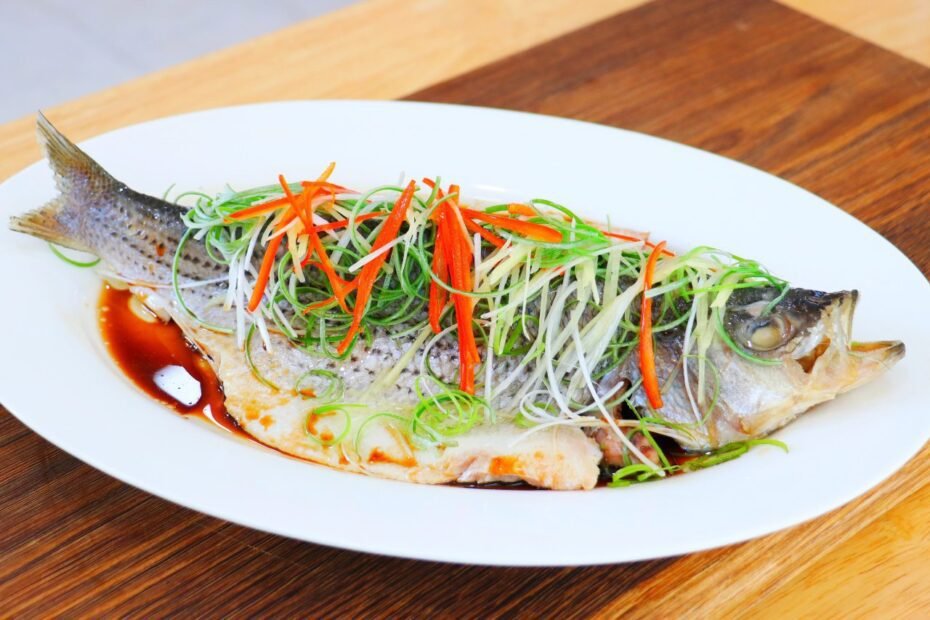
Steamed Fish, or Qing Zheng Yu (清蒸魚) in Mandarin, is perhaps the ultimate expression of the Cantonese culinary philosophy. Hailing from the coastal province of Guangdong (Canton), this dish epitomizes the region’s reverence for freshness, purity, and subtle harmony of flavors. It is not merely a cooking method; it is a meticulous ritual designed to showcase the pristine quality of the main ingredient: the fish itself.
In Cantonese culture, serving a whole steamed fish is a sign of respect and prosperity, often gracing the tables of weddings, New Year celebrations, and formal family dinners. The essence of this dish lies in its simplicity—only a few key seasonings are used—but the technique must be flawless. The result is flesh that is silken and tender, infused with the delicate aroma of ginger, scallions, and a light, savory soy sauce dressing.
The Cantonese Obsession with Sheng (Freshness)
For a Cantonese chef, a fish must be sheng (live) or hoi-sim (literally “fresh from the sea”) to qualify for steaming. This is non-negotiable. If the fish is not alive minutes before cooking, the dish will fail to achieve the required delicate texture and sweetness.
The simplicity of steaming allows the natural flavor of the fish—known as umami and xian (fresh, savory taste)—to shine through without being masked by heavy spices, oil, or frying. The few seasonings used (ginger, scallions, cilantro, and high-quality soy sauce) are carefully selected to complement and elevate the fish, not overpower it.
Why Steaming is Superior
- Retention of Moisture: Unlike frying or baking, steaming uses moist heat, preventing the delicate fish proteins from drying out.
- Clean Flavor: The fish is cooked above the liquid, ensuring that its natural juices and oils are retained or drip away cleanly, resulting in a lighter, purer flavor.
- Speed: Steaming a whole fish is remarkably fast—often just 8 to 12 minutes—which keeps the flesh tender and sweet.
The Essential Steps to Perfect Steamed Fish
Achieving the perfect Cantonese Steamed Fish relies on precision in three areas: the preparation, the steaming time, and the final dressing.
1. Preparation: Getting the Fish Ready
The fish is cleaned, scaled, and often scored on both sides. This scoring is essential as it allows the heat to penetrate quickly and evenly, reducing the overall cooking time and ensuring the thickest part of the fish cooks simultaneously with the thinner parts. Ginger slices are typically tucked into the score marks and the cavity to neutralize any slight fishy odors.
2. Steaming: Timing is Everything
The steamer setup must be extremely hot and rapidly producing steam before the fish is introduced. The fish is placed on a rack above boiling water. The timing depends entirely on the size of the fish (typically 8-12 minutes for a 1-lb fish). Overcooking by even 60 seconds can turn the silken flesh dry and rubbery.
3. The Finish: Hot Oil and Savory Sauce
This step is the spectacular finale. After the fish is cooked, the aromatics are removed, and a generous quantity of fresh, crispy julienned scallions and cilantro are layered over the top. Then, scalding hot oil is immediately poured over the herbs. The oil sizzles and crisps the herbs, releasing a final burst of intense aroma. The dish is completed with a light, complex sauce made from soy sauce, sugar, and sometimes fish sauce, drizzled around the fish.
Mastering Steamed Fish at Home: A Step-by-Step Recipe
This recipe is for a whole fish, which is the traditional and preferred method, as cooking the fish whole locks in moisture and flavor.
Preparation and Cooking Overview
| Category | Time |
| Prep Time | 15 minutes |
| Marinating | 10 minutes |
| Cook Time | 8 – 12 minutes |
| Sauce Prep | 5 minutes |
| Total Active Time | ~30 minutes |
Ingredients
I. The Fish
- 1 whole white-fleshed fish (e.g., Seabass, Grouper, Snapper, or Tilapia), approximately 1 to 1.5 lbs (450-680g), scaled, gutted, and cleaned.
- 2 tablespoons Shaoxing rice wine (or dry sherry)
II. The Aromatics & Garnishes
- 1 knob of ginger, half sliced thinly, half julienned into fine matchsticks
- 1 bunch of scallions (green onions), mostly cut into 2-inch pieces, with 1/4 of the bunch julienned into fine matchsticks
- 1/4 cup fresh cilantro, leaves and soft stems
- 3 tablespoons high-quality cooking oil (vegetable or canola)
III. The Steaming Sauce (Dressing)
- 3 tablespoons high-quality light soy sauce (preferred low-sodium)
- 1 tablespoon boiling water
- 1 teaspoon granulated sugar
- 1/2 teaspoon dark soy sauce (for color, optional)
- 1/2 teaspoon sesame oil
Instructions
Phase 1: Preparing the Fish
- Prepare the Fish: Rinse the fish under cold water and pat it thoroughly dry, inside and out, with paper towels.
- Scoring: Using a sharp knife, make two or three diagonal, shallow cuts on both sides of the thickest part of the fish. These cuts ensure even cooking.
- Initial Seasoning: Rub the entire fish, including the cavity, with the Shaoxing rice wine. Place the thin slices of ginger and the 2-inch cut scallions both inside the cavity and nestled on top of the scoring marks.
- Set Up the Steamer: Bring a large pot or wok of water to a rolling boil. Ensure the water level is below the steaming rack. Place a heatproof plate (large enough for the fish) onto the rack.
Phase 2: Steaming
- Steaming Time: Once the water is boiling vigorously and producing copious steam, carefully place the fish on the pre-heated plate in the steamer.
- Cover and Steam: Cover the steamer tightly. Steam the fish for 8 to 12 minutes.
- Timing Guide: A 1-lb fish typically takes 8 minutes. A 1.5-lb fish typically takes 10-12 minutes. The flesh should flake easily when poked, and the eyes should be opaque.
- Test for Doneness: At the end of the time, remove the lid and gently pierce the thickest part of the fish with a chopstick. If the chopstick slides in easily and the juices run clear, it is done. If the juices are pink, steam for another minute.
- Drain and Remove Old Aromatics: Carefully remove the plate with the fish from the steamer. Crucially, drain and discard the water and accumulated juices from the plate, as this liquid often contains residual “fishiness.” Remove and discard the steamed ginger slices and scallions from the fish cavity and surface.
Phase 3: The Spectacular Finish
- Prepare the Sauce: While the fish is steaming, whisk together the light soy sauce, boiling water, sugar, dark soy sauce (if using), and sesame oil in a small bowl. Set aside.
- Garnish: Place the julienned fresh ginger matchsticks, the julienned fresh scallion matchsticks, and the fresh cilantro leaves/stems generously all over the top of the hot, cooked fish.
- The Hot Oil Drizzle: Heat the 3 tablespoons of cooking oil in a small saucepan until it is smoking hot (just before it reaches the smoke point).
- Sizzle: Carefully and immediately pour the scalding hot oil directly over the scallions and ginger garnish on the fish. It should sizzle dramatically, releasing an incredible aroma and crisping the herbs instantly.
- Serve: Gently spoon or drizzle the prepared soy sauce mixture around the fish (not directly on top of the crispy herbs). Serve immediately.
Nutrition Facts and Serving Suggestions
Steamed Fish is considered one of the healthiest and lightest ways to consume fish. The method uses minimal oil (only for the finishing drizzle) and relies on the inherent goodness of the fish itself.
Nutritional Profile
White-fleshed fish is an outstanding source of lean protein, essential fatty acids, and key vitamins and minerals.
| Component (per 100g, cooked flesh only) | Value |
| Calories | ~110 – 140 kcal |
| Protein | ~20 – 25 g |
| Total Fat | ~3 – 5 g |
| Omega-3 Fatty Acids | Excellent source |
| Niacin (B3) | High |
| Selenium | High |
Note: The nutritional content is highly dependent on the type of fish used (e.g., Seabass is fattier than Tilapia) and the amount of dressing consumed.
Serving the Feast
Cantonese Steamed Fish is typically the last and most revered savory dish served at a banquet.
- The Staple: It is always served with plain steamed white rice. The lightness of the rice is the perfect vehicle for the delicate, savory sauce and complements the tender fish without competing with its flavor.
- Vegetables: The ideal accompaniment is a simple dish of blanched and seasoned Chinese greens, such as Gai Lan (Chinese broccoli) or Bok Choy, lightly dressed with oyster sauce.
- The Presentation: The fish should be served whole, head and tail intact, as this symbolizes completeness and good fortune in Chinese tradition. The presentation is key, highlighting the careful arrangement of the final, crispy aromatics.
The Timeless Elegance of Qing Zheng Yu
Steamed Fish is a culinary masterpiece because it embraces restraint. It takes courage and confidence to let an ingredient stand virtually naked on the plate, relying only on its freshness and a whisper of seasoning to carry the dish. This technique perfectly illustrates the Cantonese mastery of flavor control and texture.
The contrast between the soft, flaky meat, the heat of the hot oil, and the crisp, pungent aromatics is what transforms this simple cooking method into an unforgettable gastronomic experience. It proves that in the pursuit of perfection, often, less is truly more.
