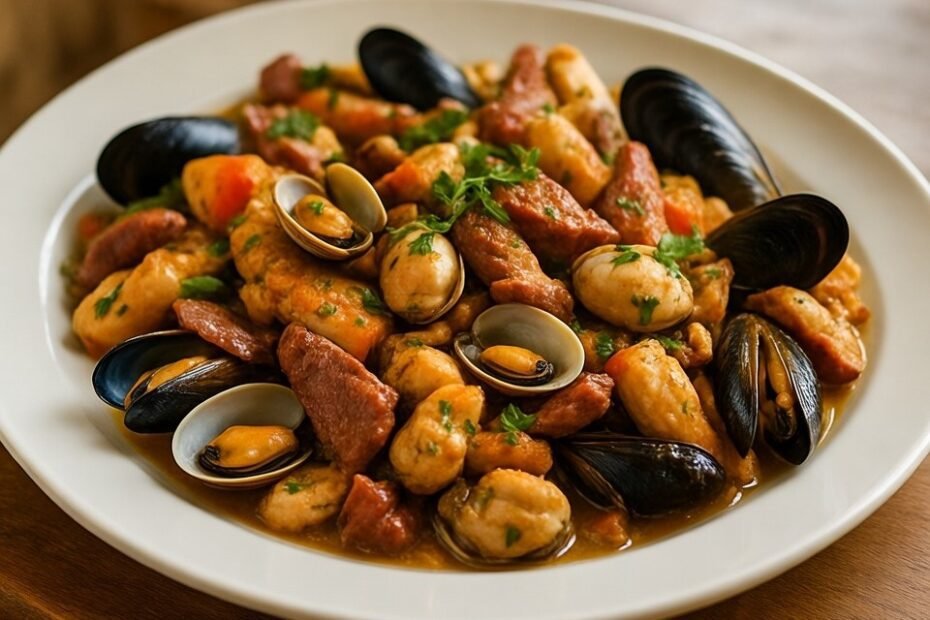
If you’re ready for a taste of Chile’s wild, misty islands, curanto is the communal feast that’ll have you dreaming of Chiloé’s rugged shores. This ancient dish—layers of seafood, meats, potatoes, and dumplings steamed in an earth oven—embodies the Mapuche and Chilote spirit of abundance and togetherness. Often shared with a joyful “¡Buen provecho!” (Enjoy!), curanto is more than a meal; it’s a celebration of land and sea. In this blog post, we’ll uncover its history, cultural roots, and nutritional perks, plus a step-by-step recipe for a home-friendly version. ¡Salud!
The Story of Curanto
Curanto, derived from the Mapudungun word “kurantu” meaning “stony ground,” hails from the Chiloé Archipelago off Chile’s southern coast, where indigenous Chilote people have prepared it for over 11,000 years. Archaeological digs reveal ancient pits lined with hot stones, filled with shellfish and roots—a testament to early foragers honoring the earth’s bounty. Evolving with Spanish and Mapuche influences, it became a staple for fishermen and farmers, cooked in communal earth ovens during festivals or harsh winters.Today, curanto symbolizes Chiloé’s resilient culture: a massive, layered feast that feeds crowds, blending seafood from the Pacific with hearty potatoes from the fertile soils. Whether “curanto en hoyo” (in the pit) or “en olla” (in a pot), it’s a ritual of patience and sharing, evoking misty fjords and folk tales. Let’s dig in—literally!
Step-by-Step Curanto Recipe
Craving this Chilean masterpiece at home? Traditional curanto requires a backyard pit, but this pot version (curanto en olla) captures the smoky, steamy magic without the excavation. It’s a feast for 6–8, perfect for gatherings. Gather your crew, and let’s layer up!
Ingredients
- For the Base Layers:
- 2 lbs (900g) clams, scrubbed
- 2 lbs (900g) mussels, scrubbed and debearded
- 1 lb (450g) fresh chorizo sausages, sliced
- 1 lb (450g) pork ribs or chicken thighs, cut into pieces
- For the Dumplings (Chapaleles and Milcao):
- Chapaleles: 2 cups cooked potatoes, mashed; 1 cup flour; 1/2 cup lard; salt; optional: chopped onions
- Milcao: 2 cups grated raw potatoes; 1 cup cooked mashed potatoes; 1/2 cup flour; salt
- For the Veggies:
- 4 large potatoes, peeled and halved
- 2 sweet potatoes, peeled and chunked
- 1 cabbage, quartered
- 4 ears corn, husked and halved
- 2 onions, quartered
- For Steaming:
- 2 cups dry white wine or water
- Banana leaves or napa cabbage leaves (for wrapping, optional)
- Salt and ground cumin, to taste
Instructions
- Prep the Dumplings: For chapaleles, mix mashed potatoes, flour, lard, salt, and onions (if using) into a dough. Form into 2-inch balls and set aside. For milcao, combine grated and mashed potatoes with flour and salt; form into flat patties. These Chilote staples add hearty texture—pro tip: make ahead and chill.
- Layer the Pot: In a large stockpot or Dutch oven, start with meats: arrange pork or chicken at the bottom, then chorizo slices. Season with salt and cumin. Add a splash of wine to deglaze.
- Build the Layers: Layer potatoes and sweet potatoes next, followed by corn halves and onion quarters. Place dumplings (chapaleles and milcao) on top, then tuck in cabbage quarters. Finally, mound the shellfish—clams and mussels—over everything. If using, wrap layers loosely in banana or cabbage leaves for authentic steam infusion. Pour remaining wine over, cover tightly.
- Steam the Feast: Bring to a boil over high heat, then reduce to low simmer. Cover and cook for 50–60 minutes, shaking the pot occasionally (don’t stir to preserve layers). It’s ready when shellfish open, potatoes are fork-tender, and meats are juicy. Discard unopened shells.
- Serve: Uncover with flair—steam will billow like a Chiloé fog! Serve straight from the pot, family-style, with crusty bread to sop up juices. Shout “¡Qué rico!” (How delicious!) and dig in.
Tips for Success
- Authentic Twist: For curanto en hoyo, dig a pit, heat stones in a fire, layer as above, cover with leaves and soil—cook 1 hour. But pot method is safer for home.
- Seafood Swap: Use razor clams or piure (sea squirt) if available; fresh is key for that briny pop.
- Make-Ahead: Prep dumplings and chop veggies a day ahead; assemble just before cooking.
- Storage: Refrigerate leftovers up to 3 days; reheat gently with a splash of wine to revive steam.
Why Curanto Is a Must-TryCuranto is a flavor odyssey—briny seafood mingling with smoky meats and earthy potatoes in a steamy embrace. It’s the ultimate group project, fostering bonds over layers of bounty, and its versatility shines year-round (though winter calls loudest). From Chiloé’s fog-shrouded tables to your backyard, it’s a dish that feeds body and soul. ¡Gracias, Chile, for this earthy wonder!
Nutritional Benefits of Curanto
Curanto is a nutrient powerhouse, blending lean proteins, complex carbs, and ocean-fresh omega-3s for a balanced feast. Here’s a breakdown per serving (about 1/6th of the pot, ~400g):
- Calories: Approximately 500–600 kcal
- Protein: 30–35 grams, from shellfish, meats, and dumplings, fueling muscle repair.
- Fat: 20–25 grams, from lard in dumplings and pork (mix of saturated and healthy unsaturated).
- Carbohydrates: 50–60 grams, from potatoes and corn, for sustained energy.
- Fiber: 6–8 grams, from veggies and cabbage, supporting digestion.
- Vitamins and Minerals: Loaded with vitamin B12 and iron (shellfish/meats), vitamin C (cabbage/onions), and potassium (potatoes); omega-3s from seafood boost heart health.
- Sodium: Moderate to high (700–900 mg), from natural shellfish brine, so balance with sides.
This stew aligns with Chile’s coastal diet—pair with a green salad for extra antioxidants.Prep and Cook Time
- Prep Time: 45 minutes (plus 30 minutes for dumplings)
- Cook Time: 50–60 minutes
- Total Time: About 2 hours
- Servings: 6–8
Serving Suggestions
Curanto demands a feast vibe: serve with pebre (Chilean salsa) for zing, or a crisp Sauvignon Blanc from the Central Valley. Follow with pan amasado (kneaded bread) and for dessert, manjar blanco (dulce de leche). Gather around a fire pit for that Chiloé magic, toasting with “¡Salud!” to shared stories.
Why Curanto Deserves a Spot on Your Table
Curanto is Chile’s gift to epicureans—a layered legacy of indigenous ingenuity and island abundance. Its communal prep and explosive flavors make it ideal for holidays or impromptu bashes, while the pot version keeps it accessible. Whether you’re a seafood lover or meat maven, this dish weaves history into every bite.So, rally your loved ones and layer away! Have you tried curanto, or got a twist on the dumplings? Drop a comment below—I’d love to hear how you make this Chilean classic your own!
