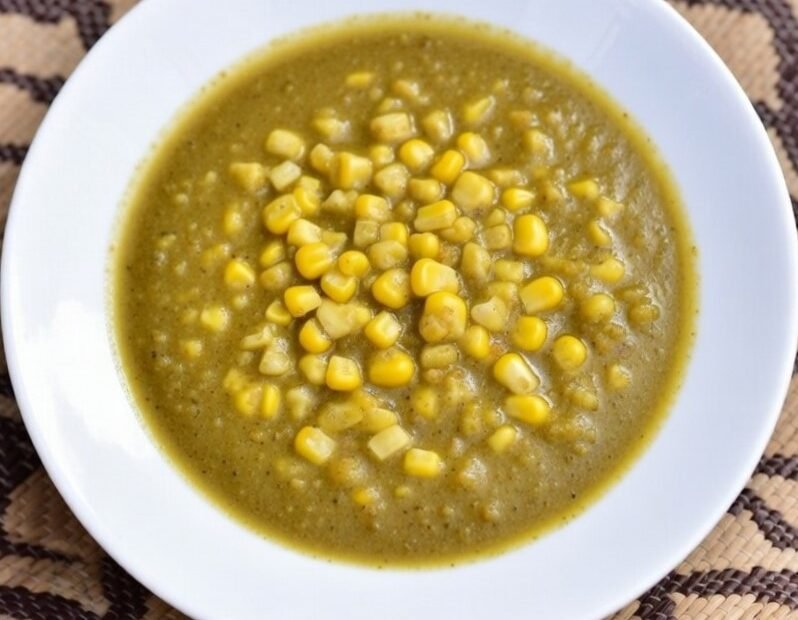
Sanga is a traditional dish from the coastal regions of Cameroon, known for its rich flavor and comforting texture. It is made with fresh maize, cassava leaves, palm nut juice, and fish. This combination creates a thick, hearty stew that is both nourishing and deeply satisfying.
In many coastal homes, Sanga is more than just a meal. It is a dish that brings families together, especially during times when fresh corn is in season. The sweetness of maize blends beautifully with the earthy taste of cassava leaves and the richness of palm nut juice.
Sanga is usually served with boiled yam, making it a complete and filling meal.
In this article, you will learn everything you need to know about Sanga, including ingredients, preparation, cooking steps, nutrition, and helpful tips.
What is Sanga?
Sanga is a stew made by cooking fresh maize together with finely chopped cassava leaves in palm nut juice. Fish is often added for flavor and protein, while spices bring warmth and depth to the dish.
The maize provides a natural sweetness, while cassava leaves give a slightly earthy, green taste. Palm nut juice adds richness and color, making the stew thick and flavorful.
The result is a balanced dish that combines sweet, savory, and earthy flavors in one pot.
Ingredients
Here is a traditional ingredient list for making Sanga.
Main Ingredients
- 3 cups fresh maize (corn kernels)
- 2 cups cassava leaves (finely chopped)
- 2 cups palm nut juice (fresh or canned)
- 300 grams fresh or smoked fish
- 1 onion (chopped)
- 1–2 seasoning cubes (optional)
- Salt to taste
For Flavor
- 2–3 cloves garlic (minced)
- 1-inch ginger (grated)
- 1–2 chili peppers (optional)
- 1 teaspoon ground crayfish (optional)
To Serve
- Boiled yam
Preparing the Ingredients
Preparing the Maize
- Remove kernels from fresh corn cobs.
- Wash thoroughly.
- You can crush or blend part of the maize for a thicker texture.
Preparing Cassava Leaves
- Wash the leaves very well.
- Pound or blend them into a fine texture.
- Cassava leaves can be tough, so they need to be finely processed.
Preparing Fish
- Clean the fish and remove scales.
- Cut into pieces.
- If using smoked fish, soak briefly to remove excess salt.
Step-by-Step Recipe
Step 1: Cook the Cassava Leaves
- Place the cassava leaves in a pot.
- Add a little water.
- Cook for about 10–15 minutes.
- This softens the leaves and reduces bitterness.
Step 2: Add Maize
- Add the fresh maize to the pot.
- Stir and cook for another 10 minutes.
- The maize will start to soften.
Step 3: Add Palm Nut Juice
- Pour in the palm nut juice.
- Mix well.
- Allow it to cook on medium heat.
Step 4: Add Fish
- Add the fish pieces to the pot.
- Let them cook gently in the stew.
Step 5: Add Aromatics
- Add chopped onion, garlic, ginger, and chili pepper.
- Stir to combine.
Step 6: Add Crayfish and Seasoning
- Add ground crayfish if using.
- Add seasoning cubes and salt to taste.
Step 7: Simmer Slowly
- Let the stew cook on low heat for 30–40 minutes.
- Stir occasionally to prevent sticking.
Step 8: Adjust Texture
- If the stew is too thick, add a little water.
- If too thin, let it cook longer to thicken.
Step 9: Final Taste Check
- Taste and adjust seasoning.
- Make sure the maize is soft and the leaves are well cooked.
Your Sanga is now ready to serve.
Serving Suggestions
Sanga is best enjoyed hot and is traditionally served with boiled yam.
You can also serve it with:
- Boiled plantains
- Rice
- Cassava fufu
The soft texture of yam pairs perfectly with the rich stew, making each bite satisfying.
Taste and Texture
Sanga has a unique taste that is both comforting and rich.
- The maize adds natural sweetness.
- The cassava leaves bring an earthy flavor.
- The palm nut juice gives a creamy, slightly nutty richness.
- The fish adds depth and a savory taste.
The texture is thick, with soft maize and smooth leafy greens combined into one hearty dish.
Nutrition Information
Sanga is a nutritious dish that provides a balanced mix of nutrients.
Cassava Leaves
- Rich in vitamins and minerals
- High in fiber
- Good for digestion
Maize
- Provides carbohydrates for energy
- Contains fiber and essential nutrients
Palm Nut Juice
- Source of healthy fats
- Contains antioxidants
Fish
- High in protein
- Rich in omega-3 fatty acids
- Supports overall health
Overall Benefits
- Provides energy and nourishment
- Supports a balanced diet
- Keeps you full for longer
Preparation and Cooking Time
- Preparation Time: 30–40 minutes
- Cooking Time: 45–60 minutes
- Total Time: About 1.5 hours
The time may vary depending on how quickly the maize softens and how finely the cassava leaves are prepared.
Tips for Home Cooks
1. Use Fresh Ingredients
Fresh maize and cassava leaves give the best flavor.
2. Process Leaves Properly
Finely chopped or blended cassava leaves cook better and taste smoother.
3. Cook Leaves Well
Cassava leaves need enough cooking time to become soft and safe to eat.
4. Control the Thickness
Sanga should be thick but not dry. Adjust water as needed.
5. Use Good Palm Nut Juice
Fresh palm nut juice gives the best taste, but canned can work as well.
6. Do Not Overcook Fish
Add fish at the right time to keep it from breaking apart.
7. Balance Flavors
Taste as you cook to keep the right balance of salt and spice.
8. Stir Occasionally
This helps prevent the stew from sticking to the pot.
Variations of Sanga
Sanga can be prepared in different ways depending on preference.
- Some people use dried fish for a stronger flavor.
- Others add meat along with fish.
- Some make it spicy with more chili.
- Others blend part of the maize for a smoother texture.
Each version has its own unique taste, but the base ingredients remain the same.
Why Sanga is Special
Sanga is a dish that reflects the coastal lifestyle of Cameroon. It uses fresh, local ingredients that are easy to find in the region.
The combination of maize and cassava leaves shows how simple ingredients can be transformed into a rich and satisfying meal.
It is often prepared during harvest seasons or family gatherings, making it a dish that carries both cultural and emotional value.
Final Thoughts
Sanga is a hearty and nourishing dish that brings together the flavors of maize, cassava leaves, and palm nut juice. It is simple yet deeply satisfying, making it a favorite in many Cameroonian homes.
If you are looking to try something different, Sanga is a great choice. It is easy to prepare with the right ingredients and offers a unique taste that you will remember.
Serve it with boiled yam and enjoy a meal that is rich, comforting, and full of tradition.
