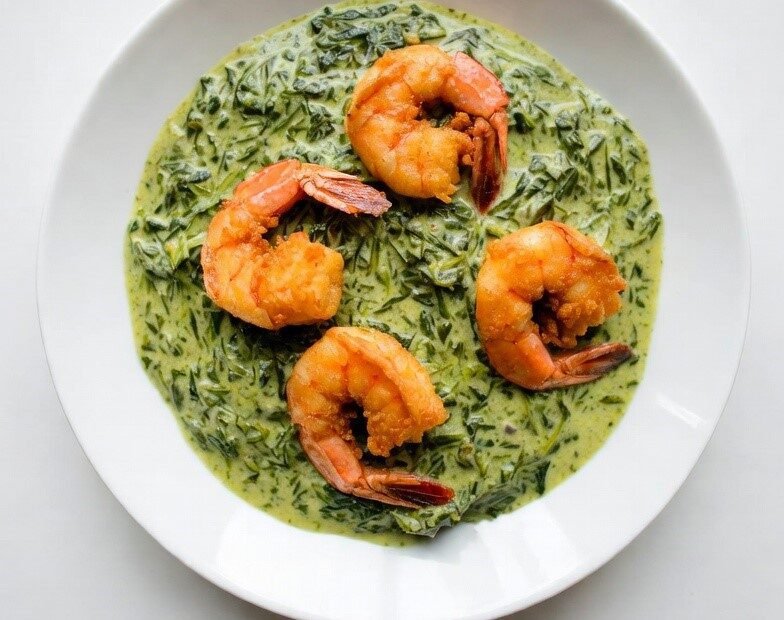
Ndolé is one of the most loved dishes from Cameroon and is often considered the national dish of the country. This rich and flavorful stew comes from the coastal city of Douala and is famous for its unique combination of slightly bitter leaves, creamy groundnuts, and protein like beef, shrimp, or fish. It is a dish that balances flavors beautifully—bitter, nutty, savory, and spicy all at once.
Traditionally served during special occasions, Ndolé has now become a staple meal enjoyed in many homes. It is usually paired with boiled plantains, rice, or even fufu, making it a filling and comforting dish.
In this article, you will learn everything about Ndolé, including ingredients, preparation, cooking steps, nutrition, and useful tips for home cooks.
What is Ndolé?
Ndolé is a stew made with bitterleaf (a leafy vegetable), ground peanuts, and meat or seafood. The bitterness of the leaves is softened during cooking, creating a balanced taste that is not overpowering. The groundnuts give the stew a creamy texture, while spices and aromatics add depth and warmth.
Although it may sound simple, Ndolé is a dish that requires careful preparation, especially when it comes to handling the bitterleaf. When done right, the result is a rich, smooth, and deeply satisfying stew.
Ingredients
Here is a traditional ingredient list for Ndolé. You can adjust based on what is available.
Main Ingredients
- 2 cups bitterleaf (fresh or dried)
- 1 cup ground peanuts (unsweetened)
- 300–400 grams beef (cut into small pieces)
- 200 grams shrimp (cleaned and deveined)
- Optional: smoked fish or dried fish
- 1 large onion (chopped)
- 3–4 cloves garlic (minced)
- 1-inch ginger (grated)
- 2–3 tablespoons palm oil or vegetable oil
- 2 seasoning cubes (optional)
- Salt to taste
For Flavor
- 1 teaspoon black pepper
- 1 teaspoon ground crayfish (optional but traditional)
- 1–2 fresh chili peppers (optional for heat)
To Serve
- Boiled plantains
- Rice
- Fufu (optional)
Preparing the Bitterleaf
The most important step in making Ndolé is preparing the bitterleaf.
If using fresh bitterleaf:
- Wash the leaves thoroughly.
- Rub them between your hands while rinsing repeatedly.
- This helps reduce bitterness.
- Taste as you wash to control how bitter you want it.
If using dried bitterleaf:
- Soak in warm water for about 1 hour.
- Rinse several times.
- Boil briefly and drain.
You want the leaves to still have a slight bitterness, not completely washed out.
Step-by-Step Recipe
Step 1: Cook the Meat
- Place the beef in a pot with salt, half the onion, garlic, and ginger.
- Add a little water and cook until tender.
- Keep the broth; you will use it later.
Step 2: Prepare the Groundnuts
- If using raw peanuts, roast them lightly and grind into a paste.
- Mix the groundnuts with water to form a smooth paste.
- Avoid lumps for a creamy stew.
Step 3: Cook the Bitterleaf
- Boil the prepared bitterleaf in water for about 10–15 minutes.
- Drain and set aside.
Step 4: Cook the Peanut Sauce
- Pour the peanut mixture into a pot.
- Add some of the beef broth.
- Cook on medium heat, stirring constantly to prevent burning.
- Allow it to thicken slightly.
Step 5: Add Meat and Fish
- Add the cooked beef into the peanut sauce.
- If using smoked or dried fish, add it at this stage.
- Let it simmer for 10 minutes.
Step 6: Add Bitterleaf
- Add the bitterleaf to the pot.
- Stir well to combine.
- Cook for another 10–15 minutes.
Step 7: Add Shrimp
- Add shrimp towards the end.
- Cook for about 5 minutes until pink and tender.
Step 8: Season the Stew
- Add remaining onions, crayfish, pepper, and seasoning cubes.
- Adjust salt to taste.
- Let everything simmer until thick and well blended.
Step 9: Add Oil
- Heat palm oil or vegetable oil in a separate pan.
- Pour it into the stew and stir well.
- This enhances flavor and richness.
Step 10: Final Simmer
- Let the stew cook for another 5–10 minutes.
- Taste and adjust seasoning.
Your Ndolé is now ready.
Serving Suggestions
Ndolé is best served hot. It pairs well with:
- Boiled ripe or unripe plantains
- Steamed white rice
- Cassava fufu
- Yams
The creamy texture of the stew goes perfectly with these starchy sides, making it a complete meal.
Taste and Texture
Ndolé has a very unique taste. The slight bitterness of the leaves is balanced by the creamy groundnuts. The meat and shrimp add richness, while spices give warmth and depth.
The texture is thick and smooth, almost like a nut-based curry, but with leafy greens mixed in. Each bite is layered with flavor.
Nutrition Information
Ndolé is not just tasty—it is also nutritious.
Key Nutritional Benefits
Bitterleaf
- Rich in vitamins A, C, and E
- Good for digestion
- Contains antioxidants
Groundnuts
- High in protein
- Good source of healthy fats
- Provides energy
Beef and Shrimp
- High in protein
- Rich in iron and minerals
- Supports muscle growth
Overall
- Balanced meal with protein, fats, and fiber
- Can be made healthier by reducing oil
Preparation and Cooking Time
- Preparation Time: 30–45 minutes
- Cooking Time: 45–60 minutes
- Total Time: About 1.5 hours
This may vary depending on how long you take to clean the bitterleaf and cook the meat.
Tips for Home Cooks
Making Ndolé at home can be easy if you follow these tips:
1. Control the Bitterness
Do not wash the bitterleaf too much. A slight bitterness is what makes Ndolé special.
2. Use Smooth Peanut Paste
Make sure your groundnuts are finely ground. A smooth paste gives a better texture.
3. Stir Frequently
Peanut sauce can stick and burn easily. Keep stirring, especially at the beginning.
4. Adjust Protein
You can use only beef, only shrimp, or a mix. Even chicken works as a substitute.
5. Use Good Stock
The broth from cooking the meat adds a lot of flavor. Do not discard it.
6. Add Oil Carefully
Too much oil can make the dish heavy. Add just enough for flavor.
7. Balance Spices
Ndolé is not meant to be overly spicy. Keep flavors balanced.
8. Try Different Sides
Plantains are traditional, but rice works very well if you prefer something simple.
Variations of Ndolé
Different regions and families have their own versions of Ndolé.
- Some use only seafood like shrimp and fish.
- Others add more meat for a richer stew.
- Some make it very spicy, while others keep it mild.
- Vegetarian versions use mushrooms or beans instead of meat.
You can experiment to find your favorite version.
Why Ndolé is Special
Ndolé is more than just a meal. It is a symbol of Cameroonian culture and hospitality. It is often served at celebrations, gatherings, and special events.
The dish reflects a perfect balance of flavors and shows how simple ingredients can come together to create something rich and satisfying.
Even though it takes time to prepare, the result is worth the effort. Once you taste it, you will understand why it is so loved.
Final Thoughts
Ndolé is a unique and delicious dish that combines bitterness, creaminess, and savory flavors in one pot. It may be different from what you are used to, but that is what makes it exciting.
With the right ingredients and a little patience, you can make this traditional Cameroonian dish in your own kitchen. Whether you serve it with plantains, rice, or fufu, Ndolé is sure to be a memorable meal.
Try it once, and it may become one of your favorite comfort foods.
