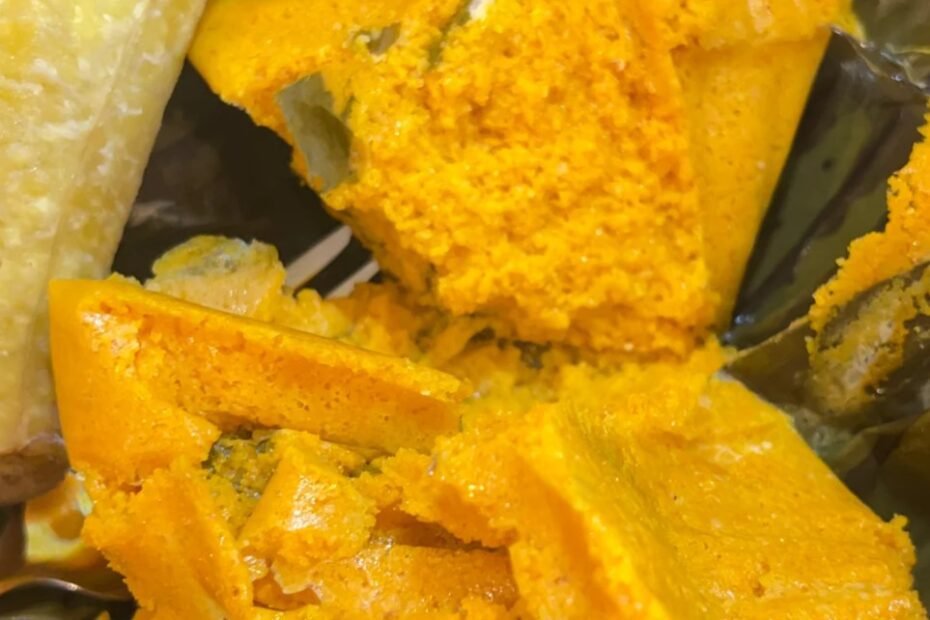
In my home, cooking is not just about feeding the family—it is about keeping our traditions alive. As a mother of two teenagers, I am always thinking about meals that are both filling and meaningful. One dish that never fails to bring everyone to the table is Koki.
Koki is a traditional dish from Cameroon, especially loved among the Bamileke people. It is made from black-eyed peas or sometimes corn, mixed with palm oil and spices, then wrapped in banana leaves and steamed. When the aroma fills the kitchen, you will hear someone say, “Mama, Koki don ready?” That is when you know it is going to be a good meal.
Let me show you how I prepare Koki for my family, step by step, just the way my own mother taught me.
What is Koki?
Koki is a steamed cake made from peeled black-eyed peas. The beans are blended into a smooth paste, mixed with palm oil, fish, and seasoning, then wrapped in banana leaves and cooked slowly.
It may look simple, but Koki is rich, soft, and very satisfying. It is often served with boiled plantains, making it a complete meal that keeps everyone full for hours.
In our home, Koki is not just food—it is comfort. When my children come back from school tired, Koki is one of the meals that brings smiles.
Ingredients
Here is what I use when I make Koki for my family.
Main Ingredients
- 2 cups black-eyed peas
- 1/2 cup palm oil
- 1 cup water (or as needed)
- 1 onion (chopped)
- 200 grams smoked fish or fresh fish
- Salt to taste
For Flavor
- 1–2 chili peppers (optional)
- 1 teaspoon ground crayfish (optional)
- 1 seasoning cube (optional)
For Wrapping
- Banana leaves (fresh or lightly softened)
Preparing the Beans
This is the most important part of Koki, and it takes patience. I always tell my children, “Good Koki starts with clean beans.”
Step 1: Soak the Beans
- Put the black-eyed peas in water and soak for about 1–2 hours.
- This makes it easier to remove the skin.
Step 2: Remove the Skin
- Rub the beans between your hands.
- The skins will come off and float.
- Wash and rinse several times until most skins are removed.
Sometimes my teenagers help me with this, but they complain, “Mama, this one is too much work!” I just laugh because they know the taste is worth it.
Step 3: Grind the Beans
- Blend the peeled beans with a little water until smooth.
- The batter should be thick but pourable.
Preparing the Banana Leaves
Banana leaves give Koki its traditional flavor.
- Wash the leaves well.
- Pass them over a flame or hot water to soften them.
- This makes them easy to fold without tearing.
If you don’t do this, the leaves will break, and your Koki will scatter. That one is not good at all.
Step-by-Step Recipe
Now let us cook Koki together.
Step 1: Prepare the Fish
- Clean and debone the fish.
- Cut into small pieces.
- Set aside.
Step 2: Mix the Batter
In a large bowl, combine:
- Blended beans
- Palm oil
- Chopped onion
- Salt
- Pepper and crayfish (if using)
Mix very well until everything is smooth and evenly combined. The color will turn yellow from the palm oil.
At this point, I always taste a little and adjust salt. As we say, “Taste before you cook, no wahala later.”
Step 3: Add Fish
- Gently mix in the fish pieces.
- Do not overmix, so the fish stays whole.
Step 4: Wrap the Koki
- Take a piece of banana leaf.
- Spoon some batter into the center.
- Fold the leaf into a tight parcel.
- Tie with string or secure with leaf strips.
If you are new to this, do not worry. The first one may not look perfect, but practice will make you better.
Step 5: Arrange in Pot
- Place the wrapped Koki in a pot.
- Arrange them upright or stacked carefully.
Step 6: Steam the Koki
- Add water to the pot (not covering the Koki).
- Cover tightly.
- Steam for about 1.5 to 2 hours.
Check occasionally and add water if needed. Do not let the pot dry.
Step 7: Check for Doneness
- Open one wrap carefully.
- The Koki should be firm and set, not soft or watery.
When it is ready, the smell alone will tell you. My children will already be waiting in the kitchen saying, “Mama, serve first!”
Serving Suggestions
Koki is best served hot. In my home, we usually eat it with:
- Boiled ripe plantains
- Boiled unripe plantains
- Sometimes garri or rice
You take a piece of Koki and a bite of plantain together. That combination is something special.
Taste and Texture
Koki is soft, rich, and slightly oily from the palm oil. The beans give it a creamy texture, while the fish adds a savory taste.
The banana leaves give a light, natural aroma that makes it even more delicious.
It is filling, so even a small portion can satisfy you.
Nutrition Information
Koki is not just tasty; it is also good for the body.
Black-eyed Peas
- High in protein
- Rich in fiber
- Good for digestion
Palm Oil
- Provides energy
- Contains vitamins
Fish
- Rich in protein
- Good source of minerals
Overall, Koki is a balanced meal that keeps you full and energized. That is why I like cooking it for my teenagers—they need strength for school and activities.
Preparation and Cooking Time
- Preparation Time: 45–60 minutes
- Cooking Time: 1.5–2 hours
- Total Time: About 2.5–3 hours
Yes, it takes time. But as we say, “Good food no dey rush.”
Tips for Home Cooks
Let me share some tips I have learned over the years.
1. Remove Bean Skins Well
If you leave too many skins, the Koki will not be smooth.
2. Use Fresh Palm Oil
Good palm oil gives better color and taste.
3. Do Not Add Too Much Water
The batter should be thick, or your Koki will be too soft.
4. Wrap Properly
Make sure the leaves are tight, so water does not enter.
5. Steam Gently
Do not rush the cooking. Low heat works best.
6. Check Water Level
Always make sure there is enough water in the pot.
7. Adjust Spice
If you have children, go easy on pepper.
8. Practice Folding Leaves
It may look difficult at first, but you will improve.
Variations of Koki
In different homes, Koki is prepared in different ways.
- Some people use corn instead of beans
- Some add more oil for a richer taste
- Some make it without fish for a vegetarian version
- Others add more pepper for a spicy kick
In my home, I keep it simple so everyone can enjoy.
A Mother’s Reflection
Cooking Koki always reminds me of my own mother. She would wake up early, prepare everything, and call us to help. At that time, we did not understand why it took so long.
Now, as a mother myself, I understand. Cooking is love. It is care. It is how we bring our family together.
When my teenagers sit down and eat Koki with smiles, I feel happy. Even if they complain during preparation, when the food is ready, they always say, “Mama, this one sweet well well.”
Final Thoughts
Koki is a special dish that carries tradition, flavor, and comfort. It may take time to prepare, but the result is always worth it.
If you try this recipe, take your time and enjoy the process. Cooking is not just about the food—it is about the memories you create along the way.
And when your family tastes your Koki, you will understand why this dish is so loved.
As we say, “Chop well, live well.”
