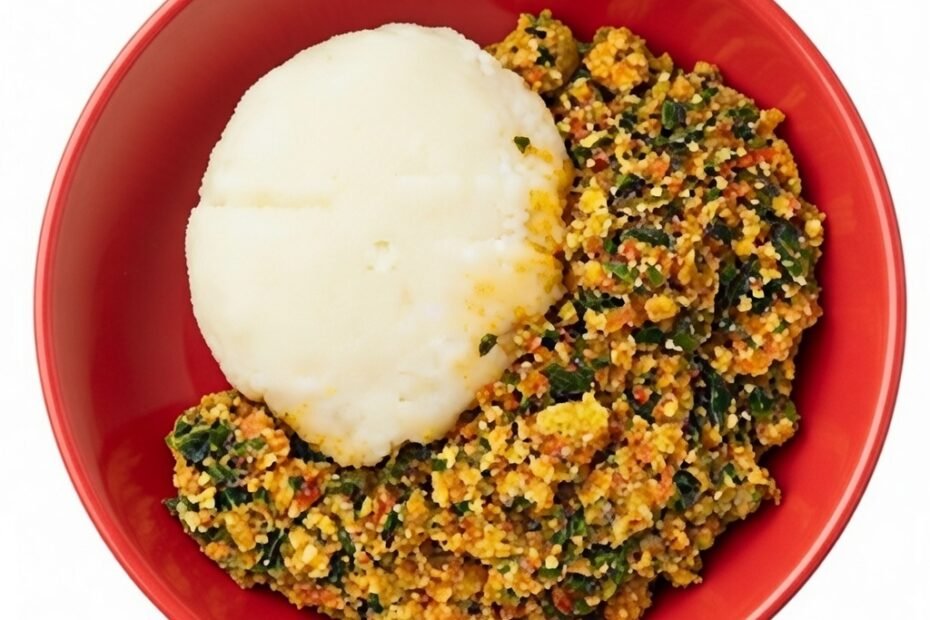
Fufu and Egusi Soup is one of the most comforting and widely enjoyed dishes in Cameroon, especially in the North West region. It is a meal that brings warmth, satisfaction, and a strong sense of tradition to the table.
The dish combines soft, stretchy fufu made from pounded yam or cassava with a rich and flavorful egusi soup. Egusi soup is made from ground melon seeds cooked with vegetables, meat or fish, and spices. Together, they create a balanced meal that is both filling and nourishing.
In many homes, this dish is more than just food. It is a shared experience. Families gather around a bowl, using their hands to scoop the soup with fufu, enjoying every bite together.
In this article, you will learn how to prepare both fufu and egusi soup, along with useful cooking tips, nutrition details, and serving ideas.
What is Fufu and Egusi Soup?
Fufu is a soft dough-like food made by pounding boiled yam or cassava until smooth and stretchy. It is mild in taste and serves as the perfect base for rich soups.
Egusi soup is made from ground melon seeds. These seeds are cooked with oil, vegetables, and protein such as beef, fish, or chicken. The result is a thick, nutty, and savory soup.
When eaten together, the soft fufu and the rich egusi soup create a satisfying combination of texture and flavor.
Ingredients
To prepare this meal, you will need ingredients for both the soup and the fufu.
For Egusi Soup
Main Ingredients
- 1 cup ground egusi (melon seeds)
- 300–400 grams beef, fish, or mixed meat
- 1 cup leafy vegetables (spinach or local greens)
- 1/2 cup palm oil
- 1 onion, chopped
- 2–3 tablespoons ground crayfish
- Salt to taste
For Flavor
- 2 cloves garlic, minced
- 1-inch ginger, grated
- 1–2 chili peppers (optional)
- 1 seasoning cube (optional)
- 1 cup stock or water
For Fufu
Option 1: Pounded Yam
- 2–3 medium yams
Option 2: Cassava Fufu
- 2 cups cassava flour or fermented cassava
Preparing the Ingredients
Start by washing and cutting the meat into pieces. Season it lightly with salt, onion, garlic, and ginger, then cook until tender. Keep the stock, as it will be used in the soup.
If using fish, clean and set it aside. Smoked fish can be used for extra flavor.
Wash and chop the vegetables. Set everything ready before cooking the soup.
Cooking the Egusi Soup
Begin by heating palm oil in a pot. Add chopped onions and cook until soft. This step helps build the base flavor.
Add the ground egusi into the pot. Some people mix it with a little water before adding, while others add it directly. Stir gently and allow it to cook. The egusi will begin to form small lumps or curds, which is part of the traditional texture.
Add the cooked meat and some of the stock. Stir and let it simmer. The soup will start to thicken as the egusi cooks.
Add crayfish, pepper, and seasoning. Mix well and let the flavors develop. The soup should not be too watery; it should have a thick, rich consistency.
Add the vegetables towards the end. This helps keep their color and nutrients. Let the soup cook for a few more minutes, then adjust salt to taste.
If you are using fish, add it carefully so it does not break apart.
The soup is ready when the oil begins to settle on top and the egusi is fully cooked.
Preparing the Fufu
Pounded Yam
Peel and cut the yam into pieces. Boil until soft. Once cooked, pound the yam in a mortar until it becomes smooth and stretchy. This process takes some effort, but it gives the best texture.
You can sprinkle a little water while pounding to make it softer.
Cassava Fufu
If using cassava flour, mix it with water and cook on low heat, stirring continuously until it forms a smooth, thick dough.
If using fermented cassava, cook it similarly until it becomes smooth and well combined.
The goal is to achieve a soft, elastic texture that is easy to shape.
Serving the Dish
Fufu and egusi soup are best served hot. Place the fufu in a bowl or shape it into small portions. Serve the soup alongside or on top.
To eat, pinch a small portion of fufu, roll it into a ball, and use it to scoop the soup. It is traditionally swallowed without chewing.
This style of eating makes the meal unique and enjoyable.
Taste and Texture
Egusi soup has a rich, nutty flavor from the melon seeds. The palm oil adds depth, while the meat or fish brings a savory taste. The vegetables provide freshness and balance.
The texture is thick and slightly grainy due to the egusi. Combined with the soft, smooth fufu, each bite feels satisfying and comforting.
The dish can be mild or spicy, depending on how much pepper is used.
Nutrition Information
Fufu and egusi soup provide a good balance of nutrients.
Egusi seeds are rich in protein, healthy fats, and essential minerals. They also provide energy and support overall health.
Meat and fish add protein, iron, and vitamins. These nutrients are important for strength and body function.
Vegetables provide fiber, vitamins, and antioxidants, which support digestion and immunity.
Fufu, made from yam or cassava, is a source of carbohydrates. It gives energy and helps keep you full.
To make the dish healthier, you can control the amount of oil and use more vegetables.
Preparation and Cooking Time
Preparation Time: 30–40 minutes
Cooking Time: 45–60 minutes
Total Time: About 1.5 hours
The time may vary depending on how you prepare the fufu and how tender the meat is.
Tips for Home Cooks
Use good quality egusi seeds. Fresh seeds give a better taste and texture.
Do not rush the cooking of the egusi. It needs time to develop flavor and thicken properly.
Add vegetables towards the end of cooking. This keeps them fresh and nutritious.
Use stock instead of plain water for a richer taste.
Be careful when adding fish. It can break easily if stirred too much.
Control the amount of palm oil. Too much oil can make the soup heavy.
If pounding yam feels difficult, you can use a food processor as an alternative, but traditional pounding gives the best texture.
Taste as you cook. Adjust salt and spice gradually.
Variations of the Dish
Different households prepare egusi soup in their own way.
Some people make it thicker, while others prefer it slightly lighter. Some use only meat, while others combine meat and fish.
The type of vegetables can also change. Spinach is common, but other local greens can be used.
Fufu can be made from yam, cassava, or even corn flour, depending on preference and availability.
Each variation has its own unique taste, but the core idea remains the same.
Why This Dish is Special
Fufu and egusi soup is more than just a meal. It represents tradition, family, and shared experiences. It is often prepared during gatherings, celebrations, and everyday meals.
The way it is eaten, using hands, makes it a communal dish. It brings people together and creates a sense of connection.
In many homes, it is one of the first traditional dishes children learn to enjoy.
Final Thoughts
Fufu and egusi soup is a classic Cameroonian dish that offers rich flavors, comforting textures, and a sense of tradition. It is a meal that satisfies both the body and the heart.
With simple ingredients and careful preparation, you can bring this dish into your kitchen. Whether you are cooking for family or trying something new, this meal is sure to leave a lasting impression.
Take your time, enjoy the process, and serve it warm for a truly satisfying experience.
