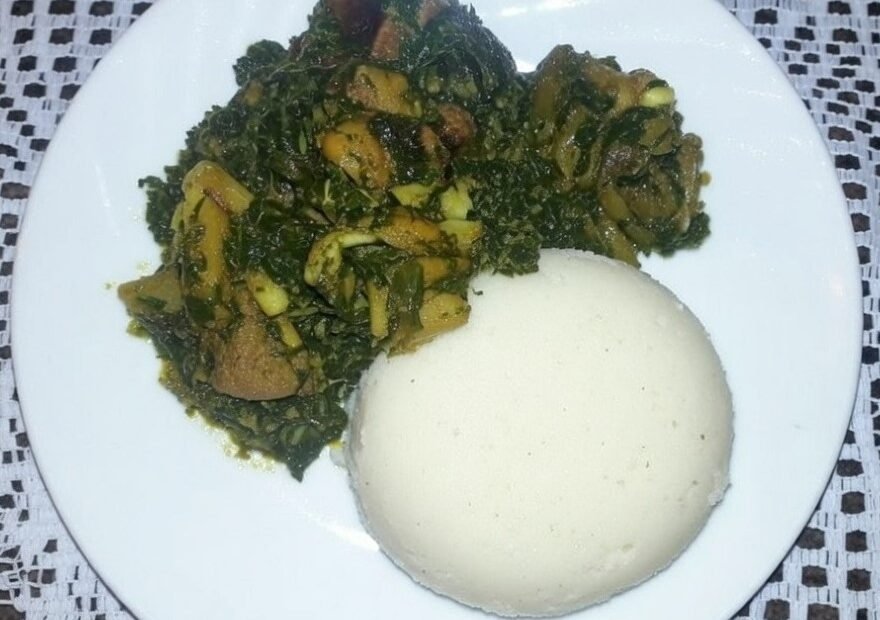
Eru is a traditional dish from Cameroon, especially popular in the South West region. It is a rich, hearty stew made with finely sliced wild leaves, waterleaf, palm oil, and protein such as beef, cow skin, or crayfish. It is most often served with fufu, making it a filling and satisfying meal.
Eru is known for its slightly chewy texture, deep flavor, and nourishing qualities. The main ingredient, Gnetum africanum, is a wild forest leaf that is highly valued for its taste and health benefits. When cooked with palm oil and spices, it creates a thick and flavorful stew that is loved across the country.
In this article, you will learn how to make Eru step by step, along with tips, nutrition details, and cooking guidance.
What is Eru?
Eru is a leafy vegetable stew made from Gnetum africanum, often simply called eru leaves. These leaves are tough and are usually sliced very thin before cooking. They are combined with waterleaf, which is softer and releases moisture during cooking, helping to balance the texture.
The stew is enriched with palm oil, seasoned with crayfish, and often includes meat or fish. It is traditionally eaten with fufu, which helps scoop up the thick and rich sauce.
Eru is not only delicious but also deeply connected to local culture and forest-based ingredients.
Ingredients
Here is a typical list of ingredients for making Eru.
Main Ingredients
- 3 cups sliced eru leaves (Gnetum africanum)
- 2 cups chopped waterleaf
- 300–400 grams beef, cow skin, or mixed meat
- 1 cup dried or smoked fish (optional)
- 1/2 cup ground crayfish
- 1/2 cup palm oil
- 1 large onion (chopped)
- 2 seasoning cubes (optional)
- Salt to taste
For Flavor
- 2–3 cloves garlic (minced)
- 1-inch ginger (grated)
- 1–2 fresh chili peppers (optional)
- 1 teaspoon ground pepper
To Serve
- Fufu (cassava fufu or pounded yam)
Preparing the Ingredients
Preparing Eru Leaves
- Wash the sliced eru leaves thoroughly.
- If they are dry, soak in warm water for about 30 minutes.
- Rinse again to remove any dirt or sand.
Preparing Waterleaf
- Wash and chop the waterleaf.
- Waterleaf contains a lot of water, so no need to add much extra liquid during cooking.
Preparing Meat
- Wash the meat and cut into small pieces.
- Season with salt, onion, garlic, and ginger.
- Boil until tender and keep the stock.
Step-by-Step Recipe
Step 1: Cook the Meat
Place the meat in a pot with chopped onion, garlic, ginger, and salt. Add a little water and cook until tender. Save the broth for later use.
Step 2: Add Waterleaf
Add the chopped waterleaf to the pot of cooked meat. Stir and cook for about 5–10 minutes. The waterleaf will release water and create a natural cooking liquid.
Step 3: Add Palm Oil
Pour in the palm oil and mix well. Let it cook for a few minutes so that the oil blends with the waterleaf and meat.
Step 4: Add Eru Leaves
Add the sliced eru leaves into the pot. At first, the volume may seem large, but the leaves will shrink as they cook. Stir well to combine.
Step 5: Add Stock if Needed
If the mixture looks too thick, add a small amount of the meat stock. Be careful not to add too much water, as Eru is meant to be thick.
Step 6: Add Crayfish and Fish
Add the ground crayfish and smoked or dried fish if using. Stir well and let it cook for about 10–15 minutes.
Step 7: Season the Stew
Add seasoning cubes, pepper, and chili if desired. Taste and adjust salt.
Step 8: Slow Cooking
Let the stew simmer on low heat for another 15–20 minutes. Stir occasionally to prevent sticking.
Step 9: Final Adjustments
Check the texture. The leaves should be soft but slightly chewy. The stew should be thick and rich, not watery.
Your Eru is now ready to serve.
Serving Suggestions
Eru is traditionally served with fufu. The most common options include:
- Cassava fufu
- Pounded yam
- Garri (eba)
To eat, pinch a small piece of fufu and use it to scoop the stew.
Eru can also be served with boiled plantains or rice, although fufu is the most authentic pairing.
Taste and Texture
Eru has a very unique texture. The leaves are slightly chewy, while the waterleaf makes the dish soft and moist. The palm oil gives it a rich, smooth feel.
The flavor is savory, slightly earthy, and mildly spicy depending on how much pepper you add. The crayfish adds a deep umami taste, making the stew very satisfying.
Nutrition Information
Eru is a healthy and balanced dish with many benefits.
Key Nutrients
Eru Leaves (Gnetum africanum)
- High in protein for a leafy vegetable
- Rich in fiber
- Contains essential minerals like iron and calcium
Waterleaf
- High water content
- Rich in vitamins and antioxidants
Palm Oil
- Provides energy
- Contains vitamin E and antioxidants
Meat and Fish
- Good source of protein
- Provides iron and essential nutrients
Overall Benefits
- Supports digestion
- Provides long-lasting energy
- Helps in maintaining a balanced diet
Preparation and Cooking Time
- Preparation Time: 30–40 minutes
- Cooking Time: 45–60 minutes
- Total Time: About 1.5 hours
Cooking time may vary depending on the type of meat used and how soft you want the leaves.
Tips for Home Cooks
1. Slice Leaves Thinly
Thinly sliced eru cooks faster and gives a better texture.
2. Do Not Add Too Much Water
Eru should be thick, not watery. Use waterleaf moisture and meat stock wisely.
3. Use Quality Palm Oil
Good palm oil gives a rich color and authentic taste.
4. Cook Slowly
Slow cooking helps the flavors blend well and softens the leaves.
5. Balance Ingredients
Do not overpower the dish with too much oil or crayfish.
6. Try Different Proteins
You can use beef, fish, or even snails for variety.
7. Stir Carefully
Eru can stick to the pot. Stir gently but regularly.
8. Taste as You Cook
Adjust seasoning gradually for the best flavor.
Variations of Eru
Eru can be prepared in different ways depending on personal preference:
- With only fish and no meat
- With assorted meats like cow skin and tripe
- With extra crayfish for stronger flavor
- With more pepper for a spicy version
Some people also add periwinkles or snails for a more traditional coastal taste.
Why Eru is Special
Eru is more than just food. It is a dish deeply connected to the forests and traditions of Cameroon. The use of wild leaves makes it unique and highlights the importance of natural ingredients in local cooking.
It is often prepared for family meals, gatherings, and special occasions. The time and care needed to prepare it make it a dish that brings people together.
Final Thoughts
Eru is a rich and flavorful stew that offers something different from everyday meals. Its combination of wild leaves, palm oil, and protein creates a dish that is both nourishing and satisfying.
While it may take some time to prepare, the result is a deeply comforting meal that is worth the effort. If you enjoy trying traditional dishes from different cultures, Eru is a great recipe to explore.
With simple ingredients and careful cooking, you can bring the taste of Cameroon’s South West region into your own kitchen.
