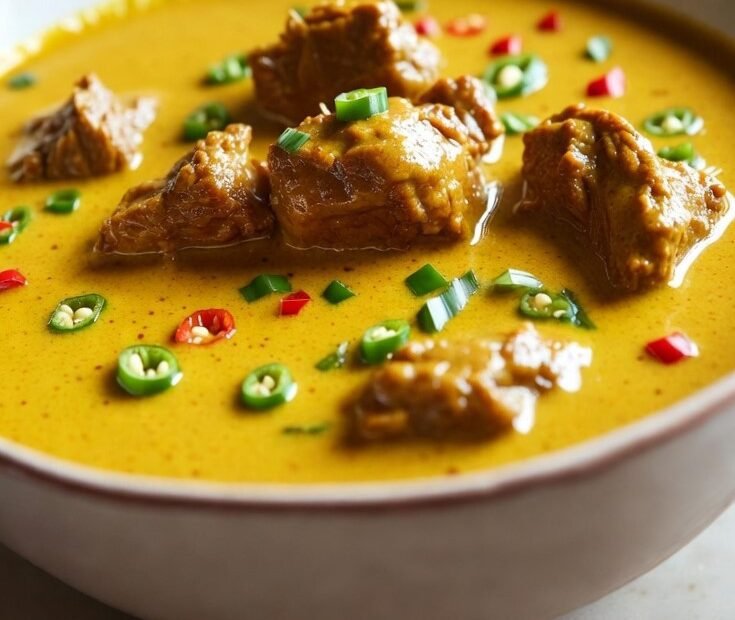
Achu and Yellow Soup is one of the most iconic traditional dishes from Cameroon, especially from the North West Grassfields region. It is a meal deeply rooted in culture, often served during family gatherings, ceremonies, and special occasions. The dish is known for its smooth, stretchy achu made from cocoyam and its rich, bright yellow soup prepared with palm oil, limestone, and spices.
This dish is not just about taste. It is about tradition, technique, and community. Preparing Achu is often a shared activity, where family members come together to pound cocoyam and prepare the soup. Eating it is also a special experience, usually done with the hands, bringing people closer together.
The combination of soft achu and flavorful yellow soup creates a meal that is both comforting and unique.
In this article, you will learn how to prepare Achu and Yellow Soup step by step, along with helpful tips, nutrition information, and serving ideas.
What is Achu and Yellow Soup?
Achu is made by pounding boiled cocoyam until it becomes smooth, sticky, and stretchy. It has a mild taste, making it perfect for pairing with flavorful soups.
Yellow soup is made using palm oil, a small amount of limestone (known locally as kanwa), spices, and broth. The limestone reacts with the palm oil to create a bright yellow color and a smooth, slightly thick texture.
The soup is usually served with beef, cow skin, tripe, or fish, adding richness and protein to the meal.
Together, Achu and Yellow Soup form a balanced and satisfying dish that is both traditional and nourishing.
Ingredients
To prepare this dish, you will need ingredients for both the achu and the yellow soup.
For Achu
- 6–8 cocoyams
- Water for boiling
For Yellow Soup
Main Ingredients
- 1/2 cup red palm oil
- 300–400 grams beef, cow skin, tripe, or fish
- 1 cup meat or fish stock
- Salt to taste
For Flavor
- 1 teaspoon limestone (kanwa) dissolved in water
- 1 tablespoon ground crayfish
- 2 cloves garlic
- 1-inch ginger
- 1–2 chili peppers (optional)
- Local spices (such as njansang or pepper)
Preparing the Ingredients
Start by washing the cocoyams thoroughly to remove dirt. Do not peel them before boiling, as the skin helps keep them firm.
Wash the meat and cut it into pieces. Season lightly with salt, garlic, and ginger, then cook until tender. Keep the stock, as it will be used in the soup.
If using fish, clean it properly and set aside.
Prepare the limestone solution by dissolving a small amount in water. Only a little is needed, as too much can affect the taste.
Cooking the Achu
Place the cocoyams in a pot and boil them with the skin on until they are soft. This may take some time, depending on their size.
Once cooked, remove the skins while they are still warm. This step is easier when the cocoyams are hot.
Pound the cocoyams in a mortar until they become smooth and stretchy. This process requires effort, but it is important for achieving the right texture.
As you pound, sprinkle a little warm water to help soften the mixture. Continue pounding until there are no lumps.
The final texture should be smooth, elastic, and slightly sticky. Shape the achu into portions and set aside.
Preparing the Yellow Soup
Yellow soup is the heart of this dish, and it requires careful preparation.
Start by heating the palm oil gently. Do not overheat it, as this can change its flavor.
In a separate bowl, mix the warm stock with the dissolved limestone solution. Slowly add this mixture to the palm oil while stirring continuously.
You will notice the color change to a bright yellow and the texture becoming smooth and slightly thick. This is the base of the soup.
Add ground crayfish, garlic, ginger, and pepper. Stir gently to combine the flavors.
Now add the cooked meat or fish into the soup. Mix carefully so the pieces remain intact.
Allow the soup to warm gently. Do not let it boil too much, as this can break the texture.
Taste and adjust salt and spice as needed.
The soup should be smooth, slightly thick, and rich, with a bright yellow color.
Serving the Dish
Achu and Yellow Soup are traditionally served together in a large bowl.
Place the achu on one side and pour the yellow soup on the other. The meat or fish is usually placed in the soup.
To eat, pinch a small portion of achu, roll it into a ball, and use it to scoop the soup. It is typically swallowed without chewing.
This method of eating makes the meal unique and enjoyable.
Taste and Texture
Achu has a soft, stretchy texture and a mild taste, allowing the soup to stand out.
Yellow soup is rich and flavorful, with a smooth texture and a slightly oily finish. The crayfish and spices add depth, while the meat or fish brings a savory element.
The combination creates a balanced dish that is both comforting and satisfying.
Nutrition Information
Achu and Yellow Soup provide a variety of nutrients.
Cocoyam is a good source of carbohydrates, providing energy. It also contains fiber, which supports digestion.
Palm oil is rich in vitamins, especially vitamin A, and provides energy. However, it should be used in moderation.
Meat and fish provide protein, which is important for muscle growth and repair. They also contain essential minerals like iron.
Crayfish adds additional protein and minerals.
Garlic and ginger contribute to overall health and have natural medicinal properties.
This dish can be part of a balanced diet when prepared with care.
Preparation and Cooking Time
Preparation Time: 30–40 minutes
Cooking Time: 45–60 minutes
Total Time: About 1.5 hours
The time may vary depending on how long it takes to pound the cocoyam and cook the meat.
Tips for Home Cooks
Choose fresh cocoyam for the best texture. Old cocoyam may not pound smoothly.
Pound the cocoyam while it is still warm. This makes it easier to achieve a smooth consistency.
Use only a small amount of limestone. Too much can affect both taste and texture.
Do not overheat the palm oil. Gentle heat helps maintain the flavor and color.
Stir the soup carefully to keep it smooth. Avoid vigorous boiling.
Use good quality stock. It adds depth and richness to the soup.
Adjust the spice level according to your preference.
If pounding by hand is difficult, you can use a food processor, but traditional pounding gives the best result.
Variations of Achu
Different families prepare Achu in their own way.
Some use only beef, while others add a mix of meats and fish. Some prefer a spicier soup, while others keep it mild.
The type of spices used can also vary, depending on availability and preference.
Despite these variations, the core elements of cocoyam and yellow soup remain the same.
Why Achu is Special
Achu is more than just a meal. It is a symbol of culture and tradition in the North West region of Cameroon. It is often prepared during important events, bringing people together.
The process of making Achu, especially pounding the cocoyam, reflects the effort and care put into traditional cooking.
Eating Achu with your hands adds to the experience, making it a shared and meaningful meal.
Final Thoughts
Achu and Yellow Soup is a classic Cameroonian dish that combines simple ingredients with traditional techniques to create something truly special.
Its smooth texture, rich flavor, and cultural importance make it a dish worth trying. While it may take some effort to prepare, the result is a satisfying and memorable meal.
With patience and attention to detail, you can bring this traditional dish into your kitchen and enjoy a taste of Cameroon.
